Kingdom of Italy: The Struggle for Rome
The unification of Italy was a complex political and military journey that culminated in the establishment of a centralized monarchy. On February 18, 1861, the first Italian Parliament assembled in Turin, marking a pivotal step toward national sovereignty. Shortly after, on March 17, 1861, the Parliament proclaimed Victor Emmanuel II as the King of Italy.
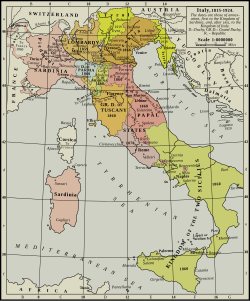
While Rome was declared the capital of the Kingdom of Italy on March 27, 1861, the government could not immediately occupy the city. Rome was defended by a French garrison under the command of General Christophe Léon Louis Juchault de Lamoricière, maintained by Napoleon III of France to protect Pope Pius IX. This geopolitical deadlock forced the Italian government to move its seat from Turin to Florence in 1865 following the signing of the September Convention.
The Papal Opposition and the First Vatican Council
Pope Pius IX remained steadfastly opposed to the goals of Italian nationalism. In December 1869, the city hosted the First Vatican Council. A significant outcome of this council was the July 1870 proclamation of the doctrine of papal infallibility—the belief that the Pope is preserved from error when defining dogma on faith or morals. Some historians suggest that this theological declaration was influenced by the sociopolitical tensions of the era.
The Path to the Capture of Rome
The tide turned in July 1870 with the outbreak of the Franco-Prussian War. By early August, Napoleon III recalled his garrison from Rome, leaving the remaining Papal States without French protection. This vacuum triggered widespread public demonstrations demanding that the Italian government seize the city.
The Italian government waited for a decisive moment, which arrived with the capture of Napoleon III at the Battle of Sedan. King Victor Emmanuel II attempted a diplomatic solution, sending Count Gustavo Ponza di San Martino to Pope Pius IX. The King proposed a peaceful entry of the Italian Army into Rome under the premise of protecting the Pope.
The diplomatic effort failed. According to historian Raffaele De Cesare, the Pope reacted with hostility, calling the King's representatives "vipers" and "whited sepulchres," and explicitly declaring that the Italian army would never enter Rome.
The Military Assault at Porta Pia
On September 11, 1870, General Raffaele Cadorna led the Italian army across the frontier. The forces advanced slowly, hoping for a negotiated entry, but by September 19, they had reached the Aurelian Walls and placed Rome under a state of siege.
Pope Pius IX agreed to surrender only after his troops provided a token resistance to demonstrate that the takeover was not voluntary. On September 20, after a three-hour cannonade breached the walls at Porta Pia, the Bersaglieri (elite infantry) entered the city. The conflict resulted in the deaths of 49 Italian soldiers and 19 Papal Zouaves. Following a plebiscite, Rome and the region of Lazio were officially annexed to the Kingdom of Italy.
Key Facts
- Proclamation: Victor Emmanuel II was named King of Italy on March 17, 1861.
- Initial Capital: Rome was declared the capital in 1861, though the government sat in Turin and later Florence.
- French Influence: Napoleon III's garrison protected the Pope until the Franco-Prussian War.
- The Breach: The Italian army entered Rome through Porta Pia on September 20, 1870.
- Casualties: The final assault cost 49 Italian and 19 Papal lives.
| Date | Event | Significance |
|---|---|---|
| March 17, 1861 | Proclamation of Victor Emmanuel II | Establishment of the King of Italy |
| 1865 | Move to Florence | Government seat shifted due to French presence in Rome |
| July 1870 | Papal Infallibility Proclaimed | Theological and political statement by the First Vatican Council |
| September 20, 1870 | Breach of Porta Pia | Military entry into Rome and end of Papal temporal power |
Frequently Asked Questions
Why couldn't the Italian government move to Rome in 1861?
The government was blocked by a French garrison commanded by General Christophe Léon Louis Juchault de Lamoricière, which was maintained by Napoleon III to protect Pope Pius IX.
What was the significance of the Battle of Sedan?
The capture of Napoleon III at the Battle of Sedan removed the French military protection from Rome, providing the Italian government the opportunity to seize the city.
How did Pope Pius IX react to the offer of a peaceful entry?
The Pope rejected the proposal from Count Gustavo Ponza di San Martino with anger, calling the King's party "vipers" and insisting they would never enter the city.
What happened at Porta Pia?
On September 20, 1870, Italian forces used a three-hour cannonade to breach the Aurelian Walls at Porta Pia, allowing the Bersaglieri to enter and capture Rome.
What was the result of the capture of Rome?
Rome and the surrounding region of Lazio were annexed to the Kingdom of Italy following a plebiscite, effectively ending the temporal power of the Pope.