Kingdom of ItalyRisorgimentoHouse of SavoyItalian UnificationBenito Mussolini

Kingdom of Italy: The Rise and Fall of a Unified Monarchy

Kingdom of Italy The Kingdom of Italy was a sovereign unitary state that existed from March 17, 1861, until June 18, 1946. Born from a decades-long process of political and social unifica...

Kingdom of Italy

The Kingdom of Italy was a sovereign unitary state that existed from March 17, 1861, until June 18, 1946. Born from a decades-long process of political and social unification known as the Risorgimento, the kingdom merged various independent states into a single entity under the leadership of the House of Savoy. This era saw Italy evolve from a fragmented collection of duchies and kingdoms into a major European power, navigating through liberal governance, a brutal fascist dictatorship, and two global conflicts before eventually transitioning into a republic.

The kingdom's journey began with the proclamation of Victor Emmanuel II of Sardinia as the first King of Italy. Over the following decades, the state expanded its borders and consolidated its administration, moving its capital from Turin to Florence, and finally to Rome in 1871.
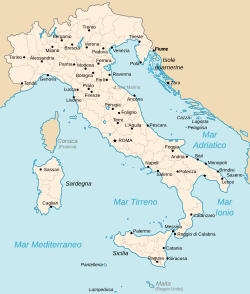
The Kingdom of Italy in 1924

Key Facts

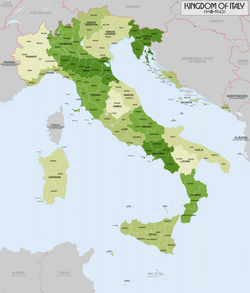
Map of the Kingdom of Italy at its greatest extent in 1943, during World War II, with the annexation of small territories from France and Yugoslavia. The territories annexed by the latter are the area constituting the province of Ljubljana, the area merged with the province of Fiume and the areas making up the Governorate of Dalmatia.
  • Duration: 1861 to 1946.
  • Founding Process: The Risorgimento (Italian Unification).
  • Ruling House: The House of Savoy.
  • Capitals: Turin (1861–1865), Florence (1865–1871), and Rome (1871–1946).
  • Government Shift: Transitioned from a constitutional monarchy to a fascist dictatorship (1925–1943).
  • End of Monarchy: Abolished via a national referendum on June 2, 1946.

The Path to Unification (1848–1870)
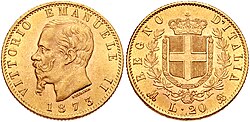
Golden 20 lire coin with the effigy of King Victor Emmanuel II of 1873. Minted in Milan (M BN); other mints included Rome (R) and Turin (T BN).

The unification of Italy was not a single event but a series of diplomatic maneuvers and military conflicts. The Kingdom of Sardinia played a pivotal role, acting as the legal and political engine of the movement. A key milestone was the proclamation of the Statuto Albertino in 1848, which provided the constitutional framework for the emerging state.
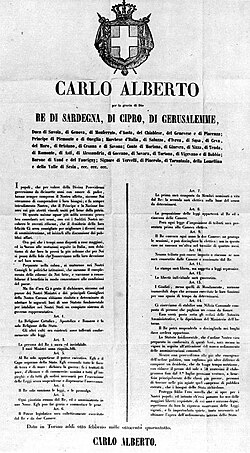
Notice of the proclamation of the Statuto Albertino in 1848 by King Charles Albert of Sardinia

The process involved the gradual annexation of territories, including the Third Italian War of Independence in 1866 and the capture of Rome on September 20, 1870, which effectively ended the temporal power of the Pope and established Rome as the definitive capital.
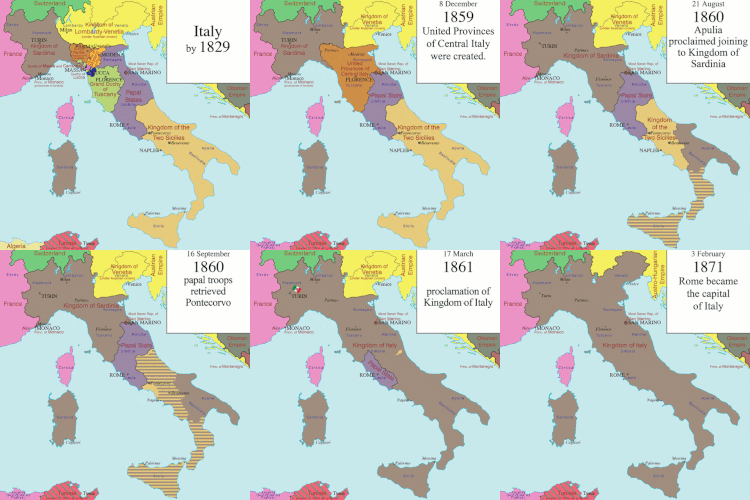
Animated map of the Italian unification from 1829 to 1871

Symbols of Sovereignty

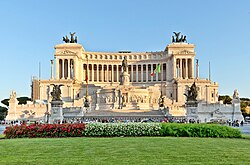
The kingdom utilized several powerful symbols to forge a national identity. The Iron Crown of Lombardy served as a historical symbol of Italian kingship, while the Altare della Patria in Rome was later inaugurated in 1911 to celebrate the 50th anniversary of unification and honor Victor Emmanuel II.
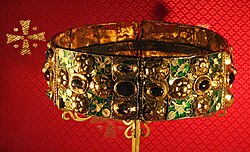
The Iron Crown of Lombardy, for centuries a symbol of the kings of Italy
The Altare della Patria in Rome, a national symbol of Italy celebrating King Victor Emmanuel II, and resting place of the Italian Unknown Soldier since the end of World War I. It was inaugurated in 1911, on the occasion of the 50th Anniversary of the Unification of Italy.

Economic Evolution and Social Challenges
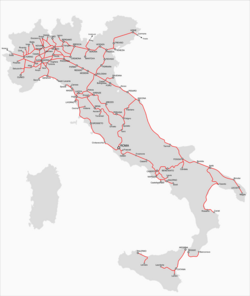
Rail Network as of 20 September 1870

Following unification, the new state faced the daunting task of merging multiple disparate bureaucracies and economies. The late 19th century was marked by a push toward industrialization, with significant growth in steel production (such as the Terni plant) and the automotive industry, highlighted by the rise of FIAT.
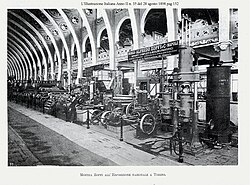
A machinery exposition in Turin, set in 1898, during the period of industrialization, National Exhibition of Turin, 1898

However, the economy was volatile. In the 1890s, the wine industry—previously a dominant export—collapsed after France recovered from a crop failure, leading to widespread bankruptcies. This economic instability, combined with the "Southern Question" (the developmental gap between the industrial North and agrarian South), fueled mass emigration to the Americas.
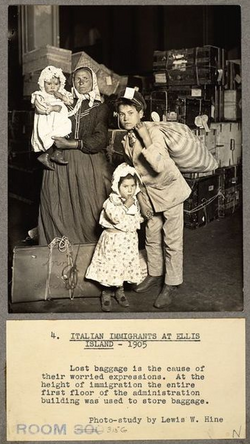
Italian immigrants arriving at Ellis Island in 1905

Infrastructure and Literacy

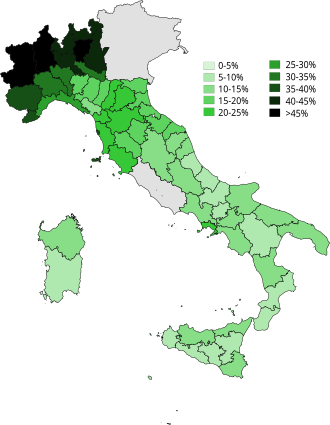
The state invested heavily in the rail network to connect the peninsula, which grew significantly between 1861 and 1870. Despite these physical connections, social gaps remained wide; literacy rates in 1861 were notably low, particularly in the southern regions.
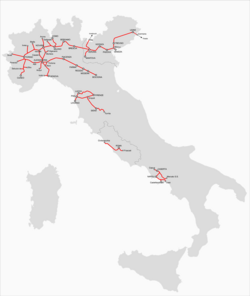
Rail Network as of 17 March 1861
Literacy rates in Italy in 1861, shortly after the proclamation of the Kingdom of Italy. Italy lacks Lazio and the Triveneto, which were subsequently annexed.

The Liberal Era and Colonial Ambitions (1870–1914)
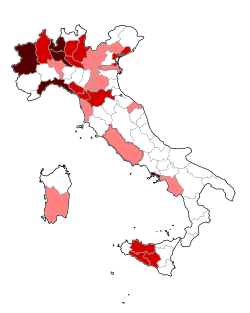
Index of industrialization of the Italian provinces in 1871 (the national average is 1.0). Source: Bank of Italy. Over 1.4 From 1.1 to 1.4 From 0.9 to 1.1 Up to 0.9

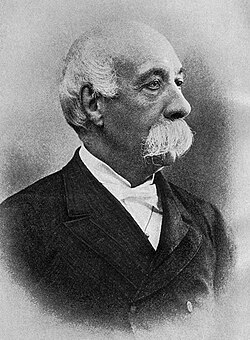
From 1870 to 1914, Italy was characterized by a liberal political system. Key figures like Agostino Depretis and Francesco Crispi shaped the nation's trajectory. Under Crispi, Italy pursued colonial expansion in Africa to assert its status as a great power.
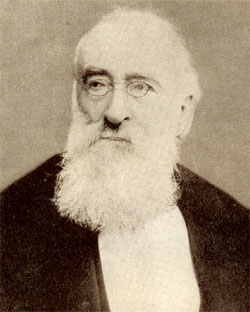
Agostino Depretis
Agostino Depretis
Francesco Crispi promoted the Italian colonialism in Africa in the late 19th century.

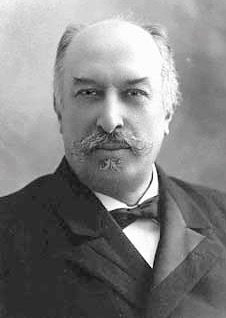
Italy's global reach extended beyond Africa; the nation participated in the Eight-Nation Alliance during the Boxer Rebellion in China (1900), eventually gaining a concession in Tientsin. Domestically, the era of Giovanni Giolitti saw attempts to balance industrial growth with social stability.
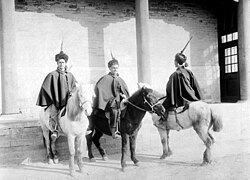
Italian mounted infantry in China during the Boxer Rebellion in 1900
Giovanni Giolitti was Prime Minister of Italy five times between 1892 and 1921.

World War I and the Rise of Fascism
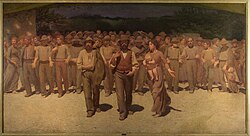
The Fourth Estate by Giuseppe Pellizza, c. 1898–1901

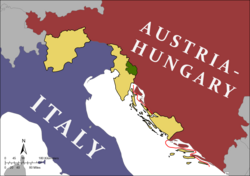
Italy entered World War I in 1915 following the Treaty of London, which promised territories such as Trentino-Alto Adige and Dalmatia. While Italy emerged victorious after the Battle of Vittorio Veneto in 1918, the perceived failure to receive all promised lands led to a sense of "mutilated victory."
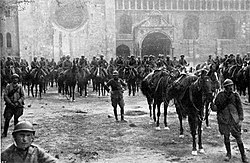
Italian cavalry in Trento on 3 November 1918, after the victorious Battle of Vittorio Veneto
Territories promised to Italy by the Treaty of London (1915), i.e. Trentino-Alto Adige, the Julian March and Dalmatia (tan), and the Snežnik Plateau area (green). Dalmatia, after WWI, however, was not assigned to Italy but to Yugoslavia.

This instability paved the way for Benito Mussolini and the National Fascist Party. Following the March on Rome in 1922, Mussolini established a dictatorship, transforming the constitutional monarchy into a totalitarian state by 1925. He sought to resolve the "Roman Question" by signing the Lateran Treaty in 1929, which created the independent Vatican City.
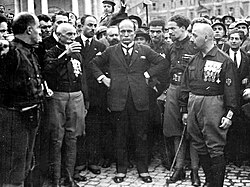
Benito Mussolini during the March on Rome in 1922
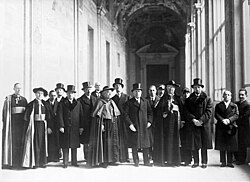
Vatican and Italian delegations prior to signing the Lateran Treaty

World War II and the Fall of the Monarchy
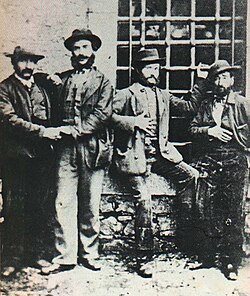
Some Lucanian brigands: Caruso, Cafo, Lamacchia and Tinna

Mussolini aligned Italy with Nazi Germany through the Pact of Steel, leading Italy into World War II in 1940. The war brought devastation and eventual internal collapse. In 1943, Mussolini was dismissed, and the kingdom split between the Kingdom of the South and the Italian Social Republic (a fascist puppet state in the north).
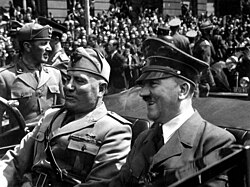
Mussolini and Hitler in June 1940
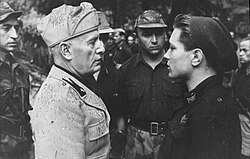
The head of the Italian Social Republic, Benito Mussolini, with a soldier in 1944

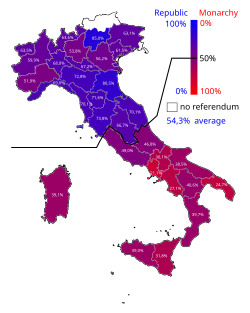
The conflict ended with the liberation of Italy by Allied forces and anti-fascist partisans in April 1945. In the aftermath, the monarchy was viewed as complicit in the fascist regime. A referendum held on June 2, 1946, resulted in the abolition of the monarchy and the birth of the Italian Republic.
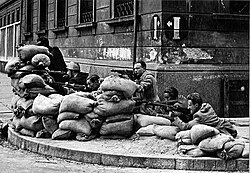
Italian anti-fascist partisans in Milan during the liberation of Italy, April 1945
Results of the 1946 referendum

Summary of the Kingdom of Italy

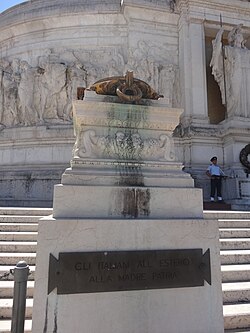
One of the two braziers that burn perpetually on the sides of the tomb of the Italian Unknown Soldier at Altare della Patria in Rome. At their base there is a plaque bearing the inscription Gli italiani all'estero alla Madre Patria ("Italians abroad to the Motherland").
Category Details
Monarchs Victor Emmanuel II, Umberto I, Victor Emmanuel III, Umberto II
Key Prime Ministers Count of Cavour, Benito Mussolini, Alcide De Gasperi
Official Language Italian
State Religion Catholicism (Official from 1929)
Currency Lira (₤)
Peak Population Approx. 45.38 million (1946)

Frequently Asked Questions
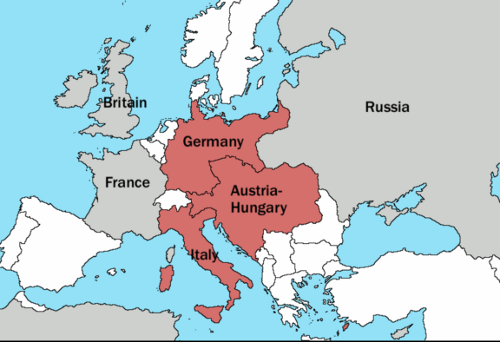
The Triple Alliance in 1913, shown in red
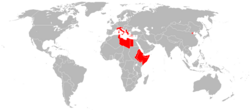
Italian Empire at greatest extent in 1942-43.
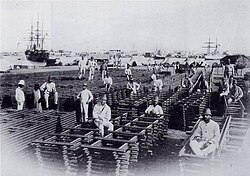
Members of the Ferrovieri Engineer Regiment during the construction of the rails to connect Massawa to Saati in Italian Eritrea, 1886.
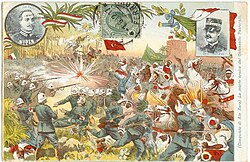
The Ain Zara oasis during the Italo-Turkish War: propaganda postcard made by the Italian Army
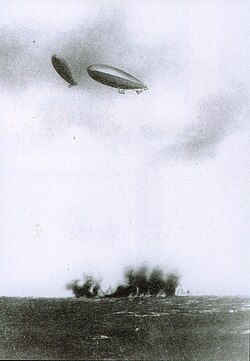
Italian dirigibles bomb Turkish positions in Libya, as the Italo-Turkish War of 1911–1912 was the first in history in which air attacks (carried out here by dirigible airships) determined the outcome.
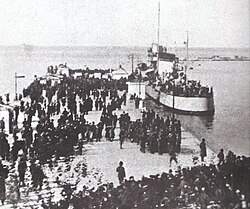
Italian troops landing in Trieste, 3 November 1918
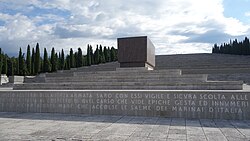
The Redipuglia War Memorial of Redipuglia, with the tomb of Prince Emanuele Filiberto, Duke of Aosta in the foreground
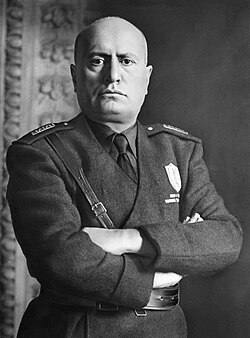
Benito Mussolini, who titled himself Duce ruled the country from 1922 to1943.
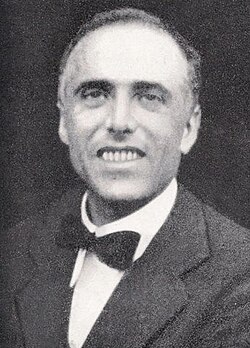
Socialist leader Giacomo Matteotti was murdered a few days after he openly denounced Fascist violence during the 1924 elections.
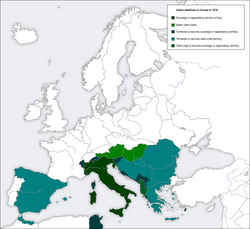
Ambitions of Fascist Italy in Europe in 1936.Legend: Metropolitan Italy and dependent territories; Claimed territories to be annexed; Territories to be transformed into client states. Albania, which was a client state, was considered a territory to be annexed.
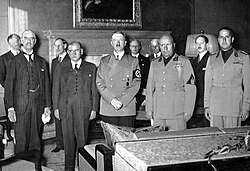
Chamberlain, Daladier, Hitler, Mussolini, and Italian foreign minister Count Ciano, as they prepared to sign the Munich Agreement
From left to right: Chamberlain, Daladier, Hitler, Mussolini and Italian foreign minister Count Ciano at the signing of Munich Agreement
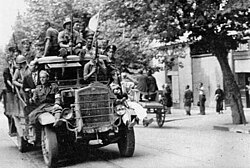
Insurgents celebrating the liberation of Naples, after the Four days of Naples (27–30 September 1943)
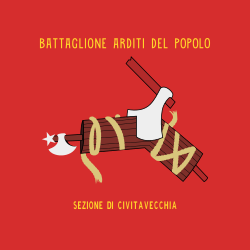
Flag of Arditi del Popolo, an axe cutting a fasces. Arditi del Popolo was a militant anti-fascist group founded in 1921.
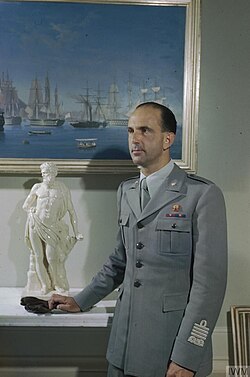
Umberto II, the last king of Italy
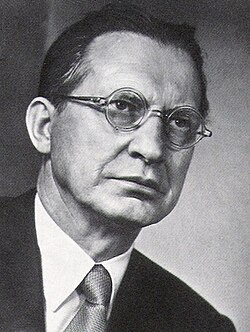
Alcide De Gasperi, first republican Prime Minister of Italy and one of the founding fathers of the European Union

How was the Kingdom of Italy formed?

It was formed through the Risorgimento, a process of unification led primarily by the Kingdom of Sardinia, which merged various Italian states into a single kingdom proclaimed on March 17, 1861.

What was the "Roman Question"?

The Roman Question referred to the political dispute between the Italian state and the Papacy regarding the temporal power of the Pope. It was resolved in 1929 with the Lateran Treaty, which established Vatican City as an independent state.

Who was the last King of Italy?

The last king was Umberto II, known as the "May King," who reigned briefly in 1946 before the monarchy was abolished.

Why did the monarchy end in 1946?

The monarchy ended due to widespread civil discontent and the House of Savoy's association with the fascist regime of Benito Mussolini. A national referendum on June 2, 1946, led the people to choose a republic over a monarchy.

What role did the House of Savoy play?

The House of Savoy provided the royal lineage for the kingdom, with its members serving as the kings of Italy from the unification in 1861 until the transition to a republic in 1946.