First Vatican Council: Papal Infallibility and the Church's Response to Modernity
The First Vatican Council, commonly known as Vatican I, stands as one of the most pivotal events in the modern history of the Catholic Church. Convoked by Pope Pius IX, this 20th ecumenical council sought to define the Church's position in an era of rapid intellectual and political upheaval. Held three centuries after the Council of Trent, Vatican I was not merely a theological gathering but a response to the encroaching pressures of the 19th century.
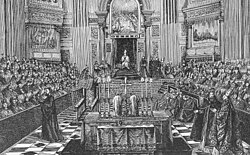
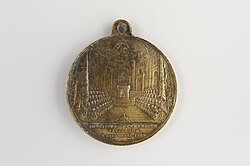
The council opened on December 8, 1869, in St. Peter's Basilica. Unlike previous Roman councils that met in the Lateran Basilica, this assembly's location in the Vatican gave the council its name. It brought together approximately 744 ecclesiastics from across the globe to address the challenges of a changing world.
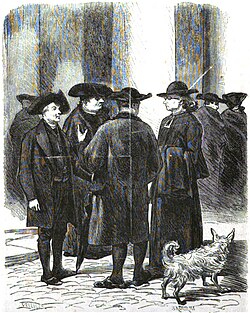
Key Facts
- Dates: December 8, 1869, to September 20, 1870.
- Convoked by: Pope Pius IX.
- Primary Outcome: The definition of papal infallibility.
- Major Documents: Dei Filius and Pastor aeternus.
- Ending Event: The council was adjourned indefinitely following the Italian Capture of Rome.
The Theological Battle Against Modernity
The primary objective of Vatican I was to clarify Catholic doctrine against the rising influence of modern philosophical trends. The council sought to protect the faith from what it perceived as dangerous errors of the age.
Dei Filius and the Catholic Faith
On April 24, 1870, the council unanimously adopted the dogmatic constitution Dei Filius. This document focused on the nature of God, revelation, and faith. In doing so, it formally condemned several 19th-century intellectual movements, including rationalism (the belief that reason is the only source of knowledge), materialism, liberalism, socialism, and secularism.
The Doctrine of Papal Infallibility
The most debated and enduring legacy of the council was the definition of the primacy and infallibility of the Bishop of Rome. This was detailed in the constitution Pastor aeternus.
Defining the Dogma
The council defined that the Pope is infallible when speaking ex cathedra (from the chair), meaning when he defines a doctrine concerning faith or morals to be held by the whole Church. It also asserted that the Pope possesses full and supreme power of jurisdiction over the entire Church.
Internal Resistance and Debate
The proposal was not without controversy. While a majority of bishops supported strengthening papal authority, a minority (roughly 10%) opposed the formal definition. These dissenters, including many German, Austro-Hungarian, and American bishops, feared that such a proclamation would alienate non-Catholics and provoke government interference in church affairs. Despite these concerns, the final vote on July 18, 1870, was overwhelmingly in favor, with 533 votes for and only two against.
Political Turmoil and the Capture of Rome
The council's proceedings were inextricably linked to the political instability of the Italian peninsula. As the Kingdom of Italy sought to unify, the Papal States were under constant threat.
The council was abruptly interrupted by the Franco-Prussian War. When French troops—who had been protecting the Pope—withdrew from Rome in September 1870, Italian forces occupied the city. Pope Pius IX, considering himself a prisoner in the Vatican, issued the bull Postquam Dei munere on October 20, 1870, adjourning the council indefinitely.
Aftermath and the Old Catholic Schism
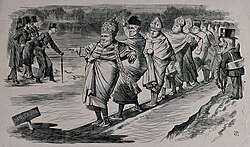
The proclamation of infallibility had immediate geopolitical and ecclesiastical consequences. Several European states reacted harshly; the Austrian Empire annulled its concordat with the Church, and Prussia entered a period of anti-Catholic struggle known as the Kulturkampf.
Within the Church, a minority of clergy and laity, inspired by historian Ignaz von Döllinger, refused to accept the dogma. This led to the formation of the Old Catholic Church. This group eventually formed the Union of Utrecht in 1889 and later entered into communion with the Anglican Communion in 1931.
| Category | Details |
|---|---|
| Key Constitutions | Dei Filius (Faith) and Pastor aeternus (Church/Papacy) |
| Core Dogma | Papal Infallibility (when speaking ex cathedra) |
| Condemned Trends | Rationalism, Materialism, Liberalism, Secularism |
| Major Schism | Formation of the Old Catholic Church |
| Political Result | End of the Papal States via the Capture of Rome |
Frequently Asked Questions
What does "ex cathedra" mean in the context of Vatican I?
It is a Latin term meaning "from the chair." In the context of the council, it refers to the specific instances when the Pope exercises his supreme apostolic authority to define a doctrine on faith or morals to be held by the entire Church.
Why was the First Vatican Council adjourned indefinitely?
The council was cut short by the Capture of Rome on September 20, 1870, when the Kingdom of Italy occupied the city following the withdrawal of French protective forces during the Franco-Prussian War.
Who were the Old Catholics?
The Old Catholics were a minority of Catholic clergy and laity who broke away from the Roman Catholic Church in protest against the definition of papal infallibility.
What was the purpose of the document Dei Filius?
Dei Filius was a dogmatic constitution intended to clarify the Church's teaching on God, revelation, and faith while condemning modern philosophical errors like rationalism and materialism.
How many bishops opposed the definition of papal infallibility?
While a small minority (about 10%) expressed concerns during the debates, only two bishops—Aloisio Riccio and Edward Fitzgerald—voted against the final definition of the dogma.