Pope Pius IX: The Longest Pontificate and the Transition to Modernity
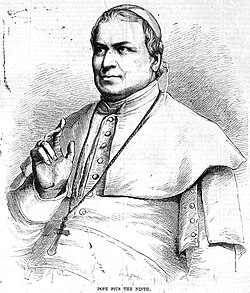
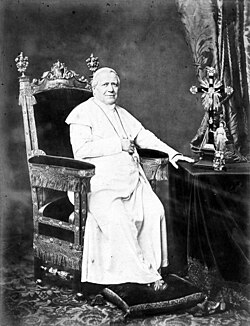
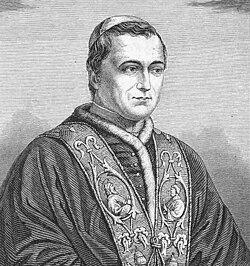
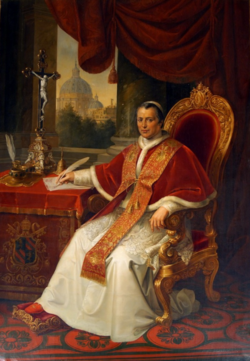
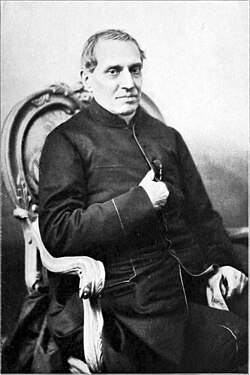
Pope Pius IX, born Giovanni Maria Battista Pietro Pellegrino Isidoro Mastai-Ferretti, stands as one of the most consequential figures in the history of the Catholic Church. Serving as the Bishop of Rome from June 16, 1846, until his death on February 7, 1878, his reign of nearly 32 years is the longest verified pontificate in history, second only to Saint Peter according to Catholic tradition.
His papacy was defined by a dramatic tension between ancient ecclesiastical authority and the rising tide of modern nationalism and liberalism. From the definition of core dogmas to the loss of the Papal States, Pius IX navigated a world in flux, ultimately transforming the role of the pope from a temporal monarch to a global spiritual leader.
Key Facts
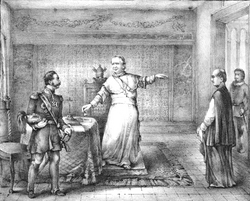
![Pius IX in audience with King Francis II of the Two Sicilies in 1862[19]](/images/a2/5c/a25c72184440052862c4a64dd33dfe06410cf34323461e352dd6917a333a2241.jpg)
- Longest Reign: Held the papacy for nearly 32 years (1846–1878).
- Dogmatic Definitions: Promulgated the dogma of the Immaculate Conception (1854) and defined papal infallibility at the First Vatican Council.
- Temporal Loss: The last pope to rule the Papal States as a secular monarch before the capture of Rome in 1870.
- Literary Output: Issued a record 38 encyclicals during his tenure.
- Beatification: Beatified by Pope John Paul II on September 3, 2000.
Early Life and Rise to the Papacy
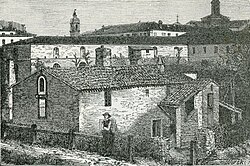
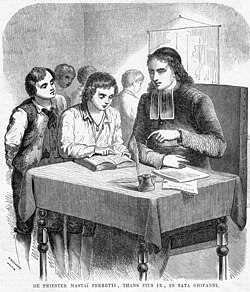
Born in Senigallia in the Papal States on May 13, 1792, Mastai-Ferretti's path to the papacy was marked by steady ecclesiastical ascent. He was ordained as a priest on April 10, 1819, and later served in various capacities, including as the head of the Hospital of San Michele and the Archbishop of Spoleto.
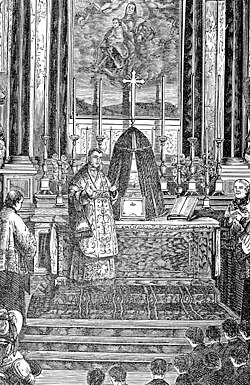
His leadership capabilities led to his appointment as the Archbishop-Bishop of Imola in 1832. He was created a cardinal in pectore (secretly) by Pope Gregory XVI in 1839, with the appointment being revealed to the public in December 1840. Following the death of Gregory XVI, he was elected pope in 1846.
The First Vatican Council and Theological Legacy
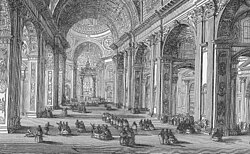
Pius IX is perhaps best known for his efforts to centralize church authority and clarify Catholic doctrine. In 1854, he promulgated the dogma of the Immaculate Conception, the belief that Mary, the Mother of God, was conceived without original sin.
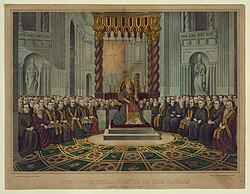
In 1868, he convoked the First Vatican Council. This landmark assembly defined the dogma of papal infallibility, which asserts that the pope is preserved from error when speaking ex cathedra (from the chair) on matters of faith and morals. However, the council never reconvened after a summer break in 1870 due to political upheaval in Europe.
Beyond councils, Pius IX was a prolific writer. He issued 38 encyclicals, including the 1864 Syllabus of Errors. This document served as a stern condemnation of modernism, secularization, and the separation of church and state, reflecting his opposition to the Enlightenment ideas of his era.
The Fall of the Papal States
For centuries, popes acted as both spiritual leaders and secular monarchs. Pius IX ruled over approximately 3 million subjects in the Papal States. However, the mid-19th century brought the rise of Italian unification (the Risorgimento). In February 1849, a Roman Republic was declared, forcing the pope into exile in Gaeta.
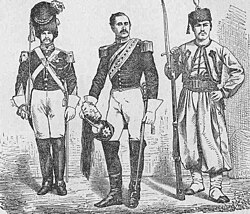
Although he returned to Rome in 1850, the geopolitical landscape had shifted. The Franco-Prussian War led to the withdrawal of French protective troops, enabling the Kingdom of Italy to capture Rome on September 20, 1870. Refusing to recognize the new Italian state's authority, Pius IX declared himself a "prisoner in the Vatican," a status that remained until the Lateran Treaty of 1929.
Administration and Modernization
Despite his theological conservatism, Pius IX embraced certain technological advancements. After experiencing a train journey in the Kingdom of the Two Sicilies, he promoted the development of a railroad network in the Papal States, which grew to 317 kilometers by 1870. He also introduced gas lighting and the electrical telegraph to his domains.
In terms of governance, he introduced the "Fundamental Statute for the Secular Government of the States of the Church" in 1848. While the clergy maintained key decision-making power, financial administration was increasingly shifted toward lay experts. In 1866, he replaced the old Roman scudo with the papal lira upon joining the Latin Monetary Union.
Summary of Pontificate
| Category | Details |
|---|---|
| Reign Dates | June 16, 1846 – February 7, 1878 |
| Key Dogmas | Immaculate Conception, Papal Infallibility |
| Major Council | First Vatican Council (1869–1870) |
| Political Shift | Loss of Papal States to the Kingdom of Italy (1870) |
| Technological Gains | Railroads, Gas Lighting, Electrical Telegraph |
| Encyclicals | 38 total |
Final Years and Beatification
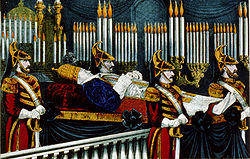
Pius IX died on February 7, 1878, at the age of 85. His death was caused by epilepsy, which triggered a seizure and a subsequent heart attack. His final words were a plea to "Guard the Church I loved so well and sacredly."
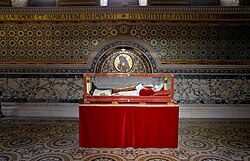
His path to beatification was long and contested, particularly by the Italian government. However, Pope John Paul II declared him Venerable in 1985 and beatified him in 2000. While celebrated by many, his legacy remains a subject of debate among historians due to his reactionary politics and his handling of the Roman ghetto.
Frequently Asked Questions
How long did Pope Pius IX reign?
Pope Pius IX reigned for nearly 32 years, from 1846 to 1878, making his the longest verified pontificate in history.
What is the "Syllabus of Errors"?
The Syllabus of Errors was a document issued in 1864 that condemned various modern ideologies, including liberalism, moral relativism, and the separation of church and state.
Why did Pius IX call himself a "prisoner in the Vatican"?
He used this term after the Kingdom of Italy captured Rome in 1870, as he refused to recognize the legitimacy of the new state and remained within the Vatican walls.
What was the significance of the First Vatican Council?
The First Vatican Council is most notable for defining the dogma of papal infallibility, asserting that the pope is preserved from error when officially defining doctrines of faith and morals.
Did Pope Pius IX support any modern technology?
Yes, despite his theological conservatism, he promoted the construction of railroads, the introduction of gas lighting, and the use of the electrical telegraph in the Papal States.