Papal Infallibility: Doctrine, History, and Application in the Catholic Church
Papal infallibility is a central dogma of the Catholic Church asserting that the pope is preserved from error when defining specific doctrines of faith or morals. This belief is rooted in the promise of Jesus to the Apostle Peter, ensuring that the guidance of the Church remains steadfast. Contrary to common misconceptions, this doctrine does not imply that the pope is incapable of sinning or making personal errors; rather, it applies strictly to formal teachings issued under specific, rigorous conditions.
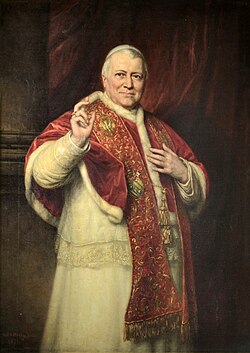
The doctrine was formally defined during the First Vatican Council (1869–1870) in the document Pastor aeternus. It relies on the principle of papal supremacy, which establishes the pope's authority as the ruling agent regarding the formal beliefs accepted by the Catholic Church.
Key Facts
- Definition: The pope is preserved from error when speaking ex cathedra on faith or morals.
- Formalization: Dogmatically defined at the First Vatican Council (1869–1870).
- Scope: Applies only to doctrines initially given to the apostolic Church and handed down via Scripture and tradition.
- Ex Cathedra: Latin for "from the chair," referring to the pope speaking in his official capacity as pastor and teacher of the Universal Church.
- Rarity: Very few statements in history have met the strict criteria for an infallible declaration.
The Nature and Conditions of Infallibility
For a teaching to be considered infallible, it must meet several strict criteria. It is not every word spoken by a pope that is considered without error. Instead, the declaration must be an ex cathedra statement.
Requirements for an Infallible Declaration
- Authority: The statement must be made by the Roman pontiff, either alone or in conjunction with the College of Bishops.
- Subject Matter: The teaching must concern matters of faith or morals.
- Intent: The pope must intend for the doctrine to be held definitely and believed as divinely revealed by the universal church.
- Formal Act: The declaration must follow a solemn defining act by the pope or an Ecumenical council.
Theological and Historical Background
While formally defined in 1870, the Catholic Church claims that the essence of infallibility existed in medieval theology and was a majority opinion during the Counter-Reformation. Historical evidence points to early developments of this thought, such as the Formula of Hormisdas in 519, which presented the Bishop of Rome as the preserver of apostolic truth.
Medieval and Early Modern Influence
The Dictatus papae, attributed to Pope Gregory VII around 1075, asserted that the Roman church had never erred and would not err for all eternity. Later, during the Counter-Reformation, the Dominican school of theology at the Roman College of Saint Thomas (now the Pontifical University of Saint Thomas Aquinas) actively defended the doctrine. Theologians like Vincentius Ferre and Dominic Gravina argued that infallibility was promised specifically to the head of the Church, Peter, and his successors.
![Pope Leo XIII, as Bishop of Rome and successor of the Apostle Peter, represented as guiding the ship of God's Church (painting by Friedrich Stummel in Kevelaer Shrine 1903).[38][full citation needed]](/images/a3/c4/a3c46434948ef521bc6410782650b57488314c7a0c4d266fa9039973e4bdb3e7.jpg)
Operation and Instances of Infallibility
Infallible declarations are rare. Many papal teachings are authoritative but do not meet the ex cathedra threshold. Scholars note that the popes often consult with bishops before making such solemn declarations.
Notable Examples of Infallible Statements
| Document/Event | Pope/Council | Year | Subject |
|---|---|---|---|
| Tome to Flavian | Pope Leo I | 449 | Two natures in Christ |
| Letter of Pope Agatho | Pope Agatho | 680 | Two wills of Christ |
| Cum occasione | Pope Innocent X | 1653 | Condemnation of Jansenist propositions |
| Ineffabilis Deus | Pope Pius IX | 1854 | Immaculate Conception |
| Munificentissimus Deus | Pope Pius XII | 1950 | Assumption of Mary |
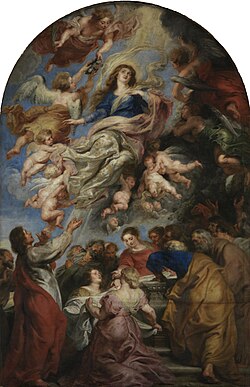
The 1950 definition of the Assumption of Mary is recognized as the only ex cathedra application of papal infallibility since the formal declaration of the dogma in 1870.
Objections and Perspectives
The doctrine has faced opposition from various quarters, both within and outside the Catholic Church.
Catholic and Internal Objections
Even before the First Vatican Council, some Catholics expressed doubt. French abbé François-Philippe Mesenguy and German professor Felix Blau criticized the lack of a clear mandate for infallibility in Scripture. In modern times, surveys have shown a divide among young Catholics regarding the pope's authority to speak infallibly.
Protestant and Ecumenical Views
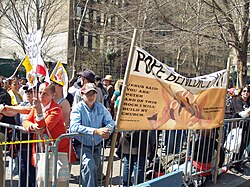
Protestant critics often argue that there is no biblical precedent for Petrine infallibility. They frequently cite Revelation 22:18 to suggest that no new revelations were intended after the New Testament era. Other Christian denominations, including Eastern Orthodox, Anglican, and Reformed churches, maintain different views on papal primacy and the nature of revelation.
Frequently Asked Questions
Does papal infallibility mean the pope is perfect?
No. The doctrine does not mean the pope cannot sin or make mistakes in his personal life or general comments. It only applies to specific, formal declarations on faith and morals made ex cathedra.
What does "ex cathedra" actually mean?
Ex cathedra is a Latin phrase meaning "from the chair." In a theological context, it refers to the pope speaking in his official capacity as the successor of St. Peter and the teacher of the Universal Church.
How often does the pope speak infallibly?
Very rarely. Since the dogma was formally defined in 1870, the only recognized ex cathedra statement was the definition of the Assumption of Mary in 1950.
Who defined the doctrine of papal infallibility?
The doctrine was dogmatically defined by the First Vatican Council during its sessions in 1869 and 1870, specifically within the document Pastor aeternus.
Is the pope's authority based on the Bible?
The Catholic Church bases this authority on the promises made by Jesus to the Apostle Peter, particularly the Petrine primacy described in the New Testament.