The Papacy: History, Authority, and the Role of the Bishop of Rome
The Papacy represents one of the oldest and most influential institutions in human history. At its core, the office of the Pope—the Bishop of Rome—serves as the central leadership of the Catholic Church. From its origins in the first century to its current status as the sovereign head of Vatican City, the papacy has evolved from a local ecclesiastical role into a global spiritual and political authority.
The term "Pope" is derived from the Latin papa, which comes from the Ancient Greek pappas, meaning "father." Throughout history, the holder of this office has been known by various titles, including the Roman Pontiff and Pontifex Maximus (Supreme Pontiff), reflecting both the spiritual and administrative duties of the role.
Key Facts
- First Holder: Saint Peter, established in the 1st century.
- Current Incumbent: Pope Leo XIV (elected May 8, 2025).
- Official Residence: The Apostolic Palace in Vatican City.
- Primary Titles: Vicar of Jesus Christ, Supreme Pontiff, and Servant of the Servants of God.
- Governance: The Pope governs the Catholic Church through the Holy See and serves as the Sovereign of the Vatican City State.
The Origins and Theological Foundation
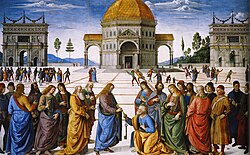
The Catholic Church traces the origin of the papal office to Saint Peter. This claim is rooted in biblical passages, such as Matthew 16:18–19, where Jesus establishes Peter as the "rock" upon which the church will be built, and John 21:17, where Peter is charged to "feed my sheep."
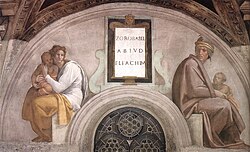
Early Christian mentions of papal primacy are found in the writings of the Church Fathers. Figures such as Irenaeus of Lyons, Ignatius of Antioch, and Cyprian of Carthage emphasized the importance of the Roman see. Additionally, some theologians draw parallels between the papal office and the biblical figure of Eliakim, who held the key to the house of David (Isaiah 22:22).
Historical Evolution of the Papacy
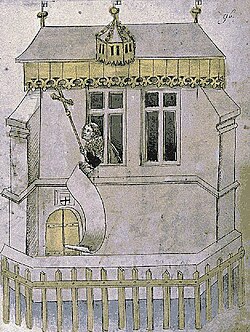
Early Christianity and the Great Schism
From the 1st century through the Council of Nicaea (325 AD), the Bishop of Rome gradually emerged as a leading figure among the early Christian communities. However, tensions between the Latin-speaking West and the Greek-speaking East eventually led to the East-West Schism of 1054, a fundamental split that created the Roman Catholic and Eastern Orthodox churches.
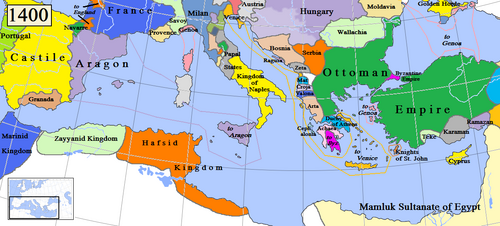
The Middle Ages and the Reformation
During the Middle Ages, the papacy expanded its temporal power, often clashing with European monarchs. This period also saw the Western Schism (1378–1417), a time when multiple claimants asserted they were the true pope. The crisis was eventually resolved at the Council of Konstanz in 1417 with the election of Pope Martin V.
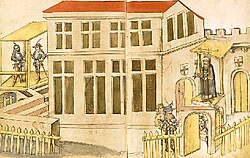
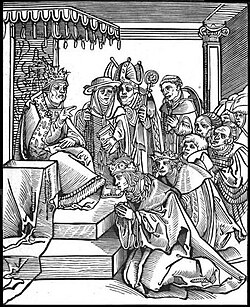
The 16th-century Reformation brought severe challenges to papal authority. Protestant reformers, such as Martin Luther, criticized the sale of indulgences and the temporal power of the pope. This era produced stark artistic contrasts, such as the works of Lucas Cranach the Elder, who depicted the pope as the "Antichrist" in opposition to the humility of Christ.
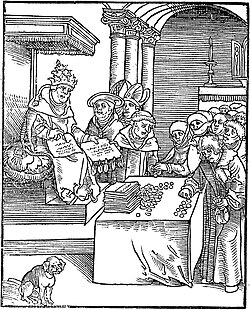
The Catholic Reformation to the Modern Era
In response to the Reformation, Pope Paul III initiated the Council of Trent (1545–1563), which reaffirmed papal claims and established the framework for the Catholic Reformation.
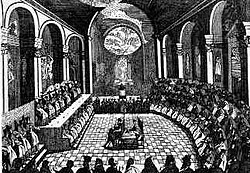
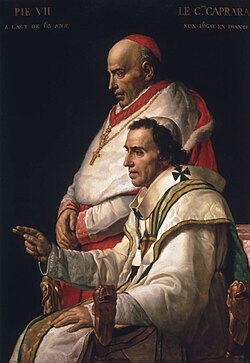
In the modern era, the papacy has transitioned from a territorial power to a primarily spiritual and diplomatic one. The First Vatican Council defined the dogma of papal infallibility, while the Second Vatican Council (1962–1965) sought to modernize the church's relationship with the contemporary world.
Governance and the Holy See
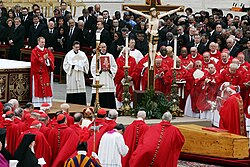
The Pope holds a unique dual role: he is the spiritual leader of the worldwide Catholic Church and the Sovereign of the Vatican City State, a sovereign entity established on February 11, 1929. The Holy See is the jurisdiction of the pope and the central government of the Catholic Church.
The Pope's official duties include the pastoral care of the Diocese of Rome, with the Archbasilica of Saint John Lateran serving as his cathedral. His international position allows him to engage in global diplomacy and advocate for peace and human rights.
Papal Tenure: Longest and Shortest Reigns
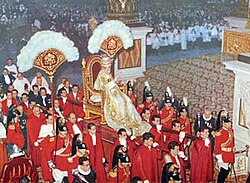
The length of a papal reign varies wildly, from decades of stability to brief transitions.
| Category | Pope | Duration |
|---|---|---|
| Longest (Estimated) | Saint Peter | c. 34–38 years |
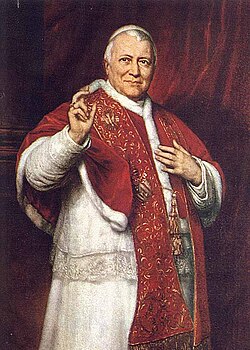
| Longest (Verifiable) | Pius IX | 31 years, 7 months, 23 days |
| Notable Long Reign | John Paul II | 26 years, 5 months, 18 days |
| Shortest | Boniface VI | 16 calendar days |
| Notable Short Reign | John Paul I | 34 calendar days |
Frequently Asked Questions
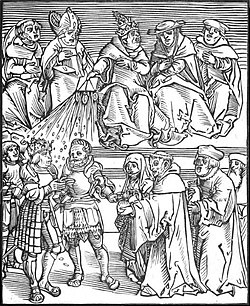
![Christus, by Lucas Cranach. This woodcut of John 13:14–17 is from Passionary of the Christ and Antichrist.[226] Cranach shows Jesus kissing Peter's foot during the footwashing. This stands in contrast to the opposing woodcut, where the pope demands others kiss his foot.](/images/f5/00/f50023e2050649d31bf5a403d9ab0c6ea1820be24b6ccf88b795cd4286edf014.jpg)
How is a new Pope elected?
A new Pope is elected through a conclave, a private meeting of the College of Cardinals. The process concludes when a candidate receives a two-thirds majority vote, signaled to the public by white smoke rising from the Sistine Chapel.
What is the difference between the Pope and the Holy See?
The Pope is the individual person who holds the office of the Bishop of Rome. The Holy See is the legal and diplomatic entity that represents the central government of the Catholic Church.
What does "Papal Infallibility" mean?
Papal infallibility is the belief that the Pope is preserved from error when he speaks ex cathedra (from the chair) to define a doctrine concerning faith or morals to be held by the whole church.
Where does the Pope live?
The Pope's official residence is the Apostolic Palace in Vatican City, though he also has an official summer residence at the Palace of Castel Gandolfo.
Can a Pope resign?
Yes, although it is rare in history, a Pope has the authority to resign from the office, as seen in the modern era with Pope Benedict XVI.