The Life and Legacy of Archbishop Thomas Croke: A Champion of Faith and Nationalism
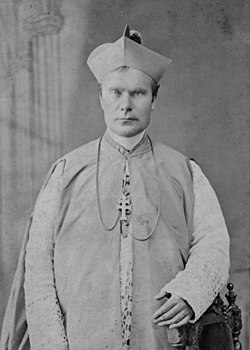
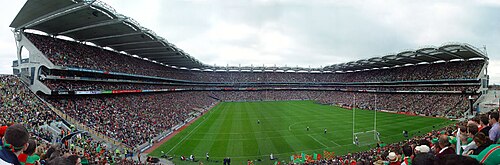
For many, the name Croke is synonymous with the roar of the crowd at Croke Park, the iconic headquarters of the Gaelic Athletic Association (GAA) in Dublin. However, the stadium is named in honor of a man whose influence extended far beyond the sidelines of sport. Thomas William Croke was a formidable ecclesiastical leader and a passionate advocate for Irish independence, serving as both the Bishop of Auckland and the Archbishop of Cashel and Emly.
Early Life and Academic Foundations
Thomas Croke was born on May 28, 1824, in Castlecor, within the parish of Kilbrin, County Cork. He was the third of eight children born to William Croke, an estate agent, and Isabella Plummer. His family background was marked by religious conviction; his mother, from an aristocratic Protestant family, had been disowned following her Catholic marriage in 1817.
Following the death of his father in 1834, Thomas and his siblings were raised under the supervision of his uncle, the Reverend Thomas Croke. The family's devotion to the church was evident, as two of Thomas's brothers became priests and two sisters entered convents. Thomas pursued an elite education in Charleville, County Cork, and later at the Irish Colleges in Paris and Rome. He achieved significant academic success, earning a Doctor of Divinity—the highest academic degree in theology—with honors.
Ordained in May 1847, Croke initially served as a professor at Carlow College. His early adulthood was touched by the political volatility of the era; the Irish radical William O'Brien noted that Croke fought on the barricades during the 1848 French Revolution. After spending 23 years working in Ireland, including a tenure as the first president of St Colman's College in Fermoy and serving as Vicar General of the Cloyne diocese, Croke's life took an international turn.
The Auckland Episcopacy
In 1870, Croke was appointed the second Catholic Bishop of Auckland, New Zealand. This appointment was strongly supported by Cardinal Paul Cullen, the Archbishop of Dublin, who sought to place Irish clergy in leadership roles across the Australasian church.
Upon arriving in Auckland on December 17, 1870, Croke found a diocese—the district under the pastoral care of a bishop—in a state of disarray. He utilized his personal wealth, bolstered by an inheritance from his uncle James Croke, to stabilize the church's finances. He further capitalized on the economic boom from the Thames goldfields to ensure that surplus income from parishes in Thames and Coromandel supported the diocese, while implementing a stricter collection system at St Patrick's Cathedral.
Croke's tenure in New Zealand was characterized by a focus on the Irish immigrant community. He imported Irish clergy to meet the needs of the growing population and advocated for the right of Catholic schools to receive state aid. He was a vocal opponent of the Education Act 1872, which established a free, secular, and compulsory education system in New Zealand. Despite his administrative success, Croke departed for Europe in January 1874 and never returned to New Zealand.
Return to Ireland: The Archbishop of Cashel
In 1875, Croke returned to his homeland to become the Archbishop of Cashel and Emly, one of the four primary archbishoprics in Ireland. It was during this period that Croke emerged as a central figure in the Irish nationalist movement.
He aligned himself with Charles Stewart Parnell and the Irish National Land League during the Land War, a period of intense agitation for land reform. While he opposed the "No Rent Manifesto" of 1881 on practical grounds, he expressed a principled support for the idea of refusing to pay taxes to the British government. His nationalist credentials were further cemented by his financial contributions to funds for released Fenian prisoners and a monument for the Manchester Martyrs.
Theologically, Croke was a proponent of Gallicanism, a movement that advocated for a degree of autonomy for the national church from the absolute authority of the Pope. This put him at odds with the Ultramontanism favored by Cardinal Cullen, which emphasized total papal centralization. Croke also supported the Temperance Movement and the Gaelic League.
His political activism made him a target of suspicion for the British government and some of his fellow bishops. However, he eventually withdrew from active nationalist politics following the public scandal involving Charles Stewart Parnell and Katharine O'Shea.
A Legacy of Nationalism and Sport
Archbishop Croke passed away on July 22, 1902, at the Archbishop's Palace in Thurles, County Tipperary, at the age of 78. He was buried in the Cathedral of the Assumption in Thurles.
His enduring legacy is most visible in the naming of Croke Park, the stadium that serves as the heart of Gaelic games. For decades, his successors as Archbishop of Cashel and Emly maintained a tradition of throwing in the ball at the All-Ireland hurling finals and minor Gaelic football finals, a practice that continued until 1964.
Summary of Archbishop Thomas Croke's Life
| Category | Details |
|---|---|
| Lifespan | May 28, 1824 – July 22, 1902 |
| Education | Irish College in Paris; Irish College in Rome (Doctor of Divinity) |
| Bishop of Auckland | 1870–1874 |
| Archbishop of Cashel and Emly | 1875–1902 |
| Key Political Affiliations | Irish National Land League, Gaelic League, Charles Stewart Parnell |
| Major Legacy | Croke Park Stadium, Dublin |