The All-Ireland Men's Senior Football Championship: A Legacy of Gaelic Sport
For over a century, the All-Ireland Men's Senior Football Championship has stood as the pinnacle of Gaelic football. Organized by the Gaelic Athletic Association (GAA)—the governing body for Gaelic games—this annual competition brings together the finest inter-county teams from across Ireland in a high-stakes battle for sporting glory during the summer and early autumn.
The tournament is more than just a series of games; it is a cultural phenomenon. The competition traditionally reaches its climax on the third or fourth Sunday of September, though since 2022, the final has been played on the third Sunday of July. The ultimate prize for the victorious team is the prestigious Sam Maguire Cup.
The Evolution of the Championship
Founded in 1887, the championship has been contested every year with only one exception: 1888, when the competition was halted due to a tour of the United States. In its infancy, the tournament featured club teams representing their counties. The first final, held on April 29, 1888, in Beech Hill, Donnybrook, saw the Commercials of Limerick defeat the Young Irelands of Louth with a score of 1–4 to 0–3.
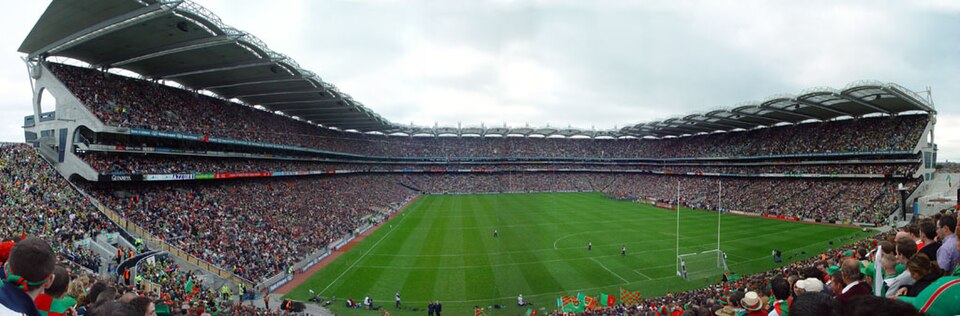
While early finals were hosted across various venues in Dublin, Cork, Kildare, and Tipperary, the landscape changed in 1913 when the GAA acquired Croke Park in Dublin. Since then, Croke Park has served as the permanent home of the final, with the sole exception of 1947, when the match was played at the Polo Grounds in New York.
The Rise of the Dynasties
The early era of the championship was dominated by teams from the southern province of Munster, specifically Limerick, Tipperary, and Cork. However, the 20th century saw the emergence of Kerry, who claimed their first title in 1903. Kerry has since become the most successful team in the history of the competition, securing 39 titles as of 2025, including two separate "four-in-a-row" streaks (1929–32 and 1978–81).
Other provinces eventually broke through, with Galway becoming the first team from Connacht to win in 1925, and Cavan leading the way for Ulster in 1933. The mid-century period saw various teams achieve multiple titles, such as Wexford, who won four consecutive championships between 1915 and 1918, and Kildare, who became the first winners of the Sam Maguire Cup in 1928.
The Mayo Narrative and Ulster's Dominance
One of the most enduring stories in the championship is that of Mayo. After winning the title in 1951, Mayo entered a historic drought, appearing in 11 finals between 1989 and 2021 without a single victory. This longest unbroken sequence of losing finals in the competition's history finally ended in 2026, when Mayo defeated Kerry by three points.
The 1990s marked a significant shift in power toward the north. Between 1991 and 1994, an Ulster team won the championship for four consecutive years. Over the following 25 years, Ulster produced more All-Ireland winning teams than any other province.
Technical Changes and Format Shifts
The rules and structure of the All-Ireland Championship have evolved to increase competitiveness and excitement. One of the most significant changes was the introduction of the qualifier system (often called the "back door") in 2001. This allowed teams that lost in their provincial championships a second chance to reach the final. A prime example occurred in 2001, when Galway won the All-Ireland despite an earlier loss to Roscommon.
More recently, the competition transitioned to a round robin system in 2023, moving away from the traditional straight knockout format in certain stages.
Scoring and Timing
The way the game is played and scored has also shifted over time:
- Scoring: Originally, a goal outweighed any number of points. In 1892, a goal was valued at five points, which was later reduced to the current value of three points in 1896.
- Match Duration: During the 1970s, the duration of provincial finals, All-Ireland semi-finals, and finals was increased from 60 to 80 minutes. By 1975, the duration was settled at the current 70 minutes.
Championship Summary
The following table provides a snapshot of the championship's historical and organizational framework.
| Category | Detail |
|---|---|
| Founded | 1887 |
| Governing Body | Gaelic Athletic Association (GAA) |
| Primary Trophy | Sam Maguire Cup |
| Most Successful Team | Kerry (39 titles) |
| Primary Venue | Croke Park, Dublin |
| Highest Attendance | 90,556 (1961 Final) |
Notable Historical Anomalies
The championship's long history includes several unusual events:
- The 1894 Replay: Abandoned after Dublin players walked off following assaults by Cork supporters; Dublin was awarded the title.
- The 1910 Final: Louth was awarded the championship after Kerry refused to travel to Dublin due to a dispute over railway ticket prices.
- Pandemic Adjustments: Recent finals were impacted by the COVID-19 pandemic, with games played either behind closed doors or at 50% capacity.