Zweibrücken Culture, Architecture, and Landmarks
Known to many as the Rose City, Zweibrücken is a destination where botanical beauty meets a rich historical legacy. From its sprawling gardens to its Baroque palaces and scientific libraries, the city offers a deep dive into the heritage of the Palatinate region. The city's cultural identity is further celebrated through the Rose Queen, a representative elected every two years to embody the spirit of the town.
The World-Renowned Rosarium
Zweibrücken is home to one of the largest Rosariums in the world, a botanical marvel featuring 1,500 species and approximately 45,000 plants. The site is divided into two distinct areas. The main garden spans 50,000 square meters, while a second, smaller garden located at the Fasanerie focuses on wild rose plants and is accessible to the public free of charge.
Historic Architecture and Palaces
The city's skyline is defined by its grand secular and religious buildings, many of which showcase the Nordic Baroque style—a regional variation of the ornate Baroque movement.
Zweibrücken Castle (Das Schloss Zweibrücken)
Built between 1720 and 1725 by master builder Jonas Erikson Sundahl, the castle served as the former residence of the Dukes of Zweibrücken. It stands as the largest Palatine secular building in the Nordic Baroque style. Although destroyed during World War II, it was rebuilt in 1965 and currently serves as the seat of the Palatinate Higher Regional Court.
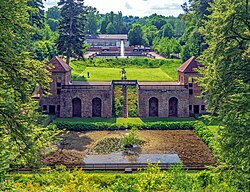
Lustschloss Tschifflik and Fasanerie
The Lustschloss Tschifflik was commissioned by Polish King Stanisław Leszczyński. The complex draws inspiration from the monarch's time in Bessarabia, which is reflected in the Turkish name "Tschifflik." Inside the fireplace room, visitors can find portraits of King Stanisław, his wife Katharina, and their daughters, Anna and Maria.
The Herzogvorstadt
The Herzogvorstadt is a complex of Baroque buildings constructed between 1762 and 1772 based on plans by Christian Ludwig Hautt. Unlike many other city structures, these buildings survived the wars and now house the city archive, the city museum, the district court, and the city administration.
Sacred Sites and Historic Landmarks
Zweibrücken's spiritual history is preserved in its three primary inner-city churches and several historic residences.
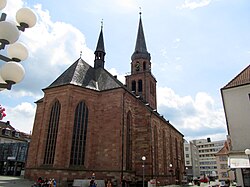
Alexanderskirche
The oldest church in the city, the Alexanderskirche is a late-Gothic Protestant hall church. Construction began in 1493 as a gift from Alexander, Count Palatine of Zweibrücken, following his pilgrimage to the Holy Land. Its crypt serves as the final resting place for numerous counts and dukes of the House of Palatinate-Zweibrücken.
Karlskirche and Heilig Kreuz Kirche
The Karlskirche was built between 1708 and 1711 by Swedish architect Haquinus Schlang for King Charles XII of Sweden, who was also the Duke of Zweibrücken. After being destroyed in World War II, it was rebuilt as a community center and reopened on November 1, 1970. The Heilig-Kreuz-Kirche is the third major church in the city center, constructed significantly later than the other two.
Other Notable Structures
- Gasthaus "Zum Hirsch": The oldest remaining building in the city center.
- Villa Ipser: Built in 1908 for a shoe manufacturer, this residence on the Rothenberg features late historicist architecture with Art Nouveau influences.
- Himmelsbergstollen: A complex of cellars carved directly into the sandstone of the Himmelsberg in the southern city center.
Museums, Libraries, and Science
Intellectual life in Zweibrücken is anchored by its specialized libraries and museums. The Zweibrücken City Museum, located in the former home of court gardener Ernst August Bernhard Petri, documents the city's history through permanent and special exhibitions, such as those marking the 200th anniversary of the State Stud.
The Bibliotheca Bipontina is a premier scientific regional library and one of the state's most important repositories of old holdings. Housed within the Helmholtz-Gymnasium, it contains valuable 16th-century first editions rescued from ducal libraries and is part of the Rhineland-Palatinate State Library Centre. Additionally, the Zweibrücken City Library, established in 1903, holds around 50,000 volumes and operates branches in Rimschweiler and a dedicated youth library.
For those interested in astronomy, the city also hosts the Zweibrücken Observatory, located at the university.
Key Facts
- Botanical Fame: Home to one of the world's largest Rosariums with 45,000 plants and 1,500 species.
- Architectural Peak: The Zweibrücken Castle is the largest Palatine secular building in the Nordic Baroque style.
- Oldest Church: Alexanderskirche, construction of which began in 1493.
- Rare Books: The Bibliotheca Bipontina houses first editions dating back to the 16th century.
- Royal Influence: The Lustschloss Tschifflik was built by Polish King Stanisław Leszczyński.
| Landmark | Type | Key Feature/Period |
|---|---|---|
| Rosarium | Botanical Garden | 45,000 plants; 1,500 species |
| Zweibrücken Castle | Palace | Nordic Baroque (1720–1725) |
| Alexanderskirche | Church | Late-Gothic (est. 1493) |
| Bibliotheca Bipontina | Library | 16th-century first editions |
| Lustschloss Tschifflik | Palace | Turkish-inspired design |
Frequently Asked Questions
Why is Zweibrücken called the "Rose City"?
The city earns this nickname because it hosts one of the largest Rosariums in the world, featuring 1,500 species and 45,000 individual plants across two gardens.
What is the significance of the Bibliotheca Bipontina?
It is one of the most important old holdings libraries in Rhineland-Palatinate, containing rare 16th-century first editions rescued from former ducal libraries.
Who built the Lustschloss Tschifflik?
The palace was built by Polish King Stanisław Leszczyński and was inspired by the time he spent in Bessarabia.
What is the oldest building in the city center?
The oldest building in the city center is the former guesthouse known as Gasthaus "Zum Hirsch."
What is the current use of the Zweibrücken Castle?
After being rebuilt in 1965 following its destruction in World War II, the castle now serves as the seat of the Palatinate Higher Regional Court.