Ludwigsburg: The Baroque Jewel of Baden-Württemberg
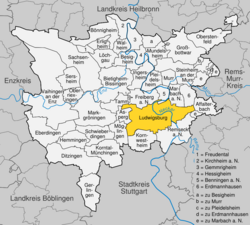
Located just 12 kilometers north of Stuttgart city centre near the river Neckar, Ludwigsburg is a city where royal ambition and Baroque elegance converge. As the primary city of the Ludwigsburg district in Baden-Württemberg, Germany, it serves as a living testament to the era of absolutism, characterized by its sprawling palaces and meticulously planned urban layout.
With a population of approximately 92,858 as of late 2024, Ludwigsburg blends its rich historical heritage with modern industrial significance, making it a vital hub within the Stuttgart Region.
Key Facts
- Primary Landmark: Ludwigsburg Palace, the largest Baroque castle in Germany.
- Founded: Early 18th century (town charter granted April 3, 1718).
- Geography: Situated in Baden-Württemberg, Germany, at an elevation of 293 meters.
- Economy: Home to major automotive suppliers and global brands like Bosch and Porsche.
- Historical Significance: Former royal residence of the Dukes of Württemberg.
A History of Royal Ambition
The region's history stretches back to the 1st century, when it was occupied by the Romans. By 260 AD, the Alamanni took control of the Neckarland, leaving behind grave sites that still exist within the city today.
The modern identity of Ludwigsburg was forged between 1718 and 1723. Duke Eberhard Ludwig von Württemberg originally intended to build a simple country home in 1704, but his vision expanded as he sought to project absolutist power—a political system where the monarch holds total authority. This ambition led to the creation of a planned Baroque city and a series of magnificent residences.
The Palaces of Ludwigsburg
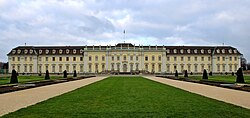
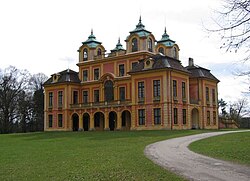
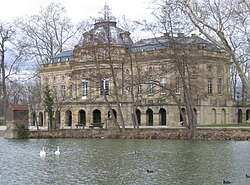
The architectural crown jewel is the Ludwigsburg Palace (Residenzschloss). To complement this main seat, the Duke added Schloss Favorite (1713–1728), a hunting lodge and country seat, and later, the Monrepos Palace (1764–1768), a serene castle situated on a lake.
The city's growth was rapid; by the time of Duke Eberhard Ludwig's death in 1733, the population had reached 6,000, rivaling the former capital, Stuttgart. However, the city's status fluctuated as the royal residence shifted between the two cities throughout the 18th century.
War, Memory, and Resilience
Ludwigsburg's 19th and 20th centuries were marked by both cultural growth and the tragedies of war. Jewish families settled in the city during the 1800s, establishing a synagogue in 1884. This site was later destroyed during Kristallnacht (the Night of Broken Glass) in November 1938. Today, the site is marked by plaster and memorials to honor the victims of the Holocaust.
During World War II, the city served as the site of the Stalag V-A prisoner-of-war camp. While it suffered moderate damage compared to other German cities, the human cost was significant, with 1,500 deaths recorded. In the post-war era, the city hosted a displaced persons camp for Polish refugees and an allied internment camp for war criminals.
To ensure these events are not forgotten, the city has participated in the Stolpersteine project, installing small brass plaques in the pavement to memorialize individuals persecuted by the Nazi regime.
City Profile and Governance
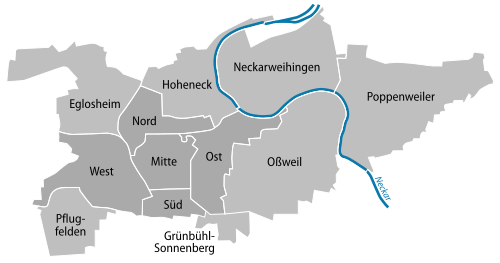
Ludwigsburg is governed by a town council of 40 members and is led by a Lord Mayor. The city is divided into several districts, including Mitte (Center), West, Nord, Ost, Süd, and outlying areas such as Eglosheim and Hoheneck—the latter known for its therapeutic and thermal baths opened in 1907.
Economic and Industrial Power
Beyond its tourism, Ludwigsburg is an industrial powerhouse. It is home to numerous automotive suppliers and global leaders in engineering and technology, including:
- Automotive: Mercedes-AMG, Porsche, Bosch, and Getrag GmbH.
- Manufacturing: Stihl and Mann+Hummel.
- Finance: Kreissparkasse Ludwigsburg and Volksbank Ludwigsburg.
The city also holds a place in infrastructure history; on October 5, 1957, Germany's first 380kV powerline went into service here.
City Overview Summary
| Category | Details |
|---|---|
| State | Baden-Württemberg, Germany |
| Population (2024) | 92,858 |
| Total Area | 43.34 km² |
| Elevation | 293 m |
| Key Industries | Automotive, Engineering, Finance |
| Administrative Region | Stuttgart |
Notable Figures
Ludwigsburg has been home to a diverse array of influential figures, from poets and scientists to political dissidents. Notable residents and figures associated with the city include:
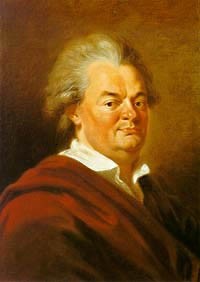
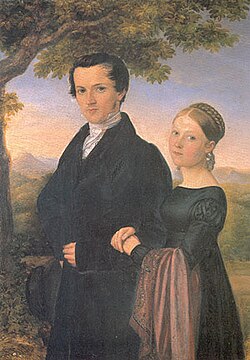
- Arts & Literature: Romantic poet Eduard Mörike and poet Christian Friedrich Daniel Schubart.
- Science: Nobel Prize winner in Chemistry Hartmut Michel and biologist Willi Hennig.
- History & Politics: Former Federal President Horst Köhler and resistance fighters Hans and Sophie Scholl.
- Business: Charles Pfizer, the chemist and founder of Pfizer Inc.
Frequently Asked Questions
What is the most famous landmark in Ludwigsburg?
The most famous landmark is the Ludwigsburg Palace (Residenzschloss), which is the largest Baroque castle in Germany.
How did Ludwigsburg start as a city?
It was founded in the early 18th century by Duke Eberhard Ludwig von Württemberg, who offered incentives like free land and tax-free status to attract residents to his ideal Baroque city.
What is the significance of the Stolpersteine in the city?
The Stolpersteine are small, brass-capped cobblestones placed in the pavement to memorialize individuals who were victims of Nazi persecution, ensuring their memory remains part of the city's daily landscape.
Which major industries are present in Ludwigsburg?
The city is a hub for the automotive industry, hosting companies such as Mercedes-AMG, Porsche, and Bosch, as well as various specialized automotive suppliers.
What is the climate like in Ludwigsburg?
The city experiences a temperate climate with an average annual temperature of 10.6°C and annual precipitation of approximately 776.1 mm.