Zero-Point Energy: The Quantum Foundation of the Vacuum
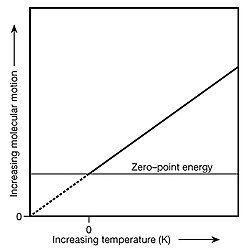
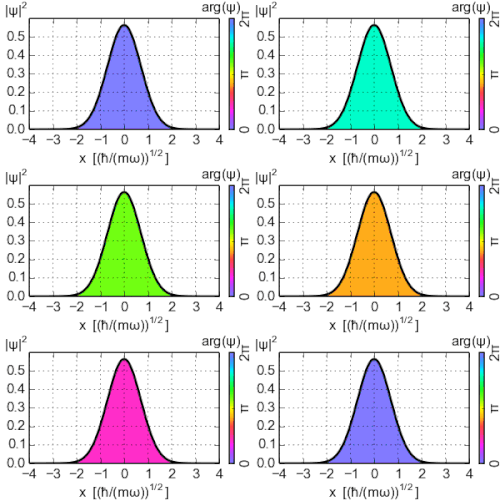
In the world of classical physics, a system at absolute zero temperature is perfectly still, possessing no kinetic energy. However, the quantum realm tells a different story. Zero-point energy (ZPE) is the lowest possible energy that a quantum mechanical system can possess. Far from being a state of total stillness, quantum systems constantly fluctuate even in their lowest energy state.
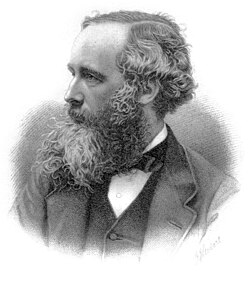
This phenomenon is rooted in the Heisenberg uncertainty principle, which dictates that certain pairs of physical properties cannot be known simultaneously with absolute precision. Consequently, atoms and molecules retain vibrational motion even at absolute zero. This principle extends beyond matter to the very fabric of space itself; the vacuum is not truly empty but is filled with fluctuating fields.
According to quantum field theory, the universe consists of continuous fluctuating fields rather than isolated particles. These include matter fields (whose quanta are fermions, such as leptons and quarks) and force fields (whose quanta are bosons, such as photons and gluons). Every one of these fields possesses zero-point energy.
Key Facts
- Definition: The lowest possible energy state of a quantum mechanical system.
- Cause: Driven by the Heisenberg uncertainty principle, preventing particles from reaching a state of zero motion.
- Vacuum Energy: Empty space contains fluctuating fields (fermions and bosons) that contribute to ZPE.
- Observability: While subtle, ZPE is experimentally verified through the Casimir effect and the Lamb shift.
- Cosmological Mystery: There is a massive discrepancy between the theorized vacuum energy and the observed expansion of the universe.
The Mechanics of Quantum Fluctuations
The Uncertainty Principle and Atomic Motion
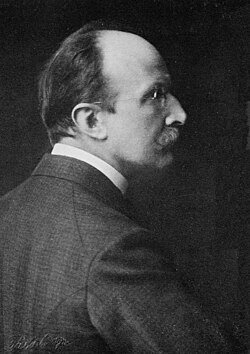
The uncertainty principle implies that the expectation values of kinetic and potential energy cannot both be zero. Therefore, the total energy of a system must always be greater than zero. This is why liquid helium, for instance, does not freeze at standard atmospheric pressure regardless of how cold it gets; it retains kinetic energy due to zero-point energy.

The Quantum Electrodynamic Vacuum
In quantum electrodynamics (QED), the electromagnetic field in free space is treated as a collection of harmonic oscillators. Even without an external source, the least eigenvalue for the Hamiltonian (the operator representing total energy) is non-zero. This results in a constant background of zero-point radiation that imparts random impulses on electrons, ensuring they never come to a complete stop.

The Higgs Field
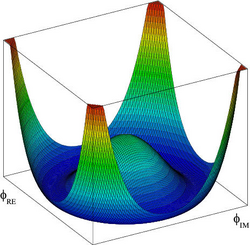
Beyond electromagnetism, other fields like the Higgs field play a critical role in the universe's structure. The Higgs field potential is often described as having a "Mexican-hat" or "champagne-bottle" profile, which is essential for the mechanism that grants mass to other particles.
Experimental Evidence of Zero-Point Energy
While ZPE may seem theoretical, several physical phenomena provide direct evidence of its existence.
The Casimir Effect
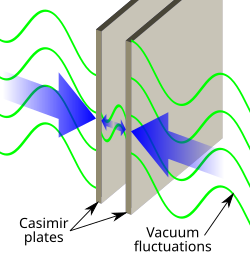
One of the most famous demonstrations is the Casimir effect. When two uncharged parallel metal plates are placed extremely close together in a vacuum, they are pushed toward each other. This happens because the plates restrict the wavelengths of the vacuum fluctuations between them, creating a lower energy density inside than outside, resulting in an attractive force.
The Lamb Shift
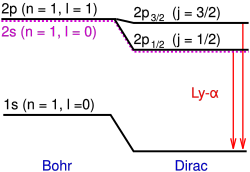
The Lamb shift refers to a small difference in energy levels between the 2S1/2 and 2P1/2 states of the hydrogen atom. This shift, which contradicts the earlier Bohr model, is caused by the interaction between the electron and the vacuum fluctuations of the electromagnetic field.
Cosmology and the Great Vacuum Mystery
Zero-point energy is central to our understanding of the universe's evolution, yet it presents one of the biggest challenges in modern physics: the cosmological constant problem.
According to general relativity, any energy in the vacuum should exert a gravitational influence. However, the observed expansion of the universe and the nature of dark energy suggest that the vacuum energy is exceptionally weak. The theoretical prediction for vacuum energy is orders of magnitude larger than what is actually observed.
Some physicists proposed supersymmetry as a solution, suggesting that fermion fields (negative ZPE) and boson fields (positive ZPE) cancel each other out. However, data from the Large Hadron Collider at CERN has yet to provide evidence for this symmetry in the low-energy universe we inhabit.
Summary of Quantum Energy Concepts
| Feature | Classical Mechanics | Quantum Mechanics |
|---|---|---|
| State at Absolute Zero | Complete stillness (Zero energy) | Constant fluctuation (Zero-point energy) |
| Vacuum Nature | Empty void | Active field of fluctuations |
| Predictive Principle | Deterministic laws | Heisenberg Uncertainty Principle |
| Key Evidence | N/A | Casimir Effect, Lamb Shift |
Frequently Asked Questions
What exactly is zero-point energy?
Zero-point energy is the lowest possible energy that a quantum mechanical system can have. Unlike classical systems, quantum systems cannot reach a state of zero energy because the uncertainty principle requires them to maintain a minimum level of fluctuation.
Can zero-point energy be used as a power source?
While there are theoretical discussions regarding Casimir batteries or engines, extracting usable energy from the vacuum remains highly speculative and is not a current technological reality.
How does the Casimir effect prove ZPE exists?
The Casimir effect shows that vacuum fluctuations exert a physical force. By limiting the types of fluctuations that can exist between two close plates, a pressure difference is created that pushes the plates together, proving the vacuum contains energy.
What is the cosmological constant problem?
It is the massive discrepancy between the amount of vacuum energy predicted by quantum field theory and the amount actually observed through the expansion of the universe. The theoretical value is far higher than the observed value.
Does zero-point energy relate to dark energy?
Yes, many physicists believe that dark energy—the force driving the accelerated expansion of the universe—may be a manifestation of the vacuum's zero-point energy, though a full theoretical model is still lacking.