Cosmological Constant and the Accelerating Universe
In the vast study of physical cosmology, the cosmological constant (denoted by the Greek letter Λ) stands as one of the most intriguing coefficients in science. Originally introduced by Albert Einstein into his field equations of general relativity, this value has evolved from a mathematical tool used to maintain a static universe into the primary explanation for the mysterious force driving the universe apart.
Today, the cosmological constant is closely linked to dark energy—the energy density of empty space, also known as vacuum energy, which arises from the principles of quantum mechanics. It serves as the cornerstone of the ΛCDM model, the current standard model of cosmology.
Key Facts
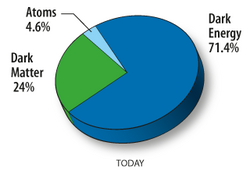
- Composition: Dark energy accounts for approximately 68% of the mass-energy density of the universe.
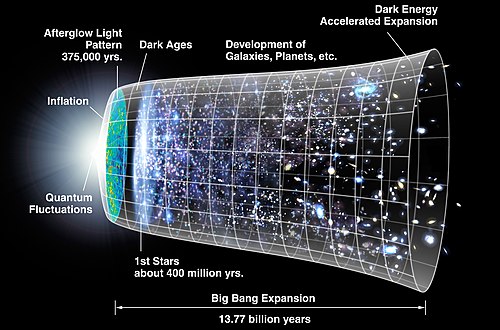
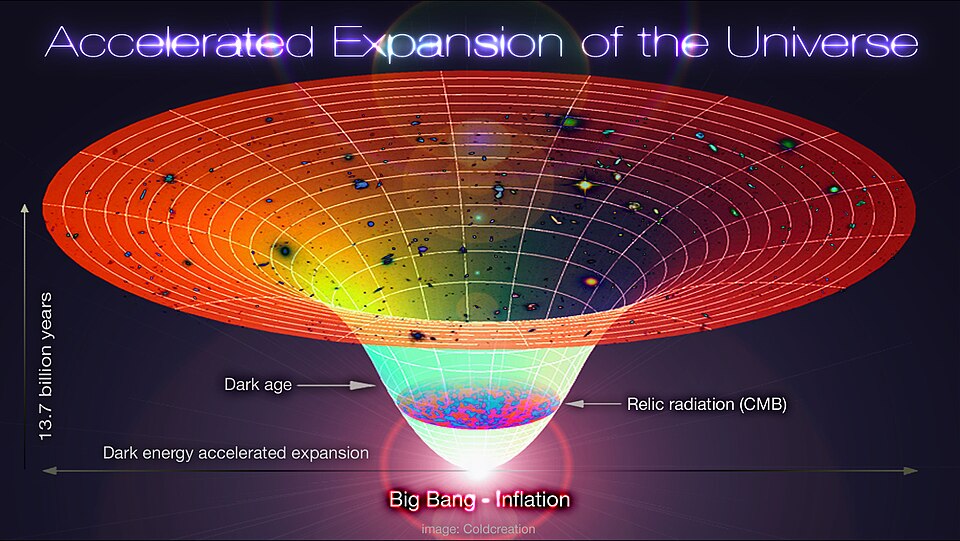
- Effect: A positive cosmological constant creates negative pressure, which drives the accelerated expansion of the universe.
- Standard Model: The ΛCDM model uses the cosmological constant as the simplest explanation for dark energy.
- Observation: The acceleration of the universe was confirmed in 1998 through the study of Type Ia supernovae.
- Equation of State: For a cosmological constant, the ratio of pressure to energy density (w) is exactly -1.
The Evolution of a Theory: From Blunder to Breakthrough
Albert Einstein first introduced the cosmological constant in 1917. At the time, the scientific consensus was that the universe was static. Einstein added Λ to his equations to counterbalance the inward pull of gravity, preventing the universe from collapsing.
However, this assumption was shattered when Edwin Hubble provided evidence that the universe was expanding. Consequently, Einstein abandoned the constant. For several decades, from the 1930s through the late 1990s, most physicists assumed the cosmological constant was zero. This period saw various models, such as the Friedmann–Einstein universe (1931) and the Einstein–de Sitter universe (1932), which operated without a cosmological constant or with zero spatial curvature.
The narrative shifted dramatically in 1998. Two independent teams—led by Saul Perlmutter, Brian Schmidt, and Adam Riess—were observing Type Ia supernovae. While they expected to find that gravity was slowing down the expansion of the universe, they discovered the opposite: supernovae were accelerating away from us. This revelation forced scientists to reinsert the cosmological constant into the equations of general relativity to account for this acceleration.
The Mathematics of Dark Energy
The Density Parameter (Ω)
Cosmologists use the density parameter to describe the composition of the universe. The total density is divided into the matter density parameter (Ωm), which includes both baryonic (normal) and dark matter, and the density parameter for dark energy (ΩΛ). Current measurements suggest ΩΛ is approximately 0.7.
The Equation of State (w)
The equation of state, denoted as w, is the ratio of the pressure that dark energy exerts to its energy per unit volume. For the cosmological constant, w = -1. Data from the Planck Collaboration (2018) measured w at -1.028 ± 0.032, which is consistent with the cosmological constant model, assuming the value does not change over time.
Vacuum Energy and Pressure
A positive vacuum energy density results in negative pressure. This negative pressure acts as a repulsive force, driving the accelerated expansion observed in the cosmos. Recent measurements estimate the vacuum energy density (ρ vac) at approximately 5.96 × 10⁻²⁷ kg/m³.
Theoretical Challenges and the Anthropic Principle
Despite its utility, the cosmological constant presents a massive theoretical problem: the predicted value from quantum field theory is vastly higher than the observed value. To address this, physicist Steven Weinberg proposed the anthropic principle in 1987.
Weinberg argued that if vacuum energy varied across different domains of the universe, we would necessarily find ourselves in a domain where the value is small. If the vacuum energy were significantly larger and positive, the universe would expand too quickly for galaxies to form. Conversely, if it were significantly negative, the universe would collapse too quickly for intelligent life to evolve. Thus, life can only exist in the rare regions where the cosmological constant is compatible with the formation of complex structures.
Cosmological Summary Table
| Parameter/Model | Symbol/Name | Approximate Value/Role |
|---|---|---|
| Cosmological Constant | Λ (Lambda) | Coefficient for vacuum energy density |
| Dark Energy Density | ΩΛ | ~68% of total mass-energy density |
| Equation of State | w | -1 (for cosmological constant) |
| Standard Model | ΛCDM | Combines Λ with Cold Dark Matter |
| Hubble Constant (2025) | H₀ | 76.5 ± 2.2 (km/s)/Mpc |
Frequently Asked Questions
What is the difference between the cosmological constant and dark energy?
The cosmological constant (Λ) is the simplest mathematical explanation for dark energy. While dark energy is the general term for the unknown force driving the universe's acceleration, the cosmological constant specifically represents a constant energy density filling space homogeneously.
Why did Einstein first remove the cosmological constant?
Einstein originally added the constant to allow for a static universe. When Edwin Hubble discovered that the universe was actually expanding, the constant was no longer necessary to prevent gravitational collapse, leading Einstein to abandon it.
How was the acceleration of the universe discovered?
In 1998, astronomers studying Type Ia supernovae found that these distant stellar explosions were dimmer than expected, indicating they were further away than they would be in a decelerating universe. This proved the expansion of the universe is accelerating.
What is the ΛCDM model?
The ΛCDM model is the standard model of Big Bang cosmology. The "Λ" stands for the cosmological constant (dark energy), and "CDM" stands for Cold Dark Matter. Together, they explain the large-scale structure and evolution of the universe.
Could the cosmological principle be wrong?
Yes. Some recent proposals suggest that due to the Hubble tension and the CMB dipole, the cosmological principle—the idea that the universe is homogeneous and isotropic—might not apply in the late universe, potentially meaning the observed acceleration is a result of this breakdown.