WWOZ 90.7 FM: The Voice of New Orleans Music and Culture
In the heart of Louisiana, WWOZ 90.7 FM serves as more than just a radio station; it is a living archive and a vibrant megaphone for the cultural heritage of New Orleans. As a non-profit, community-supported station, WWOZ specializes in the diverse sounds that define the region, from the syncopated rhythms of jazz to the soulful depths of the blues and the eclectic energy of world music.
Owned by the New Orleans Jazz & Heritage Foundation, the station provides a critical platform for local artists and regional sounds, ensuring that the musical legacy of the Crescent City continues to thrive in the modern era.
Key Facts
- Frequency: 90.7 MHz (HD Radio)
- Ownership: New Orleans Jazz & Heritage Foundation
- Format: Jazz, Blues, and New Orleans community music
- Launch Date: December 4, 1980
- Call Sign Meaning: A reference to The Wonderful Wizard of Oz
- Current Location: Jax Brewery, French Quarter, New Orleans
- Technical Power: 100,000 watts ERP
Programming and Community Impact
WWOZ is renowned for its deep commitment to local talent. While its programming is heavily weighted toward contemporary jazz and rhythm & blues, the station embraces a vast spectrum of genres, including Cajun music, zydeco, Gospel, Celtic, bluegrass, and traditional country. This inclusivity makes it a cornerstone of the New Orleans music scene.
The station is unique in its reliance on volunteer hosts. These DJs, many of whom are musicians themselves, are not paid for their on-air time and typically curate their shows from their own extensive personal record collections. This grassroots approach ensures an authentic, passion-driven listening experience.
Beyond the studio, WWOZ is famous for its live location broadcasts, most notably from the annual New Orleans Jazz & Heritage Festival. Its dedication to education and community outreach was recognized in 2018 when the Louisiana Association of Broadcasters presented the station with the Prestige Award for Station of the Year, citing its "WWOZ in the Schools" program and its extensive use of volunteer talent.
A History of Resilience
The station was envisioned in the mid-1970s by brothers Walter and Jerry Brock. They sought to create a community-focused outlet where the content took precedence over the personality of the disc jockey—a philosophy reflected in the call sign WWOZ, referencing the line "Pay no attention to the man behind the curtain" from The Wonderful Wizard of Oz.
The early days of WWOZ were defined by spartan conditions. After launching in 1980 from Bridge City, the station moved to a two-room apartment above the legendary music club Tipitina's. In this era, the studio lacked air conditioning, and water was sometimes supplied via a neighbor's garden hose. To broadcast live music from the club downstairs, staff would lower a microphone through a hole in the floor.
By 1986, the station's license was transferred to the New Orleans Jazz & Heritage Foundation to ensure financial stability. The station also became an early adopter of technology, beginning its online streaming services in 1996.
Overcoming Hurricane Katrina
The resilience of WWOZ was put to the ultimate test during Hurricane Katrina in August 2005. The station signed off just before the storm hit, with the final song being "What the Heck, Let’s Discotheque" by Side Effect. While the studios suffered damage and the staff was displaced across several states, the transmitter atop the Tidewater Building remained intact.
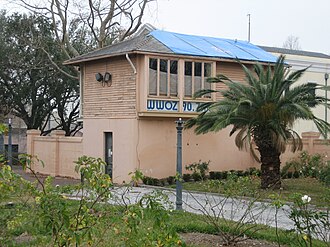
The station quickly adapted, launching "WWOZ in Exile" via a webcast hosted by WFMU in New Jersey. By October 2005, it resumed limited over-the-air broadcasts via Louisiana Public Broadcasting in Baton Rouge, eventually returning to a physical presence in New Orleans by December 2005.
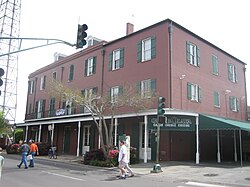
The disaster resulted in the loss of many personal record collections used by the DJs. However, a massive archive of New Orleans music performances on tape survived because the floodwaters stopped just short of the storage container's loading dock. This collection, comprising over 2,000 recordings, was later transferred to the Library of Congress and added to the National Recording Registry.
After years of operating out of temporary spaces in the French Market, WWOZ officially moved its studios and offices to the top floor of the Jax Brewery on November 28, 2023, celebrating the move with a traditional second line parade.
Technical Specifications and Reach
| Feature | Detail |
|---|---|
| FCC Facility ID | 22659 |
| Station Class | C1 |
| Effective Radiated Power (ERP) | 100,000 watts |
| Height Above Average Terrain (HAAT) | 134 meters (440 ft) |
| Transmitter Location | Canal Street at Lasalle Street |
Frequently Asked Questions
What does the call sign WWOZ stand for?
The call sign is a reference to The Wonderful Wizard of Oz. It specifically evokes the phrase "Pay no attention to the man behind the curtain," symbolizing the station's philosophy that the music and programming should be more important than the DJ's personality.
Who owns and operates WWOZ?
WWOZ is owned by the New Orleans Jazz & Heritage Foundation (Friends of WWOZ, Inc.) and operates as a non-profit, community-supported radio station.
Are the DJs at WWOZ paid professionals?
The on-air show hosts are volunteers who receive no compensation for their music programming. They typically play music from their own personal collections. The station employs a small paid staff to manage daily operations.
How did WWOZ survive Hurricane Katrina?
While the studios were damaged and staff evacuated, the transmitter remained functional. The station maintained its presence through a webcast called "WWOZ in Exile" and temporary broadcasting facilities in Baton Rouge before returning to New Orleans.
Where can I find the WWOZ music archives?
A collection of over 2,000 recordings was shipped to the Library of Congress. These are available to the public via the Recorded Sound Research Center in the Madison Building on Capitol Hill.