Kid Ory: The Pioneer of New Orleans Jazz Trombone
Edward "Kid" Ory was a transformative figure in the birth of American jazz. As a composer, bandleader, and virtuoso trombonist, Ory didn't just play the music of his time—he helped define the very sound of New Orleans jazz. He is most celebrated for his mastery of the glissando (a continuous slide between two notes), a technique that became a cornerstone of the genre's expressive power.
From his roots in the Louisiana bayous to the recording studios of Los Angeles and Chicago, Ory's career spanned over five decades, bridging the gap between early traditional Creole music and the global jazz phenomenon.
Key Facts
- Full Name: Edouard "Kid" Ory
- Primary Instrument: Trombone
- Key Contribution: Established the "tailgate" style and glissando as central elements of New Orleans jazz.
- Notable Composition: "Muskrat Ramble"
- Active Years: 1910–1966
- Major Collaborations: Louis Armstrong, Jelly Roll Morton, and King Oliver.
Early Life and the Birth of "Tailgate" Style
Born in 1886 on the Woodland Plantation in LaPlace, Louisiana, to a French-speaking family of Black Creole descent, Ory's musical journey began with homemade instruments. By his teenage years, he was already leading a respected band in southeast Louisiana. He remained in LaPlace due to family obligations until his 21st birthday, at which point he moved his ensemble to New Orleans.
Ory's early experience as a banjo player profoundly influenced his approach to the trombone. This background helped him develop the tailgate style—a rhythmic approach where the trombone provides a supportive melodic line beneath the trumpets and cornets. This style, combined with his use of the glissando, gave New Orleans jazz its characteristic sliding, soulful sound.
A Career Across Three Cities
New Orleans and the Move West
By the 1910s, Ory led one of the most prominent bands in New Orleans. His ensemble served as a training ground for legendary musicians, including cornetists Joe "King" Oliver and Louis Armstrong, as well as clarinetists Johnny Dodds and Jimmie Noone. In 1919, Ory followed the migration of other New Orleans musicians to Los Angeles.
In 1922, he made history by leading the first African American jazz band from New Orleans to record on the West Coast. These recordings, including "Ory's Creole Trombone" and "Society Blues," were released under his own label, "Kid Ory's Sunshine Orchestra."

The Chicago Years and the Hot Five
Ory moved to Chicago in 1925, entering a fertile period of collaboration. He worked with jazz giants such as Bessie Smith, Ma Rainey, and Jelly Roll Morton. Most notably, he was a member of the original lineup of Louis Armstrong's Hot Five. His composition "Muskrat Ramble" was recorded during a February 1926 session, cementing his legacy as a composer.
The Great Depression and the 1940s Revival
The economic hardship of the Great Depression forced Ory into a hiatus from music, during which he operated a chicken farm in Los Angeles. However, he returned to the spotlight in 1943. His band became a driving force in the revival of New Orleans jazz, gaining widespread popularity through radio broadcasts on The Orson Welles Almanac program starting in 1944.
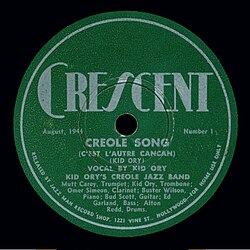
This comeback led to a significant partnership with Nesuhi Ertegun, who founded the Crescent label specifically to record Ory's band between 1944 and 1945.
Later Years and Legacy
In the late 1940s and 50s, Ory continued to perform at venues like the Beverly Cavern in Los Angeles. He eventually ventured into business, purchasing the Tin Angel nightclub in San Francisco and renaming it On-The-Levee. He retired from music in 1966 and spent his final years in Hawaii, where he passed away in 1973 from a heart attack and pneumonia.
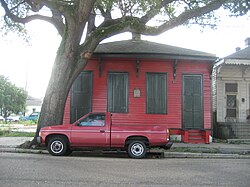
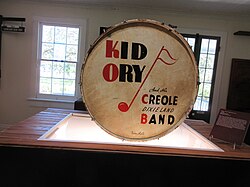
Today, Ory's legacy is preserved at the 1811 Kid Ory Historic House in LaPlace, Louisiana. Located on the site of his childhood home, the museum honors both the musician and the 1811 German Coast uprising of enslaved people.
Summary of Kid Ory's Career
| Period | Location | Key Milestone/Activity |
|---|---|---|
| 1910s | New Orleans | Led a top city band; hired Louis Armstrong (1919). |
| 1922 | Los Angeles | First New Orleans African American jazz recordings on West Coast. |
| 1925-1926 | Chicago | Member of Louis Armstrong's Hot Five; recorded "Muskrat Ramble". |
| 1930s | Los Angeles | Retired from music; ran a chicken farm. |
| 1944-1961 | Various | Revived New Orleans jazz; recorded for Crescent label. |
| 1958-1961 | San Francisco | Owned the "On-The-Levee" nightclub. |
Frequently Asked Questions
What is the "tailgate" style of trombone playing?
The tailgate style is a rhythmic way of playing the trombone that provides a foundational melodic line beneath the higher-pitched instruments like trumpets and cornets. Kid Ory developed this style, partly influenced by his early experience playing the banjo.
What is a glissando and why was it important to Kid Ory?
A glissando is a musical technique where the player slides smoothly from one pitch to another. Ory used this extensively on the trombone, helping to establish it as a signature sound and a central element of New Orleans jazz.
Which famous jazz musicians did Kid Ory work with?
Ory collaborated with many of the most influential figures in jazz history, including Louis Armstrong, King Oliver, Jelly Roll Morton, Bessie Smith, and Ma Rainey. He also served as a mentor to Benny Goodman and Charles Mingus.
What was the significance of the Crescent label?
The Crescent label was founded by Nesuhi Ertegun for the express purpose of recording Kid Ory's band during the mid-1940s, contributing to the revival of interest in traditional New Orleans jazz.
Where can people visit today to learn about Kid Ory?
Visitors can go to the 1811 Kid Ory Historic House in LaPlace, Louisiana. The museum is located on the site of the Woodland Plantation and is listed on the National Register of Historic Places.