Joe "King" Oliver: The Cornet Pioneer Who Mentored Louis Armstrong
Joseph Nathan "King" Oliver was a transformative figure in the early evolution of jazz. As a virtuoso cornet player and visionary bandleader, Oliver bridged the gap between the brass band traditions of New Orleans and the sophisticated urban jazz scenes of Chicago and New York. He is perhaps best remembered not only for his own technical innovations but as the primary mentor to Louis Armstrong, who credited Oliver as a fundamental creator of the genre.
Key Facts
- Primary Instrument: Cornet (later switched to trumpet).
- Major Contribution: Pioneered the use of mutes (plungers, cups, bottles) to alter horn sounds.
- Famous Compositions: "Dippermouth Blues," "Doctor Jazz," and "Canal Street Blues."
- Key Ensemble: King Oliver's Creole Jazz Band.
- Legacy: Served as the teacher and idol of jazz legend Louis Armstrong.
Early Life and the New Orleans Scene
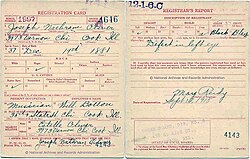
Born in Aben, Louisiana, Joseph Nathan Oliver's exact birth date is a subject of historical debate; while his 1918 draft registration lists 1881, other records suggest 1884 or 1885. In his youth, Oliver moved to New Orleans, where he initially studied the trombone before switching to the cornet.
Between 1908 and 1917, Oliver became a fixture in the music scene of New Orleans, performing in dance bands and the red-light district known as Storyville. He co-led a highly regarded band with trombonist Kid Ory, gaining popularity across different racial and economic lines. However, his time in New Orleans ended abruptly following a police arrest during a fight at a dance.
The Chicago Years and the Creole Jazz Band
Following the closure of Storyville, Oliver moved to Chicago in 1918. He quickly integrated into the city's New Orleans expatriate community, working with musicians like Lawrence Duhé and Bill Johnson. Oliver's approach in Chicago was characterized by faster tempos than the "slow drags" common in New Orleans dance halls.
In 1922, Oliver formed King Oliver's Creole Jazz Band at the Lincoln Gardens. This ensemble featured a powerhouse lineup, including his protégé Louis Armstrong on second cornet, Baby Dodds on drums, and Lil Hardin on piano. Their 1923 recordings for labels such as Gennett and Okeh introduced a wide audience to Dixieland—a style defined by collective improvisation.
The recording process was primitive; because they used acoustic horns, Armstrong's powerful playing often bounced the needle off the master record, forcing him to stand in the corner of the room during sessions. The band's influence was so great that white musicians would gather outside the doors of the black-only Lincoln Gardens just to hear them play.

Musical Innovation and the Dixie Syncopators
Oliver was a master of sonic experimentation. He pioneered the use of mutes—devices used to change the timbre of the instrument—utilizing rubber plumber's plungers, derby hats, bottles, and cups. His use of a small metal mute from the C.G. Conn Instrument Company became a signature of his sound, particularly in "Dippermouth Blues." His recording "Wa Wa Wa" is credited with popularizing the term "wah-wah" for these techniques.
By the mid-1920s, Oliver expanded his group into a nine-piece ensemble called King Oliver's Dixie Syncopators. This era saw a shift toward written arrangements combined with jazz solos. Despite his success, Oliver began struggling with periodontitis (severe gum disease), which made playing the trumpet increasingly painful and difficult.
The Mentor of Louis Armstrong
The relationship between Oliver and Louis Armstrong was one of the most significant partnerships in music history. Oliver provided Armstrong with his first professional opportunities, first in Kid Ory's band and later by summoning him to Chicago. Armstrong referred to him as "Papa Joe" and maintained that without Oliver, jazz would not be what it is today.
| Category | Details |
|---|---|
| Active Years | 1907–1937 |
| Key Bands | Creole Jazz Band, Dixie Syncopators |
| Notable Students | Louis Armstrong, Louis Panico |
| Signature Style | Collective improvisation and mute experimentation |
| Major Works | "Dippermouth Blues," "Sweet Like This," "Doctor Jazz" |
Later Hardships and Death
Despite his musical genius, Oliver struggled with business management. He suffered financial losses due to dishonest managers and missed career-defining opportunities, such as a residency at the Cotton Club, which was instead taken by Duke Ellington. The Great Depression further devastated him when he lost his life savings in a bank collapse.
His health continued to decline due to pyorrhea, a gum disease exacerbated by his diet of sugar sandwiches. By 1935, he could no longer play the trumpet. Oliver spent his final days in poverty in Savannah, Georgia, working as a janitor and running a fruit stall after pawning his instruments and suits.
Joe "King" Oliver died around April 1938 of arteriosclerosis. He was buried in Woodlawn Cemetery in the Bronx, New York, with Louis Armstrong and other loyal friends in attendance.
Frequently Asked Questions
What was Joe "King" Oliver's most significant contribution to jazz?
Beyond his compositions, Oliver's most significant contributions were his pioneering use of mutes to create unique sounds and his role as the mentor who shaped the career of Louis Armstrong.
What is the difference between the Creole Jazz Band and the Dixie Syncopators?
The Creole Jazz Band (early 1920s) focused on the New Orleans style of collective improvisation. The Dixie Syncopators (mid-1920s) was a larger nine-piece ensemble that utilized more written arrangements and structured solos.
Why did Joe Oliver stop playing music?
Oliver suffered from severe periodontitis (gum disease), which made it physically impossible for him to maintain the embouchure required to play the trumpet. He officially quit playing in 1937.
Which compositions by King Oliver are still played today?
Many of his tunes remain jazz standards, most notably "Dippermouth Blues," "Doctor Jazz," "Canal Street Blues," and "Sweet Like This."
How did Louis Armstrong view Joe Oliver?
Armstrong viewed Oliver as his idol and inspiration, calling him "Papa Joe" and stating that Oliver was a creator in his own right who fundamentally shaped the trajectory of jazz.