Fletcher Henderson: The Architect of Big Band Swing
In the evolution of American music, few figures loom as large yet remain as understated as Fletcher Henderson. A virtuoso pianist, composer, and bandleader, Henderson served as the critical bridge between the improvisational spirit of Dixieland and the polished, powerful sound of the swing era. Alongside figures like Duke Ellington, he redefined the structure of jazz, transforming it from small-group improvisation into a sophisticated orchestral art form.
Key Facts
- Full Name: James Fletcher Hamilton Henderson (known as "Smack" Henderson).
- Primary Role: Pioneer of big band jazz arranging and bandleading.
- Major Contribution: Developed the sectional "call-and-response" formula for swing music.
- Key Collaboration: Brought Louis Armstrong to New York City in 1924.
- Legacy: His arrangements provided the foundation for Benny Goodman's swing hits.
Early Life and Academic Pursuits
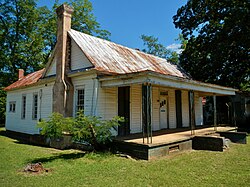
Born on December 18, 1897, in Cuthbert, Georgia, James Fletcher Hamilton Henderson grew up in a middle-class African-American family. His father was the principal of the Howard Normal Randolph School, and his mother, a teacher, introduced him to the piano at age six. Henderson's early education was rigorous; his father often insisted on hours of disciplined practice, which helped Fletcher develop a keen sense of pitch and the ability to read music by age 13.
Interestingly, Henderson's first passion was not music, but the hard sciences. After moving to Atlanta at 18 and adopting the name Fletcher Henderson, he attended Atlanta University. He graduated in 1920 with a bachelor's degree in chemistry and mathematics, a background that perhaps contributed to the precision and structure he later brought to musical arranging.
The Transition to Professional Music
Henderson moved to New York City with plans to pursue a master's degree in chemistry at Columbia University. While he briefly worked as a laboratory assistant, a chance opportunity as a substitute pianist for a riverboat orchestra shifted his trajectory. Realizing that music offered greater financial potential than chemistry, he transitioned into the industry full-time.
By 1921, Henderson became the musical director for Black Swan Records, a pioneering Black-owned label. During this period, he primarily accompanied blues singers and toured with the Black Swan Troubadours. It was during a 1922 tour in New Orleans that Henderson first encountered a young cornetist named Louis Armstrong. Although Armstrong initially declined an offer to join him, this meeting set the stage for one of the most important partnerships in jazz history.
Defining the Swing Sound
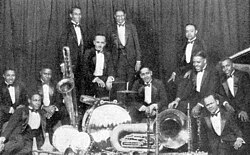
In 1924, Henderson established his first working band, which eventually became the house band at Club Alabam and later secured a prestigious engagement at the Roseland Ballroom. On October 13, 1924, Louis Armstrong finally joined the orchestra, a move that shifted the focal point of American jazz from Chicago to New York City.
The "Henderson sound" was a collaborative effort, largely driven by the arranging genius of Don Redman. Together, they established the fundamental formula for swing music by dividing the band into distinct sections (such as saxophones and trumpets). They utilized a call-and-response style, where one section would play a phrase and another would answer, or one section would provide supporting riffs behind a soloist.
Influence on Musicianship
Henderson's insistence on using written musical notation—a departure from the more casual improvisational styles of the time—encouraged a wave of musical literacy among Harlem musicians. His band featured a revolving door of legendary talent, including Coleman Hawkins, Benny Carter, and Roy Eldridge, all of whom contributed to the sophisticated blend of danceable rhythms and complex arrangements.
Collaboration with Benny Goodman
Despite his musical brilliance, Henderson struggled with the business side of bandleading and faced financial hardships following the 1929 stock market crash. By 1934, he began selling his popular arrangements to clarinetist Benny Goodman. These charts became the backbone of Goodman's success during the swing era, with Goodman frequently crediting Henderson for the superior quality of the compositions.
In 1939, Henderson joined Goodman's orchestra as a staff arranger and pianist. He continued to form his own bands throughout the 1940s and toured again with Ethel Waters in the late 1940s. However, a stroke in 1950 resulted in partial paralysis, effectively ending his career as a pianist.
Summary of Career and Impact
| Period | Key Role/Affiliation | Major Contribution |
|---|---|---|
| 1921–1923 | Black Swan Records | Musical Director and blues accompaniment. |
| 1924–1934 | Fletcher Henderson Orchestra | Pioneered big band sectional arranging; hired Louis Armstrong. |
| 1934–1939 | Freelance Arranger | Provided foundational charts for Benny Goodman. |
| 1939–1950 | Benny Goodman Orchestra | Staff arranger and pianist. |
Frequently Asked Questions
Why was Fletcher Henderson called "Smack"?
He earned the nickname "Smack" because of the distinct smacking sounds he made with his lips while performing.
How did Henderson influence the development of swing music?
Along with Don Redman, Henderson created the structural blueprint for swing by organizing the big band into sections that interacted through call-and-response and supporting riffs.
What was Henderson's relationship with Benny Goodman?
Henderson sold many of his arrangements to Goodman, who used them to achieve massive success. Goodman credited Henderson's writing as superior to his own and later hired him as a full-time staff arranger.
Did Fletcher Henderson have a background other than music?
Yes, Henderson was highly educated in the sciences, earning a bachelor's degree in chemistry and mathematics from Atlanta University in 1920 before pursuing music professionally.
What happened to Fletcher Henderson at the end of his life?
Henderson suffered a stroke in 1950 that caused partial paralysis, ending his ability to play piano. He passed away in New York City on December 29, 1952, at the age of 55.