Dixieland Jazz: The History and Evolution of Traditional New Orleans Music
Dixieland, also known as traditional jazz or hot jazz, is a vibrant musical style that emerged from the cultural melting pot of New Orleans, Louisiana, at the dawn of the 20th century. Characterized by its joyful energy and collective improvisation, Dixieland represents the foundational roots of jazz, blending diverse global influences into a unique American art form.
The style gained widespread recognition following the 1917 recordings by the Original Dixieland Jass Band. While the term "Dixieland" originally referred to that specific group, it was later adopted by revivalists in the 1940s and 1950s to describe early jazz played in a quasi-New Orleans manner, referencing the "Old South" region south of the Mason-Dixon line.
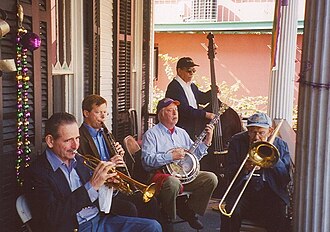
Key Facts
- Origin: Developed in New Orleans, Louisiana, blending African, European, and Caribbean influences.
- Core Sound: Defined by polyphonic improvisation, where multiple instruments improvise simultaneously around a lead melody.
- Standard Lineup: A "front line" (trumpet/cornet, trombone, clarinet) and a "rhythm section" (piano, drums, banjo/guitar, tuba/string bass).
- Key Figures: Louis Armstrong and his All-Stars were central to the genre's popularity in the 1940s.
- Global Reach: The style evolved into distinct regional variations in Chicago, the US West Coast, and the Netherlands.
The Roots and Cultural Influence of New Orleans
The birth of Dixieland was inextricably linked to the socio-cultural environment of New Orleans. The city's unique ecological and social conditions allowed for a fusion of musical backgrounds, including African rhythms, European harmonies, and Caribbean sounds. This blending was further encouraged by local social practices and public celebrations, such as St. Patrick's Day and Mardi Gras parades, which provided musicians with spaces to experiment.
The social structure of the city also played a pivotal role. African American communities fostered the music's growth through informal gatherings in homes, clubs, and churches, creating a creative sanctuary where the early elements of jazz could be shaped.
Musical Foundations
Dixieland did not emerge in a vacuum; it incorporated several existing genres, including:
- Ragtime: Syncopated rhythms that provided the structural basis for early jazz.
- Blues: The emotional and harmonic depth of the African American experience.
- Brass Band Marches: The instrumentation and outdoor performance style.
- Other Influences: French Quadrilles, beguine, and even Sicilian music, which was prominent in New Orleans during the 1910s.
The Anatomy of the Dixieland Sound
The definitive sound of Dixieland is achieved through a specific organizational structure. The ensemble is typically split into two sections: the front line and the rhythm section.
In the front line, one instrument—usually the trumpet or cornet—plays the main melody or a variation of it. Simultaneously, the trombone and clarinet improvise around that melody. This creates a polyphonic texture, which differs significantly from the highly arranged sounds of later big bands or the straight "head" melodies found in bebop.
| Section | Primary Instruments | Role in Ensemble |
|---|---|---|
| Front Line | Trumpet, Cornet, Trombone, Clarinet | Melody and polyphonic improvisation |
| Rhythm Section | Piano, Drums, Banjo, Guitar, Tuba, Double Bass | Timekeeping and harmonic foundation |
Regional Evolutions and Revivals
The Chicago Style
By the late 1910s, the music evolved into the "Chicago style." This version was faster-paced, reflecting the hustle of city life, and shifted the focus from ensemble playing toward individual solos. Chicago bands often substituted the tuba with a string bass and the banjo with a guitar, adopting a swing-style 4-to-the-bar rhythm. This style was famously associated with musicians like Eddie Condon and Jimmy McPartland.
The West Coast Revival
Starting in the late 1930s in San Francisco, Lu Watters and Turk Murphy led a "West Coast revival." This movement was a reaction against the Chicago style's lean toward swing. These bands returned to a two-to-the-bar rhythmic style and utilized the banjo and tuba, focusing on the repertoires of early masters like King Oliver and Jelly Roll Morton.
Dutch "Old-Style" Jazz
In the Low Countries, a unique form known as Oude Stijl (Old Style) emerged. Because many Dutch musicians lacked access to pianos or double basses, they improvised with available wind band instruments. These ensembles were often larger (up to 15 players) and included sousaphones and washboards, blending revivalist styles with original New Orleans jazz.
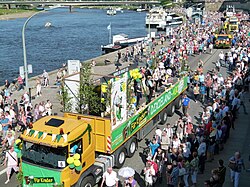
The Mid-Century Revival and Legacy
In the late 1940s and 1950s, a major Dixieland revival occurred as a reaction to the orchestrated swing era and the complexity of bebop. Led by groups like the Dukes of Dixieland, this movement brought many semi-retired musicians back to the spotlight. While some younger Black musicians avoided the revival due to its associations with nostalgia for white audiences and the Jim Crow connotations of the name "Dixieland," the era solidified the genre's place in American culture.
This legacy persists today through world-renowned festivals, such as the New Orleans Jazz & Heritage Festival and the Internationales Dixieland Festival Dresden, as well as enduring standards like "When the Saints Go Marching In" and "Basin Street Blues."
Frequently Asked Questions
What is the difference between Dixieland and other jazz styles?
Dixieland is primarily distinguished by its collective, polyphonic improvisation, where multiple instruments play improvised lines simultaneously, unlike the structured arrangements of Big Band swing or the complex, fast-paced soloing of bebop.
Why is it called "Dixieland"?
The term is a reference to the "Old South," specifically the region south of the Mason-Dixon line. It was first used to describe the Original Dixieland Jazz Band before becoming a label for the genre itself during the mid-century revival.
What instruments are essential for a Dixieland band?
A standard band features a front line of trumpet (or cornet), trombone, and clarinet, supported by a rhythm section that typically includes at least two instruments from a selection of piano, drums, banjo, guitar, tuba, or string bass.
How did the Chicago style differ from the New Orleans style?
The Chicago style is generally faster, emphasizes individual solos over ensemble playing, and uses a 4-to-the-bar swing rhythm. It also typically replaces the tuba and banjo with the string bass and guitar.
Is Dixieland still popular today?
Yes, it remains a major tourist attraction in New Orleans and is celebrated globally through international festivals in cities like Dresden, Tarragona, and Ghent, as well as through dedicated jazz periodicals.