Louis Armstrong: The Definitive Legacy of a Jazz Pioneer
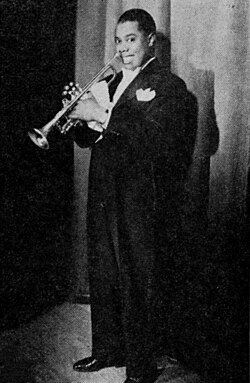
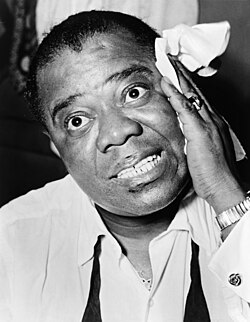
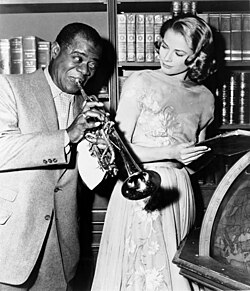
Few figures have shaped the landscape of American music as profoundly as Louis Armstrong. Known affectionately as "Satchmo," "Pops," and "Satch," Armstrong was more than just a musician; he was a transformative force who shifted the focus of jazz from collective improvisation to individual soloing. His brilliance on the trumpet and his distinctive gravelly vocals turned jazz into a global phenomenon, bridging cultural divides and redefining the possibilities of musical expression.
From his humble beginnings in New Orleans to his status as a worldwide cultural ambassador, Armstrong's career spanned over five decades of relentless innovation and performance.
Key Facts

- Full Name: Louis Daniel Armstrong
- Lifespan: 1901 – July 6, 1971 (aged 69)
- Primary Instruments: Trumpet and Vocals
- Key Genres: Jazz, Dixieland, Swing, Blues, and Traditional Pop
- Major Achievement: Oldest artist to reach number one on the Billboard Hot 100 (at age 63) with "Hello, Dolly!"
- Notable Groups: The Hot Five and The All-Stars
Early Life and Musical Foundations
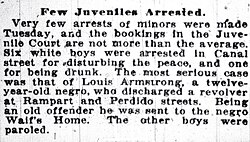
Louis Armstrong's journey began in New Orleans, where he attended the Colored Waifs' Home for Boys and the Fisk School for Boys. These early years provided the backdrop for his initial foray into music, where he absorbed the rich, multicultural sounds of his hometown.
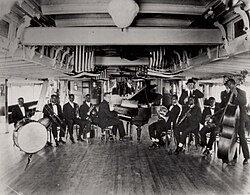
His early professional development was significantly influenced by his time on riverboats, where he refined his craft and expanded his musical vocabulary. This period of "riverboat education" served as a critical bridge between his youth and his emergence as a professional musician.
The Rise to Global Stardom
The Chicago Period and the Hot Five
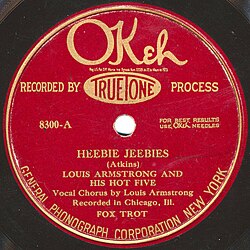
Armstrong's move to Chicago marked a pivotal era in his career. It was here that he began recording with the Hot Five, a small ensemble that allowed him to showcase his virtuosic trumpet playing. These recordings, including the legendary "West End Blues" and "Heebie Jeebies," are credited with establishing the soloist as the centerpiece of jazz performance.
The Fletcher Henderson Orchestra and the Harlem Renaissance
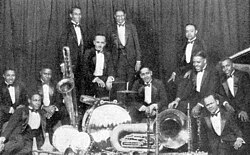
In the mid-1920s, Armstrong joined the Fletcher Henderson Orchestra in New York City. His presence in the city coincided with the Harlem Renaissance, a flourishing of African American intellectual and artistic life. During this time, Armstrong's influence grew as he integrated his New Orleans style with the emerging big band sound of the era.
Emergence as a Vocalist
While his trumpet playing was revolutionary, Armstrong's voice became equally iconic. He popularized a style of singing that mirrored his trumpet improvisations, bringing a new level of emotional depth and rhythmic freedom to vocal jazz. This versatility allowed him to transition seamlessly between jazz, blues, and traditional pop.
Later Career and Global Ambassadorship
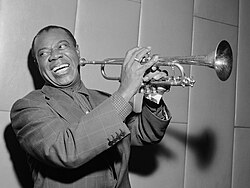
As the music industry evolved, Armstrong continued to adapt. He revived his career with the All-Stars, a smaller group that allowed him to return to his roots while maintaining a modern appeal. In his later years, he became a "jazz ambassador," traveling the world to promote American culture through music.
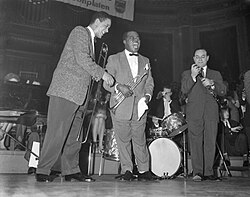
Even in his 60s, Armstrong remained a chart-topping force. In 1964, he achieved a historic milestone by knocking The Beatles off the top of the Billboard Hot 100 with his version of "Hello, Dolly!"
Personal Life and Health
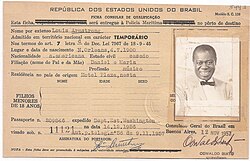
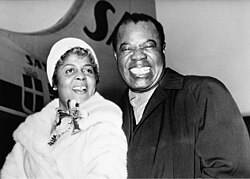
Armstrong's personal life was marked by four marriages: Daisy Parker, Lil Hardin Armstrong, Alpha Smith, and finally Lucille Wilson. Despite his public persona of perpetual joy, he faced significant health challenges. He suffered a heart attack in 1959 and was hospitalized in 1968 for heart and kidney trouble.
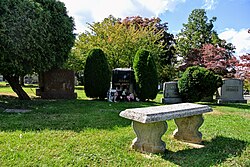
Remarkably, his dedication to his art never wavered. Even during the 1960s, he continued to perform approximately 300 nights per year. He passed away in his sleep on July 6, 1971, and is interred at Flushing Cemetery in Queens, New York City.
Summary of Career and Honors
| Category | Details |
|---|---|
| Active Years | 1918–1971 |
| Key Labels | Columbia, Victor, Decca, RCA Victor, Verve, ABC |
| Grammy Wins | Winner for "Hello, Dolly!" (1964) |
| Hall of Fame Inductions | DownBeat (1952), Hollywood Walk of Fame (1960), Rock and Roll Hall of Fame (1990) |
| Essential Works | "West End Blues," "What a Wonderful World," "Hello, Dolly!" |
Frequently Asked Questions
What were Louis Armstrong's most famous nicknames?
He was most commonly known as Satchmo, Pops, and Satch.
Which song made Louis Armstrong the oldest artist to have a number one hit in the US?
His 1964 recording of "Hello, Dolly!" reached number one on the Billboard Hot 100, making the 63-year-old artist a record-breaker.
What was the significance of the Hot Five recordings?
The Hot Five recordings were crucial because they shifted the focus of jazz from collective improvisation to the individual soloist, highlighting Armstrong's technical mastery and creativity.
How did Louis Armstrong contribute to the Harlem Renaissance?
By performing with the Fletcher Henderson Orchestra and other ensembles in New York, Armstrong brought the New Orleans jazz tradition to the center of the Harlem Renaissance, influencing a generation of musicians and artists.
Where is Louis Armstrong buried?
He is buried at Flushing Cemetery in Queens, New York City.