Württemberg-Hohenzollern: The Post-War State of West Germany
In the complex geopolitical landscape following World War II, Germany was divided into various occupation zones. One of the most distinct administrative entities to emerge during this era was Württemberg-Hohenzollern. Established in 1945 within the French-administered zone, this state served as a critical stepping stone in the reconstruction of the German federal system before its eventual merger into the modern state of Baden-Württemberg.
Key Facts
- Existence: 1945 to 1952.
- Capital: Tübingen.
- Administration: Part of the French occupation zone and later a state of West Germany.
- Population: Approximately 1,184,000 (as of 1950).
- Area: 10,406 square kilometers (as of 1950).
- Legacy: Its coat of arms influenced the design of the Porsche brand logo.
The Formation and Geography of the State
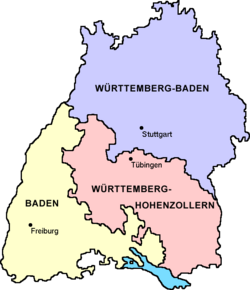
Württemberg-Hohenzollern was created from a combination of three distinct territories: the southern half of the former state of Württemberg, the Prussian administrative region of Hohenzollern, and the Bavarian district of Lindau. This configuration was a result of the post-war division of Germany.
Interestingly, the division of Württemberg into northern and southern halves was strategically determined by infrastructure. The northern half became part of Württemberg-Baden under US administration, with the boundary drawn specifically to ensure that the Autobahn connecting Karlsruhe and Munich (the current A8) remained entirely within the American zone.
Political Evolution and Governance
The state established its own legislative body, known as the Landtag of Württemberg-Hohenzollern. A significant milestone in its political development occurred on May 18, 1947, when a new constitution was enacted and the first parliament was elected. When the Federal Republic of Germany (West Germany) was officially formed on May 23, 1949, Württemberg-Hohenzollern joined as one of its constituent states.
The state was led by three successive minister-presidents during its short history:
- Carlo Schmid (SPD): 1945–1947
- Lorenz Bock (CDU): 1947–1948
- Gebhard Müller (CDU): 1948–1952
The Path to Baden-Württemberg
The existence of Württemberg-Hohenzollern was always intended to be a transitional phase. In September 1950, a straw poll was conducted across three states—Württemberg-Hohenzollern, Württemberg-Baden, and Baden—to gauge public interest in a merger. This was followed by a formal public referendum on December 9, 1951.
The results led to the unification of these three entities. On April 25, 1952, Württemberg-Hohenzollern was disestablished to form the modern, larger state of Baden-Württemberg.
Cultural Legacy and the Porsche Logo
Beyond politics, the state left a lasting mark on global branding. The coat of arms of Württemberg-Hohenzollern—which was identical to that of the Free People's State of Württemberg from the Weimar Republic—served as the foundation for the Porsche brand logo. Specifically, the red and black stripes found on the sides of the Porsche crest are reflections of the traditional colors of the Württemberg-Hohenzollern crest.
Below is a summary of the state's vital statistics and timeline:
| Attribute | Details |
|---|---|
| Capital | Tübingen |
| Area (1950) | 10,406 km² |
| Population (1950) | 1,184,000 |
| Established | 1945 |
| Joined West Germany | May 23, 1949 |
| Disestablished | April 25, 1952 |
Frequently Asked Questions
What was Württemberg-Hohenzollern?
It was a state in West Germany created in 1945 within the French occupation zone, consisting of southern Württemberg, the Hohenzollern region, and the Lindau district.
Why was the state divided from Württemberg-Baden?
The division was based on the post-war occupation zones (French vs. American). The boundary was specifically set so that the A8 Autobahn between Karlsruhe and Munich remained entirely within the American zone.
How did Württemberg-Hohenzollern influence the Porsche logo?
The red and black stripes on the Porsche crest are derived from the traditional colors of the Württemberg-Hohenzollern coat of arms.
When did the state cease to exist?
The state was disestablished on April 25, 1952, when it merged with Baden and Württemberg-Baden to form the current state of Baden-Württemberg.
Who were the leaders of Württemberg-Hohenzollern?
The state was led by three minister-presidents: Carlo Schmid (SPD), Lorenz Bock (CDU), and Gebhard Müller (CDU).