World War I: The Global Conflict That Reshaped the Modern World
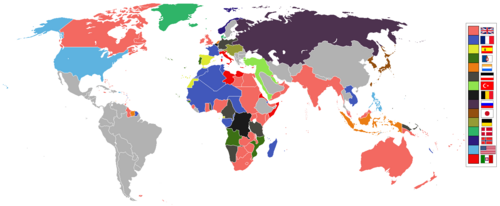
World War I, often referred to as The Great War, was a cataclysmic global conflict that lasted from July 28, 1914, to November 11, 1918. Spanning four years, three months, and 14 days, the war involved the world's great powers organized into two opposing military alliances: the Allied Powers and the Central Powers. The conflict was fought across multiple continents and oceans, including Europe, the Middle East, Africa, the Pacific, the Atlantic, and the Mediterranean and Adriatic seas.
What began as a regional dispute in the Balkans rapidly escalated into a total war, characterized by unprecedented casualties and the introduction of industrial-scale weaponry. The war fundamentally altered national boundaries, dissolved centuries-old empires, and left a legacy of trauma and political instability that would influence the 20th century.
Key Facts
- Duration: July 28, 1914 – November 11, 1918.
- Total Deaths: Estimated between 15 and 22 million military and civilian casualties.
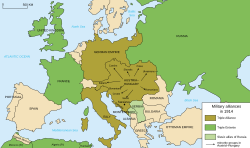
- Primary Alliances: Allied Powers (France, UK, Russia, Italy, USA, Japan) vs. Central Powers (Germany, Austria-Hungary, Ottoman Empire, Bulgaria).
- Outcome: Decisive victory for the Allied Powers.
- Key Technological Shifts: Introduction of chemical weapons, tanks, and aerial combat.
The Road to War: Alliances and Tensions
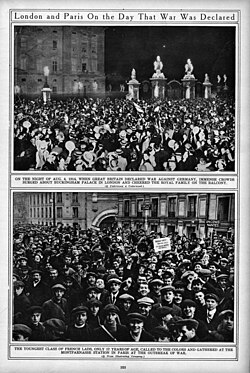
The origins of the war lay in a complex web of political and military alliances, an escalating arms race, and intense nationalist tensions in the Balkans. By 1914, Europe was divided into rival coalitions, creating a volatile environment where a single spark could trigger a continental war.
The Sarajevo Assassination
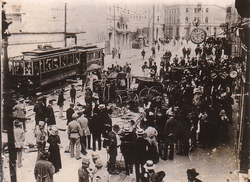
The immediate trigger was the assassination of Archduke Franz Ferdinand in Sarajevo on June 28, 1914. This event sparked the July Crisis, a period of diplomatic failure and mobilization that saw the Central Powers and Allied Powers activate their mutual defense treaties.
![Traditionally thought to show the arrest of Gavrilo Princip (right), this photo is now believed by historians to depict an innocent bystander, Ferdinand Behr, on 28 June 1914.[31][32]](/images/50/e9/50e9cef9c127b8c8656ac535232f899219ceecd48b515585f6c199fcf1f3d05a.jpg)
Following the assassination, violence expanded within Bosnia and Herzegovina, leading to a rapid escalation of hostilities. By late July, the diplomatic channels had collapsed, and the world entered a state of war.
Progress of the War
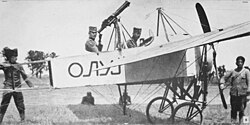
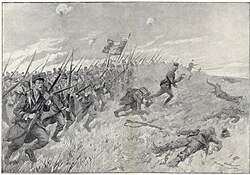
The conflict began with a series of rapid movements, but soon devolved into a grueling stalemate, particularly in Europe. While all sides initially expected a short conflict, the reality of modern firepower forced armies into the earth.
The Western Front and Trench Warfare
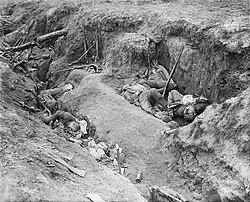
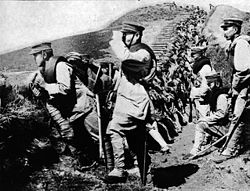
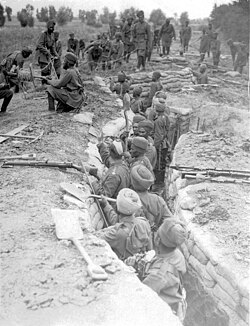
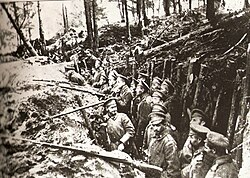
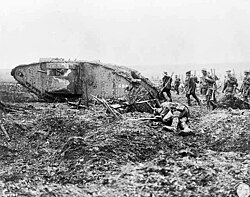
In France and Belgium, the war became defined by trench warfare—a defensive system of deep ditches and fortifications. This led to a stagnant front where gains were measured in yards and casualties were immense. Major engagements like the Battle of the Somme and the Battle of Verdun exemplified the attrition of this front.
The Eastern and Southern Fronts
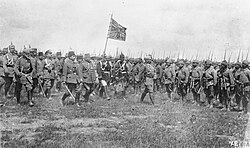
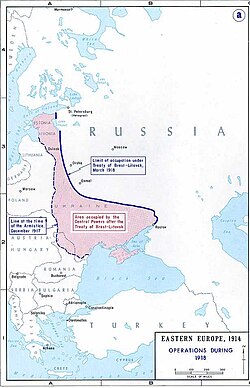
The Eastern Front, involving Russia, Germany, and Austria-Hungary, was more fluid than the West but equally deadly. Russia faced significant losses before the internal turmoil of the Russian Revolution led to its withdrawal from the war in 1917 via the Treaty of Brest-Litovsk.
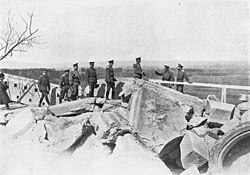
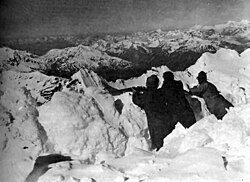
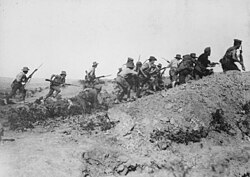
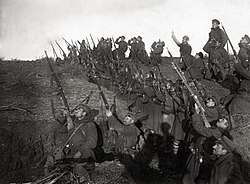
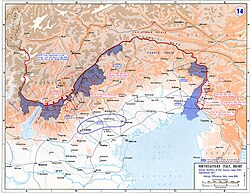
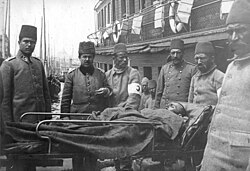
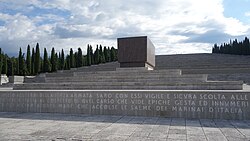
In the south, the Italian Front and the Balkan campaigns saw brutal fighting in challenging terrains, including the high Alps. Meanwhile, the Ottoman Empire fought against Allied forces in the Middle East, including the Gallipoli campaign and the Sinai and Palestine campaigns.
Global Reach: Asia, Africa, and the Seas
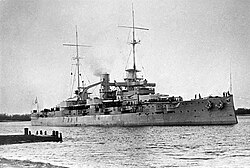
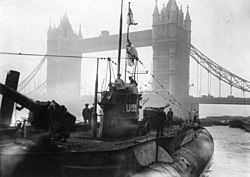
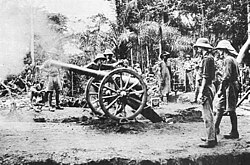
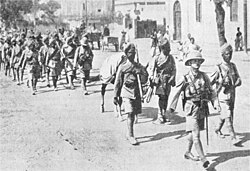
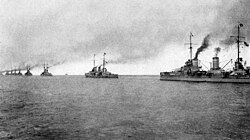
The war was truly global. Japan occupied German territories in the Pacific, while British and French forces engaged in campaigns across Africa. At sea, the naval war was characterized by the clash of massive dreadnoughts and the devastating use of submarines (U-boats) by Germany to disrupt Allied shipping.
The Final Years and Allied Victory
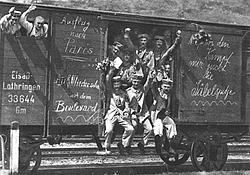
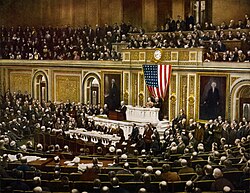
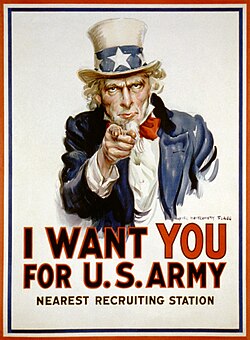
The tide of the war shifted significantly in 1917 with the entry of the United States, which provided the Allies with a massive influx of fresh manpower and industrial resources. By 1918, the Central Powers were exhausted, facing internal collapse and a superior Allied offensive.
Between April and November 1918, the Allies increased their front-line rifle strength while German strength fell by half. This imbalance led to the breakthrough of the Macedonian front and the eventual surrender of the German government.
![Between April and November 1918, the Allies increased their front-line rifle strength while German strength fell by half.[189]](/images/ce/6c/ce6c205a277dec6b970dace3534ba0cbd5b191ea5fa705c838ba02ef5b550f28.png)
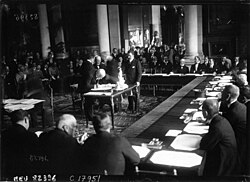
The fighting officially ended with the signing of the armistice on November 11, 1918, followed by formal peace treaties, most notably the Treaty of Versailles in 1919.
![Ferdinand Foch (second from right) pictured outside the carriage in Compiègne after agreeing to the armistice that ended the war there.[206]](/images/1e/47/1e4713cee7483613893a8a7f2a304a6106e9712c971febe0056d96d030bc5aef.jpg)
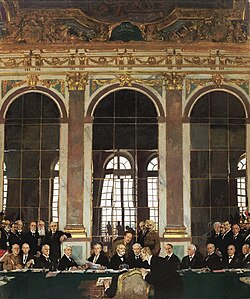
Aftermath and Legacy
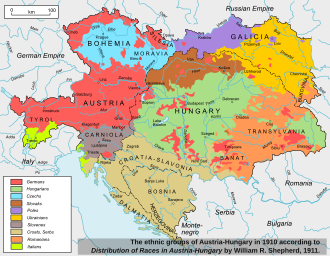
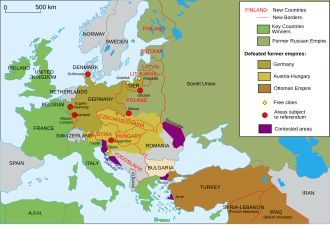
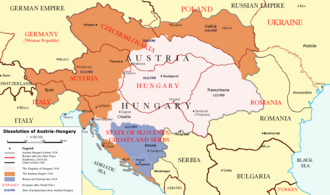
The conclusion of the war brought about a total redrawing of the global map. The dissolution of the Austro-Hungarian, Ottoman, and Russian empires led to the creation of several new national identities and borders.
| Alliance | Key Member Nations | Primary Result |
|---|---|---|
| Allied Powers | France, UK (and Empire), Russia (until 1917), Italy, USA, Japan | Victory; Territorial gains; League of Nations established |
| Central Powers | Germany, Austria-Hungary, Ottoman Empire, Bulgaria | Defeat; Loss of colonies; Significant territorial reductions |
Human and Social Cost
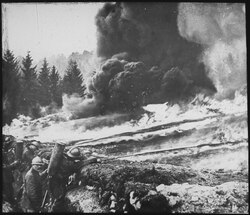
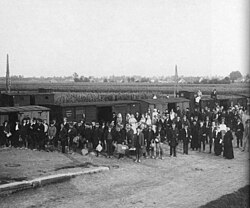
The war is remembered for its extreme brutality, including the first widespread use of chemical weapons (poison gas) and the occurrence of genocides, most notably by the Ottoman Empire against Armenians.
![Armenians killed during the Armenian genocide. Image taken from Ambassador Morgenthau's Story, written by Henry Morgenthau Sr. and published in 1918.[261]](/images/a0/e5/a0e58288c6152355b0a01a8c1fa0bd4c4daf5aa6003fbe020e16bcb8205a5b54.jpg)
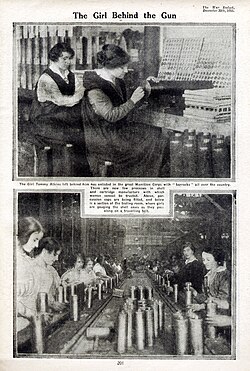
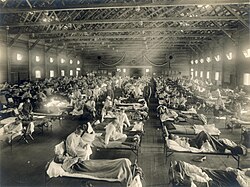
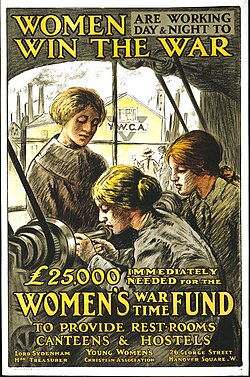
Beyond the battlefield, the war transformed society. Women entered the workforce in unprecedented numbers to support the war effort, and the global economy suffered severe disruptions.
Frequently Asked Questions
![Austro-Hungarian troops executing captured Serbians, 1917. Serbia lost about 850,000 people during the war, a quarter of its pre-war population.[112]](/images/0a/4f/0a4fe4b695e744c056bb22aa608ca4ee6bc88b20933e5e1c8fc64a6ab5a8c41f.jpg)
![Royal Air Force Sopwith Camel. In April 1917, the average life expectancy of a British pilot on the Western Front was 93 flying hours.[324]](/images/5e/ec/5eec859ba71c1b4377ac93faceec6200960512ac20bda6a83f3d318748eccf45.jpg)
What was the immediate cause of World War I?
The immediate cause was the assassination of Archduke Franz Ferdinand of Austria-Hungary in Sarajevo on June 28, 1914, which triggered a chain reaction of alliance obligations known as the July Crisis.
What was trench warfare?
Trench warfare was a type of land warfare where opposing armies fought from networks of deep ditches. It became the dominant feature of the Western Front, leading to a stalemate where neither side could make significant territorial gains.
Why did the United States enter the war?
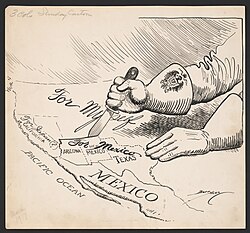
The United States entered the war in 1917, driven by factors including Germany's unrestricted submarine warfare and diplomatic tensions, such as those highlighted by the Zimmermann telegram.
How did the war officially end?
The fighting ended with an armistice on November 11, 1918. The formal legal end came through various peace treaties, the most prominent being the Treaty of Versailles signed on June 28, 1919.
What were the long-term consequences of the war?
The war led to the collapse of four major empires, the redrawing of borders in Europe and the Middle East, and a massive loss of life (15-22 million deaths), which fundamentally altered the political and social landscape of the 20th century.