Free State of Prussia
The Free State of Prussia (Freistaat Preußen) represented a pivotal era in German history, spanning from the collapse of the monarchy in 1918 to its formal abolition in 1947. Transitioning from a kingdom to a republic, it served as a critical state within the Weimar Republic and, later, a subordinated entity under Nazi Germany. For much of the interwar period, Prussia acted as a democratic bulwark against political extremism, though it eventually succumbed to the centralized power of the Third Reich.
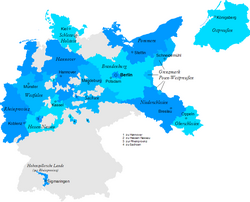
Based in Berlin, the Free State was a massive administrative entity that encompassed a significant portion of Germany's territory and population, blending industrial powerhouses in the west with agrarian heartlands in the east.
Key Facts
- Duration: 1918 to 1947.
- Capital: Berlin.
- Population (1925): Approximately 38.18 million.
- Government Type: Republic (until 1932/1933).
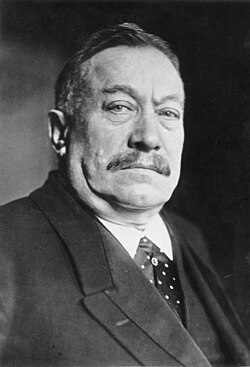
- Key Figures: Otto Braun (longest-serving Minister President) and Hermann Göring (last Minister President).
- Abolition: Formally dissolved by the Allied Control Council on February 25, 1947.
Establishment and the Democratic Transition (1918–1920)
The Free State emerged from the German Revolution of November 1918. Following the abdication of the monarchy, a revolutionary cabinet was formed to manage the transition. A defining moment occurred on January 26, 1919, with the election of the Prussian State Assembly, tasked with drafting a new constitution. This election was historic as it marked the first time women exercised their right to vote in Prussia.
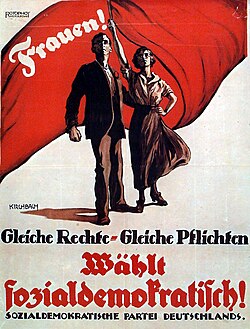
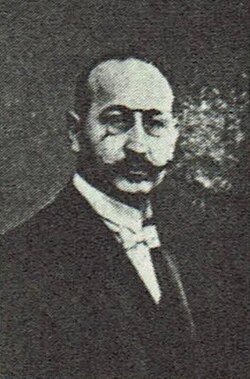
The Majority Social Democratic Party (MSPD) emerged as the dominant political force, leading a coalition with the Centre Party and the German Democratic Party (DDP)—known as the Weimar Coalition. Paul Hirsch served as an early Minister President during this formative period, overseeing the creation of new administrative bodies, including the Ministry of Public Welfare.
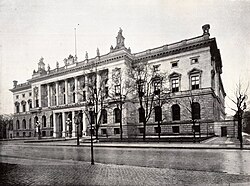
The process of formalizing the state was delayed by political unrest, including the Kapp Putsch (a right-wing coup attempt). Finally, on November 30, 1920, the State Assembly adopted the Constitution of the Free State of Prussia, establishing a parliamentary system with a two-chamber legislature: the State Council (Upper Chamber) and the House of Representatives (Lower Chamber).
Territory, Population, and Economy
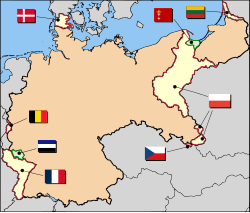
The Free State of Prussia faced significant territorial reductions following World War I. Under the Treaty of Versailles, large areas were ceded to neighboring countries to ensure regional stability and national self-determination.
| Region | Ceded To | Area (km²) | Native German Pop. % |
|---|---|---|---|
| Posen (part) | Poland | 26,042 | 34.4% |
| West Prussia (part) | Poland | 15,865 | 42.7% |
| East Upper Silesia (part) | Poland | 3,213 | 29.6% |
| Danzig | Free City of Danzig | 1,914 | 95.2% |
| Memel Territory | Lithuania | 2,657 | 51.1% |
| North Schleswig | Denmark | 3,992 | 24.1% |
| Eupen-Malmedy | Belgium | 1,036 | 81.7% |
Economically, Prussia was a land of stark contrasts. The western provinces, such as Westphalia and the Rhine Province, were heavily industrialized, with Westphalia seeing 56.8% of its workforce in industry and skilled trades. In contrast, East Prussia remained primarily agrarian, with 45.4% of its economy based on agriculture. This economic divide mirrored income disparities; average earnings in Berlin-Brandenburg were over 30% higher than the national average, while East Prussian earnings were over 30% lower.
The Weimar Era: A Bulwark of Democracy (1921–1932)
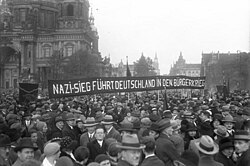
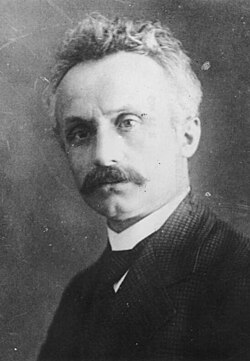
From 1921 to 1932, Prussia was often seen as more stable and democratic than the national government. Under the leadership of Otto Braun, the longest-serving Minister President, the state pursued a policy of "republicanization," attempting to purge the administration and police force of anti-democratic elements.
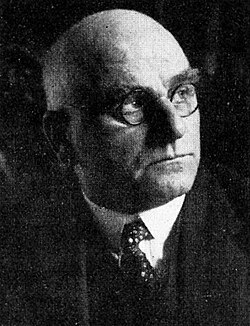
Carl Severing, as Minister of the Interior, played a crucial role in democratizing the state's administration and ensuring the police remained loyal to the republic.
Despite this stability, political polarization grew. While urban centers like Berlin and the Rhineland remained supportive of the republic, the eastern agrarian provinces became breeding grounds for the National Socialist (Nazi) party. By the 1932 elections, the NSDAP had surged, capturing 36.7% of the vote in Prussia.
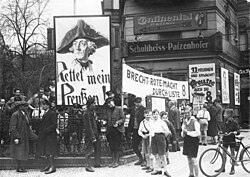
The Fall: Coup d'état and Nazi Seizure
The end of Prussian autonomy began with the Prussian coup d'état (Preußenschlag) on July 20, 1932. Instigated by German Chancellor Franz von Papen, the national government deposed the Braun government and placed Prussia under a Reich Commissioner, effectively stripping the state of its independence.
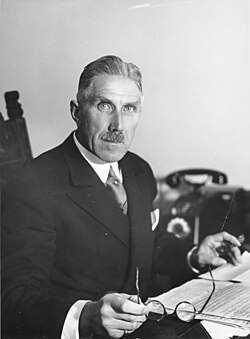
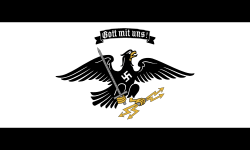
When Adolf Hitler seized power nationally in January 1933, the remaining Prussian structures were quickly "coordinated" (Gleichschaltung). Hermann Göring was appointed Minister President on April 11, 1933. The Landtag met one final time on May 18, 1933, to pass an enabling act that transferred all legislative power to the Reich, ending democratic governance in Prussia.
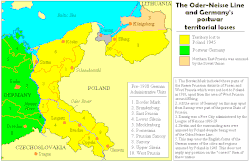
Following the defeat of Nazi Germany in 1945, the Allied Control Council determined that Prussia had been a pillar of German militarism. On February 25, 1947, the Free State of Prussia was legally abolished, and its remaining territories were divided among the Allied occupation zones or ceded to Poland and the Soviet Union.
Frequently Asked Questions
What was the Free State of Prussia?
It was the republican successor to the Kingdom of Prussia, existing as a state within the Weimar Republic and later Nazi Germany from 1918 until its formal abolition in 1947.
Who was the most influential leader of the Free State?
Otto Braun was the longest-serving Minister President and a key figure in maintaining the state as a democratic stronghold during the Weimar Republic.
What was the Preußenschlag?
The Preußenschlag, or Prussian coup d'état of 1932, was a move by Chancellor Franz von Papen to remove the democratic Prussian government and subordinate the state to the national government.
Why was Prussia abolished in 1947?
The Allied Control Council abolished Prussia by decree because it was viewed as a historical center of German militarism and authoritarianism.
How did the economy differ across the state?
Prussia had a sharp divide between the industrial west (Rhine Province and Westphalia) and the agrarian east (East Prussia and Pomerania), which also resulted in significant income disparities.