World Government: Theoretical Frameworks and the Evolution of Global Governance
A world government is a theoretical single political authority possessing jurisdiction over all of humanity and the entire planet. While a global entity with full executive, legislative, and judicial functions has never existed in reality, the concept has been debated for centuries. Depending on the proponent or detractor, this imagined system ranges from a democratic federation to a tyrannical regime.
In the modern era, the United Nations (UN) represents the closest approximation to such a system. However, the UN primarily serves an advisory role, designed to foster cooperation between sovereign national governments rather than exerting direct authority over them. Currently, international law is arbitrated by sovereign states, the International Court of Justice, and the International Criminal Court.
Key Facts
- Definition: A theoretical single political authority with global jurisdiction.
- Closest Approximation: The United Nations, though it lacks sovereign authority over member states.
- Historical Drivers: The devastation of World War II and the advent of nuclear weapons accelerated the movement toward world federalism.
- Modern Examples: Regional supranational unions like the European Union (EU) and African Union (AU) demonstrate partial integration.
- Key Figures: Immanuel Kant, Albert Einstein, and Hugo Grotius have all contributed to the philosophical or political framework of global peace.
Philosophical Foundations
Pre-Modern and Early Modern Thought
The intellectual roots of global governance stretch back to antiquity and the concept of universal monarchy. Later, thinkers like Francisco de Vitoria (1483–1546) and Hugo Grotius (1583–1645) laid the groundwork for international law.

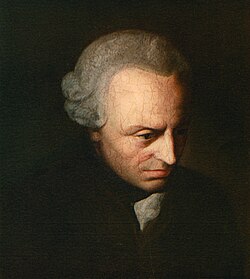
Immanuel Kant and World Citizenship
In 1795, Immanuel Kant proposed that World Citizenship was a necessary step toward establishing permanent world peace. In his "Preliminary Articles," Kant outlined several requirements for a peaceful global order, including the abolition of standing armies, the prohibition of secret treaties, and the requirement that the civil constitution of every state be republican.
The Rise of Supranational Movements
The late 19th century saw the birth of international organizations to manage specific global needs. Early examples include the International Committee of the Red Cross (1863), the Telegraphic Union (1865), and the Universal Postal Union (1874). By 1914, approximately 450 such organizations existed, driven largely by the growth of international trade.
Legal frameworks also evolved during this time. In 1883, James Lorimer explored the idea of a world government establishing a global rule of law, and the Inter-Parliamentary Union was organized in 1886 as an embryonic world parliament.
The Impact of World War II and the Atomic Age
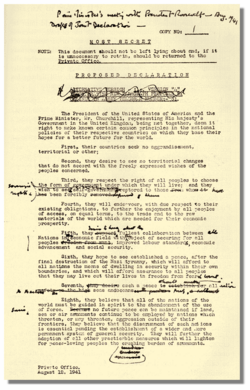
The scale of destruction during World War II—resulting in over 60 million deaths and the first use of weapons of mass destruction—created an urgent demand for institutions that could prevent future global conflicts. This led to the founding of the United Nations in 1945.
The UN was established to promote international security, human rights, and economic development. Today, it comprises 193 member states and operates in six official languages: Arabic, Chinese, English, French, Russian, and Spanish.
The World Federalist Movement
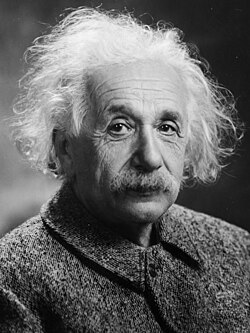
The atomic bombings of Hiroshima and Nagasaki profoundly influenced political thought. Scientists from the Manhattan Project founded the Federation of American Scientists (FAS) and published One World or None, arguing that a world government was the only way to manage nuclear risks. Albert Einstein was among those who believed this was the necessary path forward.
This era saw a surge in activism. The World Movement for World Federal Government grew to 156,000 members by 1950, and Garry Davis's World Citizens registry neared half a million signers. In 1947, the World Federalist Movement (WFM) was formed in Switzerland to coordinate these global efforts.
Modern Global Governance and Regional Integration
Following the Cold War, interest in federal world government renewed. The 1990s saw an expansion of international institutions, most notably the 1998 Rome Statute, which created the International Criminal Court in 2002.
While a single world government remains theoretical, regional integration has become a practical reality. The European Union (EU) evolved from a 1952 trade deal into a massive supranational union. Other examples include the African Union (AU), the Union of South American Nations (UNASUR), and the Eurasian Economic Union (EAEU).
The Push for a Parliamentary Assembly
In recent decades, the Campaign for a United Nations Parliamentary Assembly (UNPA) has sought to create a body to scrutinize the activities of global trade and governance organizations. As of 2019, this effort has received support from over 1,500 Members of Parliament across 100 countries.
| Era/Entity | Primary Focus | Key Characteristic |
|---|---|---|
| Early Philosophy | Universal Monarchy / Law of Nations | Theoretical foundations of global peace |
| Late 19th Century | Technical/Trade Unions | Functional cooperation (e.g., Postal Union) |
| United Nations | International Security & Human Rights | Inter-governmental advisory body |
| World Federalism | Nuclear Survival | Advocacy for a global constitution |
| Regional Unions | Economic & Political Integration | Supranational authority (e.g., EU, AU) |
Frequently Asked Questions
Does a world government currently exist?
No. A single political authority with executive, legislative, and judicial jurisdiction over all of Earth has never existed. The United Nations is the closest approximation, but it is an international organization that fosters cooperation between sovereign states rather than ruling over them.
What is the difference between the UN and a world government?
The UN is an inter-governmental organization that primarily serves an advisory role and relies on the cooperation of its member states. A world government would possess sovereign authority and the power to enforce laws globally, regardless of individual national consent.
Why did the atomic bomb increase support for world government?
The unprecedented destructive power of nuclear weapons led many, including Albert Einstein and the Federation of American Scientists, to believe that national sovereignty was too dangerous. They argued that only a world government could effectively regulate nuclear weapons and prevent total human extinction.
What are supranational unions?
Supranational unions are organizations where member states cede some of their sovereignty to a higher authority to achieve common goals. Examples include the European Union (EU) and the African Union (AU), which integrate economic and political functions across multiple nations.
What was Immanuel Kant's contribution to this idea?
Kant proposed the concept of World Citizenship and a federation of free states. He argued that for world peace to be sustainable, states should adopt republican constitutions and abolish standing armies, moving toward a legal framework of universal hospitality.