UNESCO: Advancing Global Education, Science, and Culture
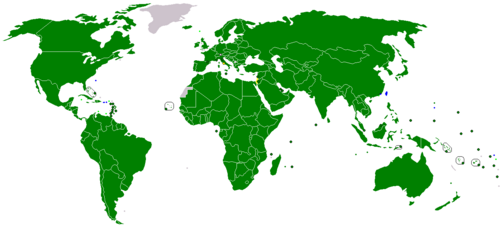
Established on November 16, 1945, UNESCO (the United Nations Educational, Scientific and Cultural Organization) serves as a specialized agency of the United Nations. Headquartered in Paris, France, the organization is governed by the United Nations Economic and Social Council and is dedicated to fostering international peace and security through global cooperation in education, the sciences, and culture.
Under the leadership of Director-General Khaled El-Enany, UNESCO coordinates a vast network of member states and associates to protect the world's shared heritage and ensure equitable access to knowledge and scientific advancement.
Key Facts
- Founded: November 16, 1945.
- Headquarters: Paris, France.
- Current Director-General: Khaled El-Enany.
- Core Mission: Promoting peace through education, science, and culture.
- Global Reach: Operates through a network of field offices across Africa, Arab States, Asia and Pacific, Europe, North America, and Latin America.
Core Activities and Global Initiatives
UNESCO operates across several domains to promote sustainable development and pluralism. Its work ranges from the protection of physical landmarks to the preservation of invisible cultural traditions.
Cultural and Scientific Preservation
One of the organization's most visible roles is the designation of sites and projects of exceptional significance. This includes the World Heritage Sites, which protect landmarks of outstanding universal value, and the Biosphere Reserves, managed through the Programme on Man and the Biosphere (MAB) since 1971.
![Carondelet Palace, Presidential Palace – with changing of the guards. The Historic Center of Quito, Ecuador, is one of the largest, least-altered and best-preserved historic centres in the Americas.[156] This centre was, together with the historic centre of Kraków in Poland, the first to be declared World Heritage Site by UNESCO on 18 September 1978.](/images/1c/a3/1ca31cf6c45e5d9722171c5faf697ad73900d8a2f6e2108de1876bbf8516ba06.jpg)
Other critical preservation efforts include:
- Memory of the World: An international register established in 1997 to preserve documentary heritage.
- Intangible Cultural Heritage: The identification of "Masterpieces of the Oral and Intangible Heritage of Humanity."
- Linguistic Diversity: The UNESCO Atlas of the World's Languages in Danger.
- Global Geoparks Network: Recognizing sites of geological significance.
Education and Science
UNESCO promotes lifelong learning and scientific literacy. It manages the UNESCO ASPNet, a network of over 12,000 schools in 182 countries, and the UNESCO Chairs, involving more than 770 institutions in 126 countries.
In the realm of science, the organization focuses on water resources management via the International Hydrological Programme (IHP), active since 1965, and supports STEM through various international prizes and partnerships.
Organizational Structure and Partnerships
UNESCO's operations are supported by a complex structure of governing bodies and specialized institutes. The General Conference and the Executive Board provide oversight and strategic direction.
The organization collaborates with numerous NGOs and professional bodies, including the International Council of Museums (ICOM), the International Council on Monuments and Sites (ICOMOS), and the International Union for Conservation of Nature (IUCN).
Specialized Institutes
| Acronym | Full Name | Location |
|---|---|---|
| IBE | International Bureau of Education | Geneva |
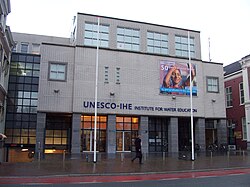
| IHE | IHE-Delft Institute for Water Education | Delft |
| UNESCO-UNEVOC | International Centre for Technical and Vocational Education and Training | Bonn |
| MGIEP | Mahatma Gandhi Institute of Education for Peace and Sustainable Development | New Delhi |
Recognition and Awards
To incentivize excellence and progress, UNESCO grants numerous prizes across five primary categories:
- Education: Including the UNESCO/King Sejong Literacy Prize and the Prize for Girls' and Women's Education.
- Natural Sciences: Such as the L'Oréal-UNESCO Awards for Women in Science and the Kalinga Prize.
- Social and Human Sciences: Including the Madanjeet Singh Prize for the Promotion of Tolerance and Non-Violence.
- Culture: Such as the Melina Mercouri International Prize.
- Communication and Information: Including the Guillermo Cano World Press Freedom Prize.
Frequently Asked Questions
What is the primary purpose of UNESCO?
UNESCO is a specialized agency of the United Nations designed to promote international collaboration in education, science, and culture to increase universal respect for justice, the rule of law, and human rights, ultimately contributing to global peace.
What are World Heritage Sites?
World Heritage Sites are landmarks or areas with legal protection designated by UNESCO for having cultural, historical, scientific, or other forms of significance.
How does UNESCO support education?
UNESCO supports education through initiatives like the ASPNet school network, the publication of the "Four Pillars of Learning," and the promotion of International Literacy Day on September 8th each year.
Who leads UNESCO?
UNESCO is led by a Director-General. As of 2025, the incumbent Director-General is Khaled El-Enany of Egypt.
What is the Memory of the World register?
Established in 1997, the Memory of the World International Register is a project that aims to preserve the world's documentary heritage and facilitate its accessibility to all.