Literacy: Evolution, Global Trends, and Modern Definitions
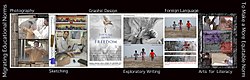
Traditionally, literacy was defined simply as the ability to read and write. However, since the mid-twentieth century, this definition has expanded. Today, literacy encompasses the ability to identify, understand, interpret, create, communicate, and use written information. This broader perspective views literacy as a vital tool that enables individuals to participate effectively in society and achieve their personal and professional goals.
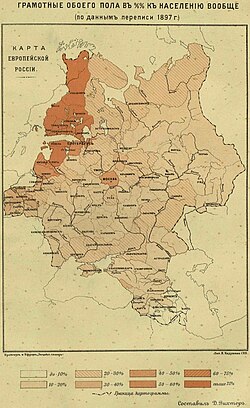
The global spread of literacy is inextricably linked to the invention of writing systems, the expansion of formal education, and rapid technological advancements. While worldwide literacy rates have climbed substantially, significant disparities persist across different countries, regions, and demographic groups—most notably regarding gender and socioeconomic access.
![Adult literacy rates, 2023[1]](/images/f2/dc/f2dc21b53524f3516f2e0ac338b138aa6a7164d5dc732e148e23b14198e976d9.webp)
Key Facts
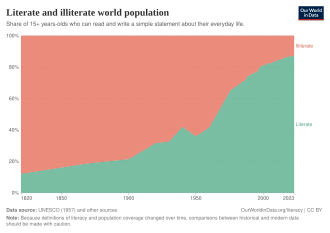
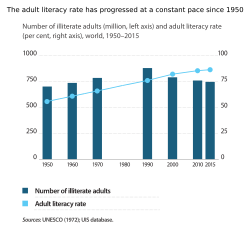
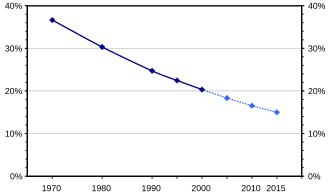
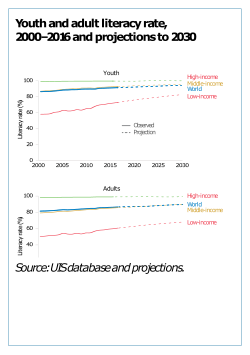
- World illiteracy was halved between 1970 and 2015.
- Modern literacy includes specialized forms such as digital, financial, and health literacy.
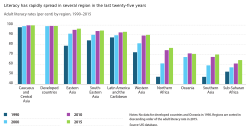
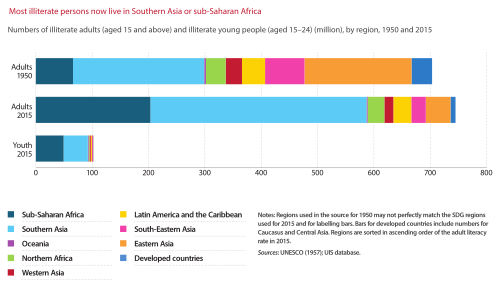
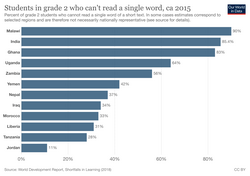
- Significant regional disparities remain, with the highest concentrations of illiteracy currently in Southern Asia and sub-Saharan Africa.
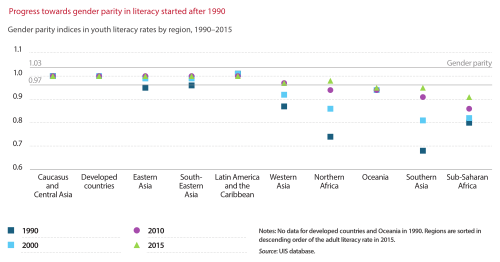
- Gender parity in youth literacy began to show marked progress after 1990.
- Literacy is recognized as a fundamental human right and a key indicator of global development.
The Expanding Spectrum of Literacy
As society becomes more complex, the term "literacy" is now applied to various specialized domains of knowledge. These "multiliteracies" allow individuals to navigate specific professional or social environments:
- Computer Literacy: Skill in using computers and digital technology.
- Scientific Literacy: The ability to understand science.
- Statistical Literacy: The ability to reason with statistics and data.
- Financial Literacy: The ability to make informed choices about money.
- Health Literacy: The ability to understand healthcare information.
- Media Literacy: The ability to navigate and critically analyze media.
- Visual Literacy: The ability to interpret images, maps, and video.
- Mathematical Literacy (Numeracy): The ability to apply numerical concepts.
Beyond these specialized forms, scholars distinguish between basic literacy and functional illiteracy, which refers to adults who may possess basic reading skills but cannot apply them effectively to the demands of daily life.
Historical Evolution of Reading and Writing
Origins and Antiquity
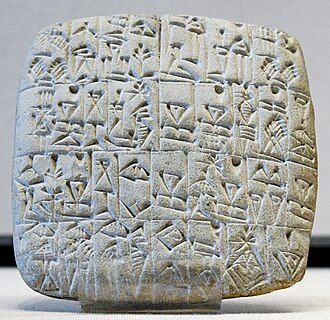
The journey of literacy began with the invention of alphabetic writing and early recording systems. In ancient civilizations, literacy was often restricted to a small elite of scribes and administrators.
Medieval and Early Modern Eras
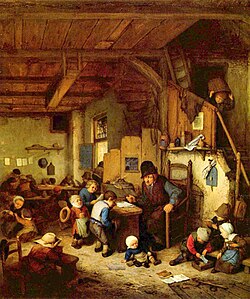
By the 14th century, literacy began to seep into broader society; by 1300, it was noted that "everyone knew someone who could read," and books were present in most churches and villages. However, formal rates remained low across Europe during the early modern period.
| Nation | 1500 (%) | 1800 (%) |
|---|---|---|
| England | 6 | 53 |
| Netherlands | 10 | 68 |
| Belgium | 10 | 49 |
| Germany | 6 | 35 |
| France | 7 | 37 |
| Austria/Hungary | 6 | 21 |
| Poland | 6 | 21 |
| Italy | 9 | 22 |
| Spain | 9 | 20 |
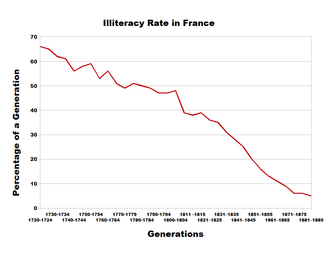
Industrialization and Modern Proliferation
The Industrial Revolution accelerated the need for literacy. Interestingly, reading and writing skills did not always develop at the same pace. In Spain between 1841 and 1860, while the overall literacy rate remained around 25%, the proportion of people who could both read and write increased significantly.
Global Literacy Trends and Disparities
![Adult literacy rate, male (%), 2015[113]](/images/1c/bb/1cbb6ca407f70126a3264a6de01fb29c616079e56c92886b365ffe9027afb8a4.webp)
Regional Analysis
Since 1950, adult literacy rates have increased at a constant pace globally, though the distribution is uneven.
Africa: Literacy rates vary wildly. For example, Equatorial Guinea reports approximately 95% literacy, while South Sudan is approximately 27%. Other notable rates include Mauritius (89.8% in 2011) and Niger (28.7%).
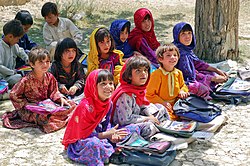
Asia: Significant progress has been made in countries like China (96.7% in 2015) and Sri Lanka (92.63% in 2015). However, challenges remain in Afghanistan, where the adult literacy rate was 43% in 2020, though youth literacy (ages 15–24) was higher at 65%.
Gender and Socioeconomic Factors
Gender has historically been a primary divider in literacy access. While progress toward gender parity in youth literacy accelerated after 1990, gaps remain in many adult populations. Conversely, in some developed countries, a gender gap has emerged where boys may struggle more with literacy learning than girls.
The Impact of Literacy on Development
![Adult literacy rate, female (%), 2015[114]](/images/22/6d/226db6d64790b97352dc0d066c03892030214039b54bc682ae6509072df323dc.webp)
Literacy is more than an educational milestone; it is a critical driver of socioeconomic health. Higher literacy rates are directly linked to improved health outcomes, increased economic participation, and more effective civic engagement. Because of this, literacy is viewed as a fundamental human right and a primary indicator of a nation's development.
Frequently Asked Questions
What is the difference between basic literacy and functional literacy?
Basic literacy is the fundamental ability to read and write. Functional literacy is the ability to use those reading and writing skills effectively in everyday life to function independently in society.
Which regions currently face the highest rates of illiteracy?
The majority of the world's illiterate population currently resides in sub-Saharan Africa and Southern Asia.
How has the definition of literacy changed over time?
It has evolved from a narrow focus on reading and writing to a broad set of competencies including the ability to interpret, create, and communicate information across various media and specialized fields (e.g., digital or financial literacy).
Is there still a gender gap in global literacy?
Yes, although youth literacy gender parity has improved significantly since 1990, disparities still exist in adult literacy rates in many parts of the world.
Why is literacy considered a development indicator?
Literacy is fundamental to economic participation, healthcare access, and civic life, making it a reliable proxy for a population's overall access to education and socioeconomic opportunity.