Understanding Writing Systems: From Ancient Symbols to Modern Scripts
While spoken language is a universal human experience, writing is a much more recent development. It is a conventional system used to represent a specific language through a set of symbols, known as a script, governed by specific encoding rules. Every complex writing system we use today began as proto-writing—a primitive stage where a limited number of ideographs (symbols representing ideas) were used, though they lacked the capacity to express the full breadth of human thought or complex grammar.
![The relationship between spoken, written, and signed modes of language, as modelled by Meletis & Dürscheid (2022)[1] While many spoken or signed languages are not written, there are no written languages without a spoken counterpart that they originally emerged to record.](/images/f8/ce/f8ce84c856ed22443d0a3c383f173e6414864ffb792efa27fd42c2d1eaca01a1.webp)
The Relationship Between Writing and Language
The connection between written symbols and spoken words has been studied since the time of Aristotle. It is important to note that while language is universal, writing is not; it was independently invented in only a few locations throughout history. Furthermore, while many spoken languages exist without a written form, every written language is built upon an existing spoken foundation.
This relationship can be complex. A single language, such as Hindustani, can be expressed through multiple different writing systems. Conversely, one writing system can represent many languages. For example, Chinese characters were used to write the Vietnamese language from at least the 13th century until they were replaced by a Latin-based alphabet in the 20th century.
For those whose first language is a signed language, reading a written script associated with a spoken language is considered literacy in a second, acquired language.
Key Facts
- Writing Origins: The earliest conventional writing systems appeared during the late 4th millennium BC.
- Independent Invention: Writing was invented independently in several regions, including Mesopotamia, Egypt, China, and Mesoamerica.
- Symbol Counts: Alphabets typically use fewer than 100 symbols, while syllabaries and logographies can use hundreds or thousands.
- Foundational Script: Most modern alphabets descend from or were inspired by the Proto-Sinaitic script (c. 1800 BC).
- Spatial Nature: Writing is fundamentally spatial; systems like Braille prove that literacy is not strictly visual but relies on the arrangement of symbols in space.
How Writing Systems Are Classified
Linguists classify writing systems based on how their graphemes (the smallest functional units of a writing system) relate to the units of spoken language. These classifications generally fall into two categories: phonetic and logographic.
Phonetic Writing Systems
Phonetic systems use graphemes to represent the sounds of a language. These are further divided into several types:
- Alphabets: Use letters to represent phonemes (individual speech sounds).
- Pure alphabets: Represent both consonants and vowels.
- Abjads: Primarily represent consonant sounds.
- Abugidas: Represent consonant-vowel pairs.
- Syllabaries: Use syllabograms to represent entire syllables or moras (units of prosody). These are most effective for languages with simple syllable structures. For instance, Japanese uses two kana syllabaries (hiragana and katakana) to represent roughly 100 moras. In contrast, English has a complex structure with an estimated 15,000 to 16,000 distinct syllables, making a pure syllabary difficult to implement.

Logographic Systems
Logographic (or morphographic) systems use graphemes to represent units of meaning, such as words or morphemes (the smallest units of meaning). These systems often require a vast inventory of symbols to function effectively.
![Diagram comparing the abstraction of pictographs in cuneiform, Egyptian hieroglyphs, and Chinese characters – from an 1870 publication by French Egyptologist Gaston Maspero[c]](/images/f9/2b/f92bfc0739a2c544793173723a84c0ef63a80ec88f9378cd0a753eab7e995869.webp)
A Brief History of Script Evolution
Writing emerged independently across the globe through distinct evolutionary paths:
- Mesopotamia: Cuneiform was the first major system, initially used for Sumerian and later adapted for Akkadian around 2350 BC.
- Egypt: Egyptian hieroglyphs emerged around the same time as cuneiform (between 3400 and 3100 BC), though the two systems are believed to be independent inventions.
- China: Chinese characters emerged independently in the Yellow River valley around 1200 BC.
- Mesoamerica: Scripts such as the Olmec and Maya systems are also considered independent inventions.
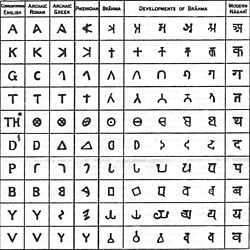
- The Alphabetical Lineage: Alphabetic writing began around 1800 BC in the Sinai Peninsula. This Proto-Sinaitic script led to the Phoenician alphabet (c. 1050 BC), which in turn gave rise to the Greek alphabet (c. 800 BC). The Latin alphabet, a descendant of the Greek, is now the most widely used script in the world.
Graphical Properties and Directionality
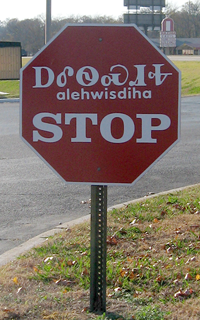
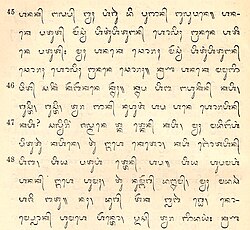
Beyond linguistic units, writing systems are defined by their physical and visual properties. This includes directionality—whether the text is arranged in horizontal rows or vertical columns—and the sequence in which they are read.
Writing is also characterized by orthographic regularity, which refers to how consistently graphemes map to phonemes. For example, in English, the phoneme /eɪ/ can be represented by various graphemes such as ⟨e⟩, ⟨ai⟩, ⟨ay⟩, ⟨ea⟩, or ⟨ei⟩, depending on the word.
Finally, writing is not strictly a visual medium. Braille, an invented system of raised bumps, allows for the encoding of symbols through touch. This demonstrates that writing is a spatial phenomenon rather than a purely visual one.
Summary of Writing System Types
| System Type | Primary Unit Represented | Typical Symbol Count | Example |
|---|---|---|---|
| Alphabet | Phonemes (individual sounds) | Low (usually < 100) | Latin, Greek |
| Syllabary | Syllables or Moras | Medium (hundreds) | Japanese Kana, Yi script |
| Logography | Morphemes or Words | High (thousands) | Chinese characters |
Frequently Asked Questions
What is the difference between an alphabet and a syllabary?
An alphabet uses individual letters to represent specific sounds (phonemes), such as consonants and vowels. A syllabary uses symbols (syllabograms) that represent entire syllables or units of sound, such as "ka" or "mi," rather than individual letters.
Why do some writing systems have thousands of characters?
Logographic systems, like Chinese characters, use symbols to represent meanings or words rather than just sounds. Because there are so many unique words and morphemes in a language, these systems require a much larger inventory of symbols compared to phonetic alphabets.
Is writing always a visual process?
No. While most writing is visual, the existence of Braille proves that writing is fundamentally a spatial process. Braille uses raised tactile symbols to encode information, allowing for literacy through touch rather than sight.
Can one writing system be used for multiple languages?
Yes. For example, Chinese characters have historically been used to write various languages within the Sinosphere, including Vietnamese, before the adoption of the Latin-based alphabet.
What is proto-writing?
Proto-writing is an early stage of communication that uses symbols (ideographs) to convey ideas but lacks the structural rules and complexity required to fully encode a spoken language's grammar and full range of expression.