United Nations Group of Experts on Geographical Names (UNGEGN)
The United Nations Group of Experts on Geographical Names (UNGEGN) is a specialized body dedicated to the national and international standardization of geographical names. As one of the nine expert groups of the United Nations Economic and Social Council (ECOSOC), UNGEGN ensures that place names are consistent, accurate, and usable across borders, facilitating better communication in cartography, navigation, and international relations.
By providing international guidelines and hosting periodic conferences, UNGEGN helps countries establish their own naming standards, which then serve as the foundation for global standardization.
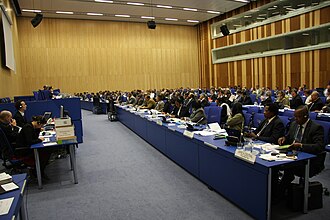
Key Facts
- Mandate: To address domestic and international standardization of geographical names and provide linguistic recommendations.
- Governance: Reports to the UN Conferences on the Standardization of Geographical Names held every five years.
- Support: Managed by a Secretariat provided by the United Nations Statistics Division.
- Structure: Organized into 24 linguistic/geographical divisions and 9 specialized working groups.
- Core Tool: Promotes the use of Toponymic Guidelines for map and other editors.
History and Evolution
The drive to standardize geographical names began in the late 1940s, initiated by the UN Cartographic Section of ECOSOC. Following a decade of discussions and the passing of ECOSOC resolution 715A (XXVII) in 1959, the first expert group meeting was convened in New York City in 1960.
This initial group paved the way for the first UN Conference on the Standardization of Geographical Names in 1967 in Geneva. A pivotal outcome of this conference was the confirmation that national standardization must be the primary basis for any international standardization efforts.
Mandate and Objectives
UNGEGN is tasked with solving the complexities of naming places both within countries and across international borders. Its primary focus is often linguistic, offering suggestions to ensure names are transcribed and translated accurately.
The group's core objectives include:
- Highlighting the benefits of standardized geographical names.
- Assisting nations that lack formal standardization processes.
- Facilitating the exchange of best practices and results from national standardization work.
- Increasing awareness among the user community regarding authorized national names.
Organizational Structure
UNGEGN operates through a hierarchical structure designed to cover the entire globe and various linguistic needs.
The Bureau
The Bureau provides leadership and consists of a Chair, two Vice-Chairs, and two Rapporteurs. Current leadership includes Chair Pierre Jaillard (France), Vice-Chairs Sungjae Choo (Republic of Korea) and Hasanuddin Abidin (Indonesia), and Rapporteurs Trent C. Palmer (USA) and Wendy Shaw (New Zealand).
Divisions and Working Groups
To manage the diversity of global languages and regions, UNGEGN is split into 24 Divisions. These are groups of countries with common geographical or linguistic interests (such as the Arabic Division, the China Division, or the Norden Division). Countries may belong to more than one division.
Additionally, 9 Working Groups handle cross-cutting issues. These include specialized teams focusing on:
- Country Names
- Romanization Systems (converting non-Roman scripts to Roman letters)
- Toponymic Terminology
- Geographical Names as Cultural Heritage
- Exonyms (names for a place used by foreigners)
The UN Conference on the Standardization of Geographical Names
Every five years, the United Nations Statistical Commission organizes a major international conference. While typically held at the UN Headquarters in New York City, it can be hosted elsewhere if a country covers the costs.
The conference brings together delegations of experts from various countries. It is important to note that the purpose of the conference is technical standardization; it is not intended to settle political disputes between states regarding the use of specific names.
Toponymic Guidelines
Toponymy is the scientific study of place names. To assist editors and cartographers, UNGEGN promotes the creation of "Toponymic guidelines for map and other editors, for international use."
Origin and Development
The concept was initiated by Josef Breu during the 1977 conference in Athens. Breu developed a sample based on his native Austria, which was presented in 1979. This model was later adopted through several UN resolutions (including Resolution 4 in 1982 and Resolution 14 in 1987) to encourage all countries to publish and maintain their own guidelines.
Standard Contents of Guidelines
To ensure consistency, UNGEGN provides a checklist of what these guidelines should include:
| Category | Details Included |
|---|---|
| Linguistic Data | Alphabets, spelling rules, pronunciation aids, and romanization keys. |
| Language Context | Dialect distribution, relationship between dialects and standard languages, and multilingual distributions. |
| Administrative Data | Legal status of names, names authorities, and administrative divisions. |
| Cartographic Aids | Glossaries, official map abbreviations, and source materials. |
Frequently Asked Questions
What is the main goal of UNGEGN?
The main goal is to facilitate the standardization of geographical names at both national and international levels to ensure consistency in maps and other documents.
Does UNGEGN decide which name a city should have?
No. UNGEGN emphasizes that national standardization is the basis for international standardization. It assists countries in their processes but does not settle political disputes over naming.
What are Toponymic Guidelines?
These are official documents that compile a country's specific rules and information regarding place names, intended for use by map editors and other international users.
How often does the UNGEGN conference take place?
The conference is held every five years, typically at the United Nations Headquarters in New York City.
What is the role of the Divisions within UNGEGN?
Divisions group countries by shared language or geography to stimulate regional cooperation and technical meetings regarding name standardization.