The New World: Exploring the Origins and Meaning of Mundus Novus
For centuries, the European understanding of the globe was limited to three known landmasses: Africa, Asia, and Europe. Collectively, these regions became known as the Old World. This geographical horizon expanded dramatically during the Age of Discovery, leading to the introduction of a term that would reshape history: the New World (Latin: Mundus novus).
While today we use the term to describe the Western Hemisphere—primarily the Americas and occasionally Oceania—its origin was not a simple discovery, but a gradual realization that the lands across the Atlantic were not the eastern edges of Asia, but entirely new continents.
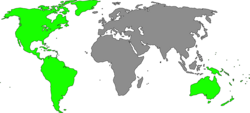
Key Facts
- Coined by: Amerigo Vespucci in a 1503 letter.
- Original Latin Term: Mundus novus.
- Old World Definition: The combined landmasses of Europe, Africa, and Asia.
- New World Definition: The Americas and sometimes Oceania.
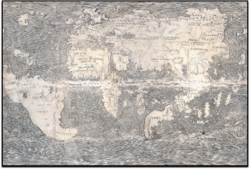
- First Map Label: The 1507 Waldseemüller map was among the first to label the region "America."
- Scientific Impact: Led to the discovery of the Pacific Ocean and the realization that the Americas were separate from Asia.
The Origin of "Mundus Novus"
The Florentine explorer Amerigo Vespucci is widely credited with popularizing the term "New World." In the spring of 1503, Vespucci wrote a letter to his patron, Lorenzo di Pier Francesco de' Medici. This letter was later published in Latin as Mundus Novus, and it contained a groundbreaking hypothesis: the lands discovered to the west were not part of Asia, as Christopher Columbus had believed, but were instead a distinct continent.
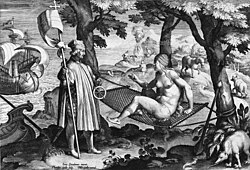
Vespucci's conclusion came after his 1501 expedition to Brazil. While stopping at Bezeguiche (modern-day Dakar, Senegal), he encountered sailors returning from India. By comparing the nature of the people and lands he had seen in the west with the accounts of those returning from the east, he realized the two were fundamentally different. In his famous opening paragraph, he asserted that it was "lawful to call it a new world" because these lands were unknown to their ancestors and contradicted the beliefs of ancient geographers.
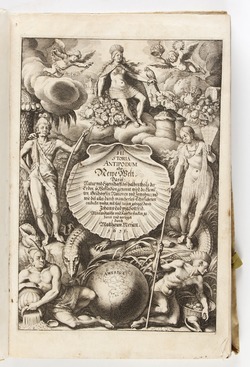
Prior Usage and Early Theories
Although Vespucci gave the term its popular cachet, he was not the first to use similar language. Earlier explorers and chroniclers had attempted to describe these unknown regions:
- Alvise Cadamosto: In the 1450s, this Venetian explorer used the phrase "another world" (un altro mondo) to describe sub-Saharan Africa, though he viewed this as a literary flourish rather than a geographical claim.
- Peter Martyr d'Anghiera: An Italian chronicler who doubted Columbus's claims. As early as 1493, he referred to the discoveries as the "western antipodes" (regions on the opposite side of the earth) and the "new hemisphere."
- Christopher Columbus: Despite his insistence that he had reached Asia, Columbus's own letters occasionally hinted at something new. In 1499, observing the Orinoco delta, he suggested a previously unknown continent lay behind it, though he theorized it might be the Biblical terrestrial paradise.
From Theory to Map: The Acceptance of a New Continent
The transition from "the Indies" to the "New World" took several decades of mapping and exploration. Early representations were often fragmented. For example, a 1504 globe, possibly created by Leonardo da Vinci, depicted the New World as only South America.
The Spanish monarchs eventually convened the Junta de Navegantes (a conference of navigators) between 1505 and 1508 to synthesize geographical data. Amerigo Vespucci attended and was appointed piloto mayor (chief of navigation for Spain). During these meetings, Spanish officials began to accept that the Antilles and Central America were not the Indies, shifting their goal toward finding a sea passage through the Americas to reach Asia.
Cartography evolved rapidly to reflect this. The 1507 Waldseemüller map was a milestone, depicting a completely open sea between Asia and the New World. However, some maps continued to show a land bridge between Asia and North America until the discovery of the Bering Strait in the 18th century.
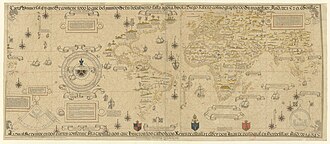
The final pieces of the puzzle fell into place with Vasco Núñez de Balboa's discovery of the Pacific coast in 1513 and Ferdinand Magellan's voyage (1519–1522), which proved the Pacific Ocean was a vast body of water separating the two hemispheres.
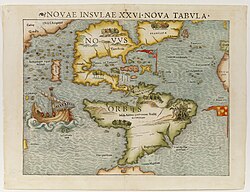
Modern Applications of the Term
While the term "New World" is often criticized today for reflecting a colonial perspective—ignoring the millions of indigenous people already living there—it remains a vital classification in several scientific and commercial fields.
Agriculture and Biology
In biology, species are often divided into Old World (Palearctic and Afrotropic) and New World (Nearctic and Neotropic) groups. This is seen in the classification of "New World monkeys" or "New World vultures."
Agriculture uses a similar divide. The "Old World" shared a common history of domesticated plants (wheat, barley) and animals (cattle, horses). In contrast, "New World crops" were domesticated in the Americas and later spread globally. These include maize, potatoes, tomatoes, avocados, and cocoa.
Wine Terminology
In the wine industry, "New World wines" refer to those produced outside the traditional regions of Europe, North Africa, and the Near East. This includes wines from the United States, South America, South Africa, Australia, and New Zealand.
Summary Comparison: Old World vs. New World
| Category | Old World | New World |
|---|---|---|
| Geography | Europe, Africa, Asia | The Americas, Oceania |
| Agriculture | Wheat, Barley, Cattle, Sheep | Maize, Potato, Tomato, Turkey |
| Biology | Palearctic, Afrotropic realms | Nearctic, Neotropic realms |
| Wine | Europe, North Africa, Near East | Americas, Australia, NZ, South Africa |
Frequently Asked Questions
Who actually coined the term "New World"?
While others used similar phrases, Amerigo Vespucci is credited with coining and popularizing the term Mundus Novus in his 1503 letter to Lorenzo de' Medici.
Did Christopher Columbus believe he had found a "New World"?
No. Until his death in 1506, Columbus insisted that the lands he discovered were the eastern edges of Asia (the Indies), although he did occasionally speculate that he had found a previously unknown continent or the Biblical terrestrial paradise.
What are some examples of New World crops?
Common New World crops include maize (corn), potatoes, squash, tomatoes, avocados, cocoa, vanilla, and various types of capsicum (peppers).
Why is the term "New World" considered problematic today?
Critics argue that the term applies a colonial perspective, implying the land was "new" or "discovered," which ignores the long history and presence of the indigenous peoples who inhabited the Americas for millennia.
How does the wine industry define the New World?
In wine terminology, the New World encompasses all wine-growing regions outside of the traditional European, North African, and Near Eastern areas.