Understanding the Old World: Geography, History, and Cultural Connections
The term Old World (known in Latin as Mundus vetustus) refers to the massive landmass of Afro-Eurasia. This concept emerged in European thought following the year 1493, a pivotal moment when explorers became aware of the existence of the Americas, Oceania, and Antarctica. By labeling Africa, Europe, and Asia as the "Old World," Europeans were able to distinguish these familiar lands in the Eastern Hemisphere from the "New World"—the newly encountered territories of the Western Hemisphere, specifically the Americas.
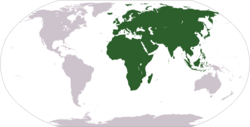
The Geography of Afro-Eurasia
In historical and archaeological contexts, the Old World is defined by regions that shared indirect cultural contact from the Bronze Age onward. Much of this development occurred within the temperate zone, specifically between the 25th and 45th parallels north. This area encompasses the Mediterranean region and North Africa, extending into Mesopotamia, the Persian plateau, the Indian subcontinent, China, and portions of sub-Saharan Africa.
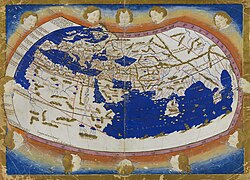
Beyond the standard definition, the mainland of Afro-Eurasia is sometimes referred to as the World Island. This term, which may have been coined by Sir Halford John Mackinder in his work The Geographical Pivot of History, describes the continuous landmass while excluding various island groups such as the British Isles, Japan, Sri Lanka, Madagascar, and the Malay Archipelago.
Historical Development and the Axial Age
The civilizations of the Old World were deeply interconnected, most notably through the Silk Road, a vast network of trade routes. Following the Bronze Age, these regions experienced a significant Iron Age. This era was characterized by the Axial Age, a period of profound cultural, philosophical, and religious evolution that shaped the foundations of modern society.
The Emergence of Cultural Spheres
The developments during the Axial Age led to the rise of several distinct cultural spheres that continue to influence the world today:
- Western Sphere: Defined by Hellenism and classical traditions.
- Near Eastern Sphere: Characterized by Zoroastrian and Abrahamic traditions.
- Far Eastern Sphere: Encompassing Hinduism, Buddhism, Jainism, Sikhism, Confucianism, and Taoism.
Key Facts
- The term Old World refers to the continents of Africa, Europe, and Asia.
- It was coined by Europeans after the discovery of the Americas in 1493.
- The World Island refers to the mainland of Afro-Eurasia, excluding major island groups.
- The Axial Age was a period of major religious and philosophical growth during the Iron Age.
- The Silk Road served as a primary connection for trade and culture between these regions.
| Feature | Old World | New World |
|---|---|---|
| Continents | Africa, Europe, Asia | Americas, Oceania, Antarctica |
| Hemisphere | Eastern Hemisphere | Western Hemisphere |
| Historical Context | Bronze and Iron Age contact | Encountered after 1493 |
Frequently Asked Questions
What does the term "Old World" specifically include?
The Old World includes the continents of Africa, Europe, and Asia, which make up the Afro-Eurasian landmass.
When did the distinction between the Old and New Worlds begin?
The distinction became prominent after 1493, when European awareness expanded to include the Americas, Oceania, and Antarctica.
What is the "World Island"?
The World Island is a term used to describe the mainland of Afro-Eurasia, excluding island groups like Japan, the British Isles, and Madagascar.
What was the significance of the Axial Age?
The Axial Age was a period of intense cultural, philosophical, and religious development that led to the emergence of major Western, Near Eastern, and Far Eastern cultural spheres.
How were the different regions of the Old World connected?
Many of these regions were connected through the Silk Road, a major trade route that facilitated contact between civilizations.