Uzbekistan: A Journey Through Central Asia's Heart of Silk and History
Nestled in the heart of Central Asia, the Republic of Uzbekistan stands as a vibrant crossroads of ancient civilizations, diverse cultures, and rapid modern development. From the legendary Silk Road trading posts to the bustling modern streets of Tashkent, Uzbekistan offers a profound look into a history that has shaped the world.
Whether you are drawn to the turquoise domes of its historic cities, the rich flavors of its traditional cuisine, or its strategic importance in contemporary geopolitics, Uzbekistan is a nation of immense depth and complexity.
Key Facts
- Capital: Tashkent
- Official Language: Uzbek (with Karakalpak recognized regionally)
- Population: Approximately 39 million (2026 estimate)
- Government: Unitary semi-presidential republic
- Currency: Uzbek sum (UZS)
- Major Religions: Predominantly Islam (Sunni)
A Tapestry of History
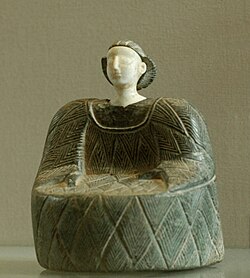
The history of Uzbekistan is a long and winding narrative that stretches back to prehistory. The region has been home to various ancient civilizations, evidenced by archaeological finds such as chlorite and limestone statuettes from the second millennium BC.
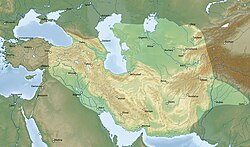
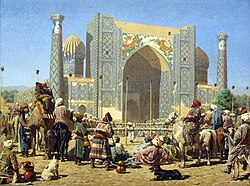
During the medieval period, the region saw the rise of powerful empires and the influence of the Timurid period, a golden age of art, science, and architecture. The legacy of Timur's empire remains visible in the grand structures that define the landscape today.
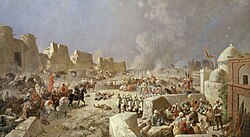
Following the era of the Uzbek khanates, the region underwent significant political shifts, including the Russian conquest and the subsequent Soviet period. Uzbekistan became an integral part of the Soviet Union as the Uzbek SSR before declaring state sovereignty in 1990 and achieving full independence on 1 September 1991.
Geography and Environment
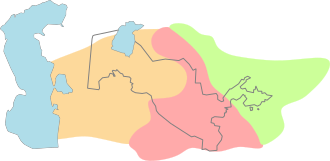
Uzbekistan is a landlocked nation covering 448,978 km², making it a central player in regional dynamics. Its geography is diverse, ranging from the fertile valleys of Fergana to the vast deserts of the north.
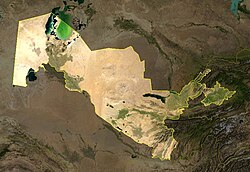
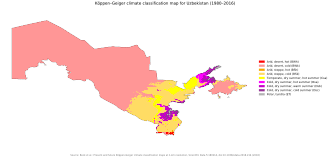
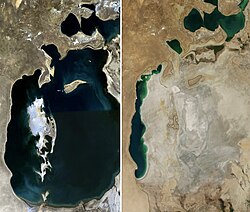
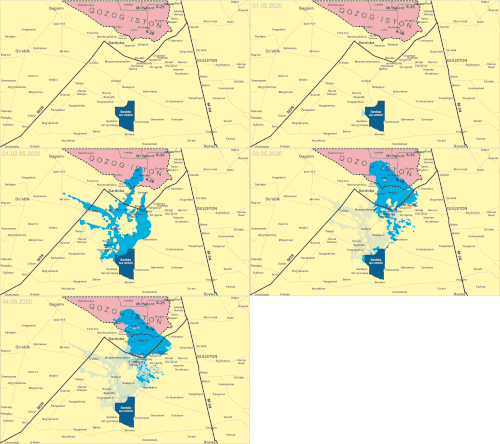
The climate is largely defined by its continental nature, which can be categorized using the Köppen climate classification system. However, the environment faces significant challenges, most notably the ecological crisis surrounding the Aral Sea. The shrinking of this sea has had profound impacts on the local ecosystem and the livelihoods of those living nearby.
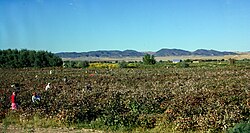
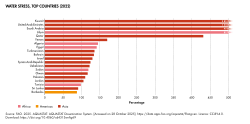
Water scarcity is another critical issue; in 2022, Uzbekistan was ranked as the thirteenth most water-stressed country globally. Managing resources like cotton production and reservoir stability remains a priority for the nation's environmental future.
Culture, Cuisine, and Heritage
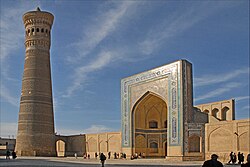
The cultural richness of Uzbekistan is perhaps most visible in its UNESCO World Heritage sites. These sites include the historic centers of Bukhara, Khiva, and Shakhrisyabz, as well as the legendary crossroads of Samarkand.
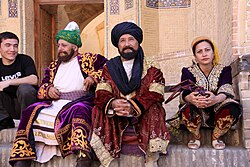
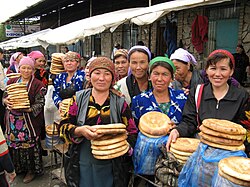
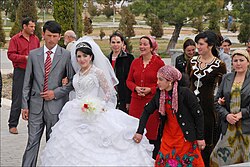
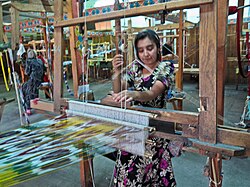
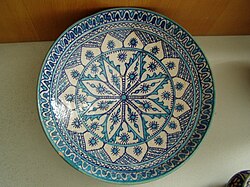
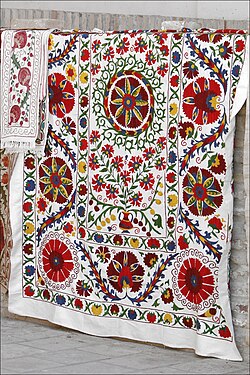
Uzbek culture is also expressed through its exquisite crafts, such as traditional pottery, intricate embroidery, and the production of fine silk. The local markets and festivals, like the Silk and Spice Festival in Bukhara, showcase these traditions to the world.
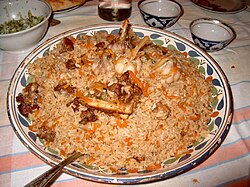
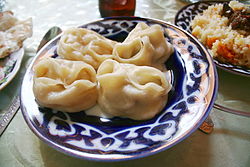
No exploration of Uzbekistan is complete without mentioning its cuisine. Dishes like Palov (pilaf) and manti (dumplings) are staples that reflect the hospitality and culinary heritage of the people.
Modern Uzbekistan: Politics and Economy
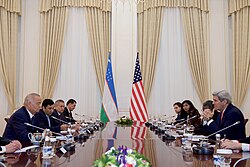
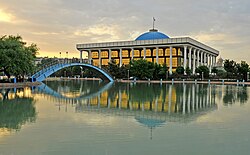
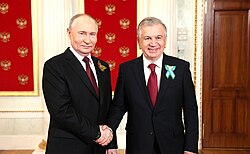
Today, Uzbekistan is a unitary semi-presidential republic led by President Shavkat Mirziyoyev. The government is structured with a legislature known as the Oliy Majlis, consisting of the Senate (Upper House) and the Legislative Chamber (Lower House).
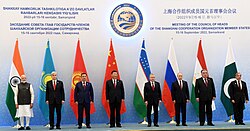
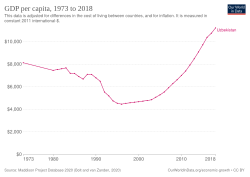
Economically, the nation is developing steadily. With a growing GDP and a focus on modernization, Uzbekistan is working to expand its role in international trade and regional cooperation, participating in forums such as the Shanghai Cooperation Organisation (SCO).
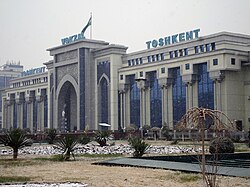
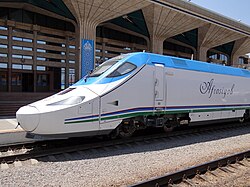
Infrastructure development is also a key focus, seen in the expansion of transportation networks like the Afrosiyob high-speed train, which connects major urban centers like Tashkent, Samarkand, and Bukhara.
Summary of Uzbekistan at a Glance
| Category | Details |
|---|---|
| Capital City | Tashkent |
| Total Area | 448,978 km² |
| Official Language | Uzbek |
| Currency | Uzbek sum (UZS) |
| HDI (2023) | 0.740 (High) |
Frequently Asked Questions
What are the most famous historical cities in Uzbekistan?
Samarkand, Bukhara, and Khiva are the most renowned historical cities, each famous for its ancient architecture and role on the Silk Road.
What is the official language of Uzbekistan?
The official language is Uzbek. Additionally, Karakalpak is recognized as a regional language.
What is the main religion practiced in Uzbekistan?
The vast majority of the population practices Islam, with approximately 94.28% identifying as Muslim (predominantly Sunni).
How is the economy of Uzbekistan performing?
Uzbekistan is experiencing economic development, with a projected total GDP (PPP) of $552.16 billion for 2026.
What are some traditional Uzbek foods?
Popular traditional dishes include Palov (a rice pilaf) and manti (steamed dumplings).
Which UNESCO World Heritage sites are located in Uzbekistan?
Uzbekistan hosts five cultural sites (Itchan Kala, Bukhara, Shakhrisyabz, Samarkand, and the Silk Roads corridor) and two natural sites (Western Tien-Shan and the Cold Winter Deserts of Turan).