Exploration: The History and Science of Discovery
Exploration is the fundamental process of seeking out the unknown with the expectation of discovery. While we often think of it as a uniquely human endeavor, exploratory activity is actually a common trait among most organisms capable of directed locomotion (the ability to move purposefully) and learning. In the natural world, this is seen in the foraging behavior of social insects, where feedback from individual scouts influences the movement of the entire group.
Whether it is a robot maximizing knowledge over a specific area or a human seeking firsthand experience, exploration drives the expansion of both biological survival and scientific understanding.
Key Facts
- Exploration is common to most organisms capable of learning and directed movement.
- Human geographical exploration is divided into two major eras: early migration and recent cross-cultural exchange.
- The 17th century marked a shift toward exploration driven by scientific discovery.
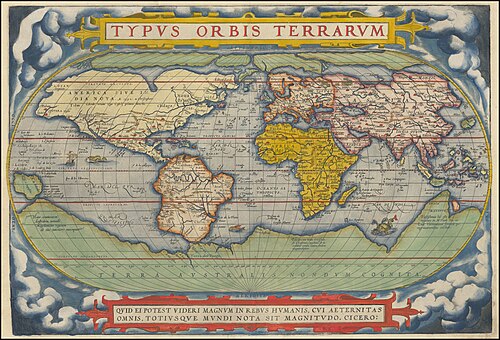
- Abraham Ortelius published the first modern atlas, the Theatrum Orbis Terrarum.
- Exploration spans multiple domains, including geographical, underwater, space, urban, and geological.
The Evolution of Geographical Exploration
Human history has been shaped by two distinct eras of geographical movement. The first era encompasses most of human history, characterized by the migration of people out of Africa to settle in new lands. During this time, distinct cultures developed in relative isolation. A notable event occurred approximately 14,000 years ago when groups crossed the Ice Age land bridge from Siberia to Alaska, eventually moving south to settle the Americas.
The second era, spanning the last 10,000 years, is defined by increased cross-cultural exchange. Driven by trade and exploration, this period led to the intermingling and eventual convergence of once-isolated cultures.
Historical Milestones in Mapping and Discovery
The written history of exploration dates back to ancient Egypt in the 4th millennium B.C. By the 2nd century AD, the thinker Ptolemy provided influential early insights into the world. Between the 5th and 15th centuries AD, much of the world's exploration was led by Chinese and Arab explorers.
Following this, the Age of Discovery emerged as European scholars rediscovered the works of ancient Greek and Latin geographers. While some were motivated by conquest or the need for safer land routes, the 17th century introduced a shift toward nobler motives, such as the expansion of scientific knowledge. This era allowed for the creation of comprehensive world maps, culminating in Abraham Ortelius's publication of the Theatrum Orbis Terrarum, the world's first modern atlas.
| Category | Key Characteristics | Notable Examples/Context |
|---|---|---|
| Early Human Era | Migration and isolation | Movement out of Africa; Siberian land bridge |
| Modern Era | Cultural exchange and convergence | Trade-driven intermingling |
| Age of Discovery | Scientific and territorial expansion | Rediscovery of classical geography |
| Scientific Era | Knowledge-driven exploration | Development of modern atlases |
Diverse Domains of Exploration
Exploration is not limited to land. It extends into every frontier available to science and technology.
Underwater and Space Exploration
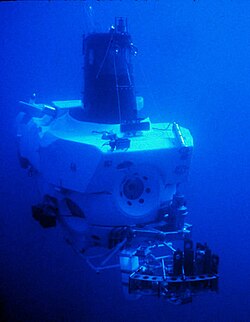
The depths of our oceans and the vastness of space represent the most challenging frontiers. Underwater exploration often utilizes specialized technology, such as the DSV Alvin, a crewed submersible used extensively for deep-sea investigation.
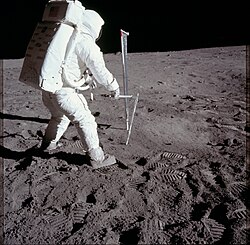
In space, exploration has moved from observation to physical presence. Missions like Apollo 11 allowed humans to interact directly with other celestial bodies, such as when Buzz Aldrin took a core sample of the Moon.
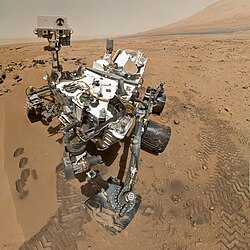
Modern space exploration also relies heavily on autonomous technology. Rovers, such as the Curiosity rover on Mars, allow for systematic examination of planetary surfaces where humans cannot yet easily go.
Other Specialized Fields
- Urban Exploration: Investigating man-made structures and abandoned environments.
- Geological Exploration: The study of Earth's physical structure, often involving geophysics and economic geology.
- Systematic Investigation: Using diagnostic examination to seek firsthand experience or data.
Frequently Asked Questions
Is exploration only a human activity?
No. Exploratory behavior is common to most organisms that possess the ability to learn and engage in directed locomotion, such as social insects foraging for food.
What was the first modern atlas?
The first modern atlas was the Theatrum Orbis Terrarum, published by Abraham Ortelius, which featured a world map depicting all known continents.
How did the motives for exploration change over time?
While early exploration was often driven by migration and survival, later periods like the Age of Discovery involved conquest and trade. By the 17th century, motives expanded to include scientific discovery and the pursuit of knowledge.
What is the difference between the two major eras of geographical exploration?
The first era was defined by human migration and the development of isolated cultures. The second era, beginning roughly 10,000 years ago, is characterized by increased trade and the intermingling of different cultures.
What role does technology play in modern exploration?
Technology is essential for exploring extreme environments, such as using submersibles for the ocean, rovers for Mars, or computational techniques like simultaneous localization and mapping for autonomous vehicles.