Space Probes: Robotic Pioneers of the Solar System and Beyond
While human astronauts represent the face of space exploration, the vast majority of our cosmic discoveries are driven by space probes. These uncrewed robotic spacecraft are engineered to venture into the deep reaches of the universe, collecting scientific data and transmitting it back to Earth. From the rocky surfaces of nearby moons to the mysterious depths of interstellar space, these machines act as our eyes and ears in environments where humans cannot yet survive.
Unlike artificial satellites, which typically remain in orbit around Earth to provide communication or weather data, space probes are designed for deep-space travel. They are sent toward specific celestial bodies—such as planets, asteroids, or comets—or launched into the void between stars to expand our understanding of the cosmos.
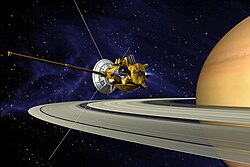
Key Facts
- Definition: Uncrewed robotic spacecraft designed for deep-space exploration.
- Primary Targets: The Moon, planets, moons, asteroids, comets, the Sun, and interstellar space.
- Key Distinction: Unlike satellites, probes travel beyond Earth's orbit to distant celestial bodies.
- First Success: Mariner 2 was the first spacecraft to successfully fly by another planet (Venus) in 1962.
- Interstellar Milestone: Voyager 1 became the first human-made object to enter interstellar space in 2012.
The Evolution of Deep Space Exploration
The era of robotic exploration began in the late 1950s during the early years of the Space Age. Initial efforts were focused on our closest neighbor, the Moon, through programs such as the Soviet Luna probes and the American Pioneer program. As technology advanced, the scope of these missions expanded from lunar studies to the exploration of Venus, Mars, Jupiter, Saturn, and the outer reaches of our Solar System.
Classifying Space Probes by Mission Profile
Not all probes operate in the same way. Depending on their scientific objectives, they are categorized into several distinct types:
- Flyby Probes: These spacecraft pass near a celestial body to collect data without entering its orbit.
- Orbiters: These enter a stable orbit around a target body, allowing for long-term, continuous observation.
- Landers: These are designed to reach and touch down on the surface of a planet or moon.
- Rovers: A specialized type of lander capable of moving across a surface to explore different locations.
- Atmospheric Probes: These descend through the atmosphere of a celestial body to study weather conditions and chemical composition.
Milestones in Scientific Discovery
Throughout history, specific missions have fundamentally changed our understanding of the universe. The Mariner 2 mission marked a turning point in 1962 when it completed the first successful planetary flyby of Venus. Later, the Voyager probes revolutionized our knowledge of the outer planets and eventually transitioned into the study of interstellar space.
One of the most complex missions in history was the Cassini–Huygens mission, which studied Saturn and its diverse system of moons. A major highlight of this mission occurred in 2005, when the Huygens lander became the first probe to successfully land on Saturn's moon, Titan.
| Mission Name | Primary Target/Region | Key Achievement |
|---|---|---|
| Mariner 2 | Venus | First successful planetary flyby |
| Huygens | Titan (Moon of Saturn) | First landing on Titan |
| Voyager 1 | Outer Planets / Interstellar Space | First human-made object in interstellar space |
| Parker Solar Probe | The Sun | Close-range solar study |
Modern Frontiers
Today, space probes continue to push the boundaries of the known. Modern missions are designed to study the most extreme environments in our solar system with unprecedented precision. For example, the Parker Solar Probe is designed to study the Sun, while the Lucy mission focuses on investigating primitive asteroids to unlock secrets of the early solar system.
Frequently Asked Questions
What is the difference between a satellite and a space probe?
Artificial satellites usually remain in orbit around Earth to perform specific tasks like communication or observation. Space probes are sent beyond Earth's orbit to explore other planets, moons, or deep space.
How do rovers differ from landers?
While both reach the surface of a celestial body, a lander remains in a fixed location, whereas a rover is capable of moving across the surface to explore different areas.
What does it mean to enter interstellar space?
Interstellar space is the region of space located between star systems. Voyager 1 became the first human-made object to enter this region in 2012.
Can probes study the atmosphere of a planet?
Yes, atmospheric probes are specifically designed to descend through a planet's atmosphere to analyze its composition and weather patterns.
What was the first successful planetary flyby?
The Mariner 2 probe achieved the first successful flyby of another planet when it passed Venus in 1962.