Understanding Genius: From Biological Markers to Philosophical Debate
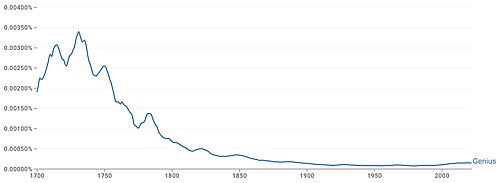
What does it truly mean to be a genius? While the word is often used casually in modern conversation, it describes a rare characteristic of original and exceptional insight. A genius is someone whose performance in a specific art or endeavor surpasses expectations, establishes new methods of operation, or sets standards for the future that remain beyond the reach of their competitors. This trait is deeply intertwined with both intellectual ability and creative productivity.
Historically, the term has evolved. In the early 19th century, Carl von Clausewitz explored the concept of "military genius," defining it as a very high mental capacity for specific employments. Today, the term encompasses not only specialists but also polymaths—individuals who excel across a wide variety of disparate subjects.
Key Facts
- Definition: Genius is characterized by exceptional insight and creativity that sets new standards in a given field.
- IQ Threshold: Modern scholars suggest a minimum IQ of approximately 125 is necessary for genius, though it is not sufficient on its own.
- Biological Link: Research indicates a lower density of thalamic dopamine D2 receptors may be linked to high creativity.
- Essential Traits: Beyond intelligence, genius requires drive, persistence, and opportunity for talent development.
- Philosophical View: Arthur Schopenhauer famously distinguished talent from genius, stating that genius "hits a target no one else can see."
The Origins of Intelligence Measurement
The scientific attempt to quantify genius began with Francis Galton and James McKeen Cattell. Galton, the founder of psychometry (the science of measuring mental capacities), initially believed that eminence was inherited. In his 1869 work, Hereditary Genius, he studied the families of eminent Britons to argue that "natural ability" was a non-random factor that drove individuals toward reputation and success.
Galton's work was heavily influenced by two pioneers of statistics: Carl Friedrich Gauss and Adolphe Quetelet. Gauss discovered the normal distribution (the bell-shaped curve), while Quetelet applied this curve to social statistics to define the "average man." Galton used these concepts to develop historiometry, the analytical study of historical human progress, by assessing the kinship of eminent figures.
The IQ Paradox: Intelligence vs. Achievement
The relationship between Intelligence Quotient (IQ) and genius has been a subject of intense study. In 1916, Lewis Terman used the Stanford–Binet test to classify individuals as "near genius" or "genius." He spent the rest of his life conducting a longitudinal study called Genetic Studies of Genius to track gifted children.
However, history has shown that a high IQ score is not a guaranteed predictor of world-changing achievement. For example, William Shockley and Luis Walter Alvarez were both rejected from Terman's study because their IQ scores were too low; both later won the Nobel Prize in physics. Similarly, the renowned physicist Richard Feynman reported a school IQ of 125, which is respectable but not exceptionally high.
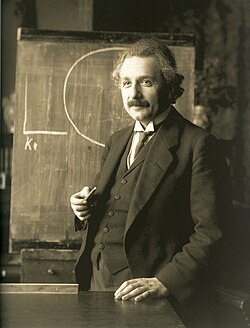
These findings led psychologists to conclude that while a baseline level of intelligence (roughly 125) is necessary, it must be combined with personality traits such as persistence and drive. Researcher Arthur Jensen proposed a multiplicative model where genius is the result of high ability, high productivity, and high creativity.
The Biology of the Creative Mind
Recent scientific inquiries have looked beyond test scores to the physical structure of the brain. A 2010 study by the Karolinska Institute found that highly creative individuals, as well as people with schizophrenia, exhibit a lower density of thalamic dopamine D2 receptors.
Researchers suggest that fewer D2 receptors in the thalamus may result in a lower degree of signal filtering. This allows a higher flow of information to reach the brain, potentially enabling healthy creative geniuses to see uncommon connections and solve problems in ways that others cannot.
![Ibn al-Haytham, a scientist and polymath who is considered a genius[43]](/images/ad/89/ad89a97fb58d87a160cf85ac5f5770838eaa69553ff9269a2463c8d48125838c.jpg)
Philosophical Perspectives on Genius
Philosophers have long debated the nature of the genius mind, often focusing on the relationship between the individual and society.
The Social Distance of David Hume
David Hume suggested that society perceives the genius in a manner similar to how it perceives the ignorant: as someone disconnected from the collective, working remotely and at a distance from the rest of the world.
The Originality of Immanuel Kant
For Immanuel Kant, the essence of genius was originality. He defined genius as the ability to independently understand concepts that would normally require a teacher. In Kant's view, the works of a genius are non-imitative and serve as exemplary rules for others to follow.
The Will and Intellect of Arthur Schopenhauer
Arthur Schopenhauer argued that in a genius, the intellect predominates over the "will" far more than in the average person. This allows the genius to engage in pure, disinterested contemplation. However, this focus on the abstract often leads to maladaptive traits in daily life—a phenomenon Schopenhauer described as "falling into the mire while gazing at the stars."
![Confucius, one of the most influential thinkers of the ancient world[10][11][12][13][14][15] and the most famous Chinese philosopher,[16] is often considered a genius.[17][18][19][20][21]](/images/8e/06/8e069412812d56c2a13476c9ad3561d19657af792a829c1f6725a2612e015b51.webp)
Examples of Recognized Genius
Across history, various individuals have been cited as geniuses due to their transformative impact on their respective fields:
- Mathematics: Srinivasa Ramanujan, who made substantial contributions despite minimal formal training.
![Srinivasa Ramanujan, a mathematician who is widely regarded as a genius. He made substantial contributions to mathematics despite little formal training.[9]](/images/18/d0/18d06bc8601b1d2ce6d00629dd14b307022334a8108c389225ba4240206c779b.jpg)
Srinivasa Ramanujan, a mathematician who is widely regarded as a genius. He made substantial contributions to mathematics despite little formal training.[9] - Literature: Miguel de Cervantes, acknowledged as a literary genius.
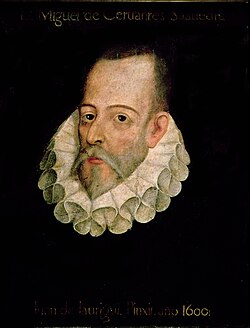
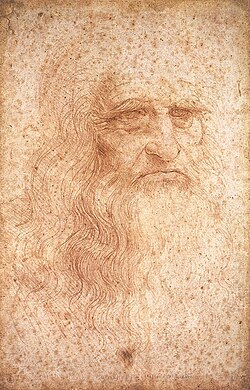
Miguel de Cervantes, novelist who is acknowledged as a literary genius - Arts and Music: Leonardo da Vinci, a polymath, and Wolfgang Amadeus Mozart, a child prodigy.
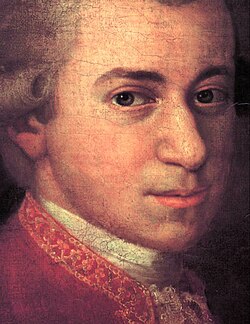
Wolfgang Amadeus Mozart, considered a prodigy and musical genius - Cinema: Stanley Kubrick, deemed a filmmaking genius.
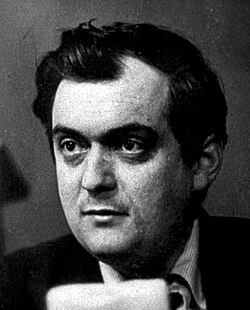
Stanley Kubrick, deemed a filmmaking genius
Summary of Genius Models
| Perspective | Primary Driver | Key Characteristic |
|---|---|---|
| Psychometric (Galton) | Heredity | Natural ability and "neurophysiological efficiency" |
| Modern Psychological | Ability + Personality | IQ threshold (~125) combined with drive and persistence |
| Biological (Karolinska) | Brain Chemistry | Lower thalamic dopamine D2 receptor density |
| Kantian Philosophy | Originality | Ability to produce non-imitative ideas |
| Schopenhauerian | Intellect over Will | Capacity for disinterested contemplation |
Frequently Asked Questions
Is a high IQ score required to be a genius?
While a minimum level of intelligence (approximately 125) is generally considered necessary, it is not sufficient. Many individuals with very high IQs do not achieve the status of genius, while some Nobel laureates have had relatively modest IQ scores.
What is the difference between talent and genius?
According to philosopher Arthur Schopenhauer, talent is the ability to hit a target that no one else can hit, whereas genius is the ability to hit a target that no one else can even see.
Can genius be inherited?
Francis Galton hypothesized that eminence is inherited from ancestors, a theory he explored in his study of eminent British families. However, modern views emphasize that hereditary ability must be paired with environment, opportunity, and personal drive.
How does brain chemistry affect creativity?
Research suggests that a lower density of dopamine D2 receptors in the thalamus may reduce signal filtering, allowing more information to flow into the brain. This may help creative individuals make unusual and innovative connections.
What is a polymath?
A polymath is a person whose knowledge and expertise span a significant number of different subject areas, effectively exhibiting genius across multiple fields.