Women's Suffrage Music: The Melodies of a Political Revolution
For centuries, the political landscape of the United States was a predominantly male domain. Women were expected to remain silent on matters of governance, with few exceptions like Abigail Adams who advocated for rights in the nation's early years. This silence began to break in the mid-nineteenth century when the Seneca Falls Convention in New York organized the fight for women's rights, sparking the first wave of feminism in the U.S.
While political doors remained closed, women found an unexpected gateway to expression through the church. In the nineteenth century, hymns were a central part of Christian worship. Because women were forbidden from preaching, singing became one of the few socially acceptable ways to express their feelings. Eventually, women began writing their own hymns to share personal testimonies. Despite initial backlash from men, these female hymnists proved that music could be a powerful vehicle for a voice that was otherwise suppressed.
From Hymns to Political Anthems
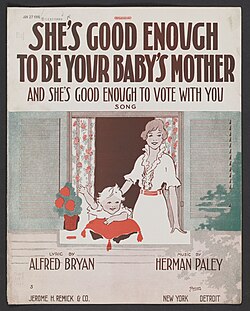
The transition from religious hymns to political music happened naturally. Following the Seneca Falls Convention, composers began writing music specifically for the suffrage movement. These works generally fell into two categories: rally songs, which were often printed as single-sheet papers or "songsters" for public gatherings, and songs of persuasion, which were published commercially to reach women within their own homes.
Early examples include Julia F. Baker's "Women's Rights Convention Waltz," which supported legal changes, and Kate Horn's "Woman's Rights, a Right Good Ballad," which emphasized traditional values. By the late nineteenth century, songs like George Cooper and Edwin Christie's "Daughters of Freedom! The Ballot Be Yours" (1871) and Joseph D. Payne's "Shall Women Vote" (1881) expressed a growing hope for the right to vote.
The Role of the Hutchinson Family Singers
The Hutchinson Family Singers played a pivotal role in evolving suffrage music into a tool for activism. Acting as "singing evangelists," the family collaborated with leaders like Lucy Stone, Elizabeth Cady Stanton, and Susan B. Anthony. In 1867, John W. Hutchinson co-wrote "The Kansas Suffrage Song" to the tune of "Old Dan Tucker."
The impact of this musical approach was profound. During campaigns in Leavenworth, Kansas, in 1867 and 1881, the Hutchinsons sang while activists gave speeches. Elizabeth Cady Stanton noted that these songs could appeal to the hearts and emotions of the public in a way that traditional lecturers and speakers simply could not.
Funding the Movement Through Music
As the movement grew, suffrage organizations began treating music as both a promotional tool and a source of revenue. By compiling and selling songbooks, they funded their operations and brought political ideas directly into American households.
- South Dakota Suffrage Organization: Sold a twenty-page songster for ten cents in 1888.
- American Woman Suffrage Association (AWSA): Published a songbook in 1889 for fifteen cents.
- National American Woman Suffrage Association (NAWSA): Distributed song leaflets at conventions and published suggestions for rally songs in 1896.
Beyond songbooks, suffragists utilized musical plays and pantomimes to engage the public. By 1912, Eugenie M. Raye-Smith, a professor and editor of the Woman Lawyers Journal, compiled the "Equal Suffrage Song Sheaf," a collection of twenty-five songs dedicated to Anna Howard Shaw.
Music as a Loophole for Protest
Music also served as a strategic tool to bypass restrictive laws. In Los Angeles on July 14, 1911, authorities enacted "prohibitive ordinances" that banned political speeches. To circumvent this, women set their political rhetoric to music, singing their sentiments instead of speaking them.
A similar tactic appeared in 1917 when six women were arrested for protesting outside the White House. They formed a song service, which triggered nationwide song competitions where the general public submitted original suffragist music. This trend continued until the goal was achieved in 1920 when women earned the right to vote.
African American and Native American Perspectives
Women of color also contributed to the musical movement, though their experiences differed. Adella Hunt Logan wrote "Just As Well As He" in 1912, repurposing the tune of "Comin' Through the Rye" to transform a song of objectification into a plea for full enfranchisement. Frances Ellen Watkins Harper also contributed through works like "Songs for the People."
However, the movement also contained problematic elements. Some songs, such as "American Citizens Who Cannot Vote" and "Is It Right?", used African American and Native American women as "punchlines." These songs argued that if Black men could vote, it was ridiculous that white women could not, effectively using women of color to shock the audience by placing white women on the same social level as those the era deemed "incompetent."
Key Facts
- First Wave Catalyst: The Seneca Falls Convention sparked the organized fight for women's rights in the U.S.
- Strategic Categories: Suffrage music was divided into "rally songs" for public events and "songs of persuasion" for home use.
- Emotional Appeal: The Hutchinson Family Singers used music to reach audiences emotionally in ways speeches could not.
- Legal Loophole: In 1911 Los Angeles, women sang their political messages to avoid laws banning political speeches.
- Financial Tool: Organizations like NAWSA and AWSA sold songsters to fund their suffrage activities.
- Culmination: The popularity of suffrage song sheets lasted until the 19th Amendment was ratified in 1920.
| Contributor/Organization | Key Work/Contribution | Year/Period | Purpose |
|---|---|---|---|
| Julia F. Baker | Women's Rights Convention Waltz | Post-Seneca Falls | Support for rights change |
| Hutchinson Family | The Kansas Suffrage Song | 1867 | Emotional appeal/Campaigning |
| NAWSA | Song leaflets and meeting guides | Late 19th Century | Funding and organization |
| Eugenie M. Raye-Smith | Equal Suffrage Song Sheaf | 1912 | Comprehensive song collection |
| Adella Hunt Logan | Just As Well As He | 1912 | Plea for full enfranchisement |
Frequently Asked Questions
Why did women use hymns to start their political expression?
Because women were forbidden from preaching in churches, singing hymns was one of the few socially acceptable ways they could use their voices and express their feelings publicly.
What was the difference between rally songs and songs of persuasion?
Rally songs were designed for public gatherings and were often printed on single sheets. Songs of persuasion were published commercially, making them more likely to enter the private domestic sphere of the home.
How did music help women protest in Los Angeles in 1911?
When authorities banned political speeches through prohibitive ordinances, women bypassed the law by setting their political rhetoric to music and singing their messages instead.
Who were the Hutchinson Family Singers?
They were a musical group that acted as "singing evangelists" for the suffrage cause, traveling with leaders like Susan B. Anthony to appeal to the emotions of voters through song.
How was music used to fund the suffrage movement?
Suffrage organizations, including the AWSA and the South Dakota Suffrage Organization, compiled and sold songsters and songbooks to the public to raise money for their cause.