Universal Suffrage: The Global Evolution of Voting Rights
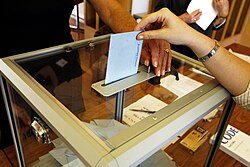
Universal suffrage, also known as universal franchise, is the legal right for all adult citizens within a specific jurisdiction to vote in elections. Often summarized by the democratic slogan "one man, one vote," this principle ensures that political representation is not restricted by wealth, social status, race, or gender.
While the concept seems straightforward, its application varies. In most contexts, universal suffrage excludes non-citizens and minors. However, some democratic theorists advocate for presumptive inclusion—a legal standard where the right to vote is protected for all subjects unless the government can provide clear evidence that disenfranchisement is necessary.
To understand the full scope of these rights, it is important to distinguish between two types of suffrage: active suffrage, which is the right to cast a vote, and passive suffrage, which is the right to stand as a candidate and be elected to office. Together, these constitute universal full suffrage.
Key Facts
- Universal Suffrage: The right of all adults in a jurisdiction to vote.
- Active vs. Passive: Active suffrage is the right to vote; passive suffrage is the right to be elected.
- First Major Milestone: New Zealand was the first major country to grant women the right to vote in 1893.
- Full Political Rights: Finland was the first territory to grant women both the right to vote and the right to run for office in 1906.
- US Milestones: The 19th Amendment (1920) guaranteed women's suffrage, while the Voting Rights Act of 1965 expanded protections for African Americans.
The Historical Path to Universal Male Suffrage
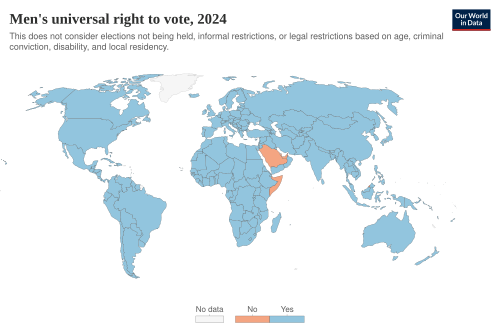
The movement toward universal suffrage gained momentum in the Western world during the early 19th century, primarily focusing on the removal of property requirements. Previously, voting was often a privilege reserved for landowners.
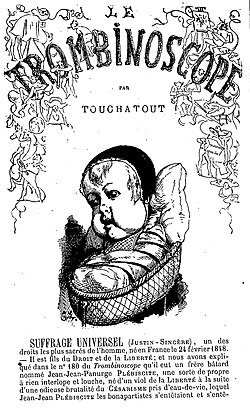
France played a pivotal role in this transition. The First French Republic briefly adopted universal male suffrage in 1792, becoming one of the first national systems to abolish property prerequisites. Following the 1848 Revolution, France and Switzerland established continuous suffrage for resident male citizens.
Other nations followed similar trajectories. Greece recognized full male suffrage in 1844, and Spain did so in its 1869 Constitution. In Germany, the North German Confederation enacted suffrage for all adult males in 1867, and the German Empire implemented full male suffrage by 1871. In the United States, the end of the Civil War led to the freeing of slaves and the granting of citizenship and suffrage to adult males, although many states later implemented restrictions to diminish these rights.
The Struggle for Women's Suffrage
The extension of the franchise to women was a global struggle that spanned over a century. Early, isolated instances occurred, such as in Corsica between 1755 and 1769, and in New Jersey in 1776 (though the latter was rescinded in 1807).
New Zealand emerged as a global leader in 1893 by granting active universal suffrage to women. However, it took until 1919 for New Zealand to grant women passive suffrage (the right to be candidates). In Europe, the autonomous Grand Duchy of Finland led the way in 1906, granting women full political rights. This resulted in the world's first female members of parliament being elected in 1907.
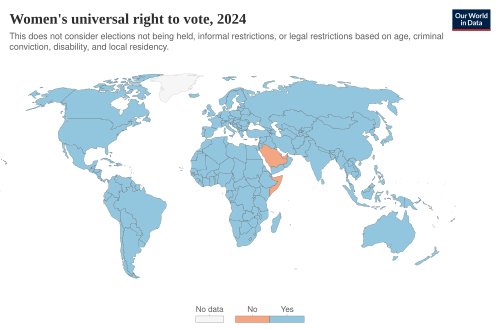
In the United States, the suffrage movement began in the mid-19th century and culminated in the ratification of the 19th Amendment in 1920. Despite this, many African American and poor white women remained excluded from the polls until the mid-1960s. In the United Kingdom, voting rights were not guaranteed to all women until 1928.
Some countries experienced much slower transitions. In Switzerland, women only gained the right to vote at the federal level in 1971 via a male-only referendum. The final holdout was the Canton of Appenzell Innerrhoden, which only granted women the right to vote in 1990 following a mandate from the Swiss Federal Court.
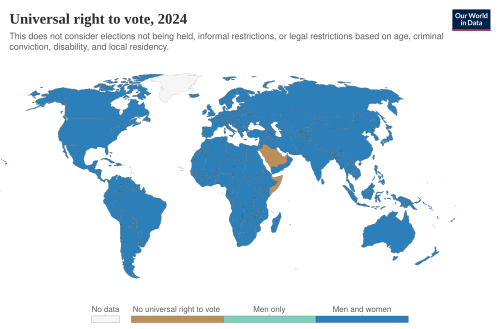
Expanding Rights in the United States
The mid-20th century saw a critical shift in the U.S. toward the principle of "one person, one vote." Under the leadership of Chief Justice Earl Warren, the U.S. Supreme Court and Congress worked to dismantle systemic barriers to voting.
Key legislative and judicial milestones included the Civil Rights Act of 1964 and the Voting Rights Act of 1965, which were essential in protecting the rights of African Americans. Furthermore, the 1966 Supreme Court ruling in Harper v. Virginia Board of Elections declared state poll taxes unconstitutional, removing a significant financial barrier for poor voters.
Global Democratic Institutions
The evolution of suffrage continues to influence international governance. A notable example is the European Parliament, which has been the only international organ elected via universal suffrage since 1979.

| Region/Country | Milestone | Year | Type of Suffrage |
|---|---|---|---|
| France | First national system to abolish property requirements for men | 1792 | Active Male |
| New Zealand | First major country to grant women the right to vote | 1893 | Active Female |
| Finland | First territory to grant women full political rights | 1906 | Active & Passive Female |
| United States | Ratification of the 19th Amendment | 1920 | Active Female |
| United Kingdom | Voting rights guaranteed to all women | 1928 | Active Female |
| Switzerland | Federal women's suffrage introduced | 1971 | Active Female |
Frequently Asked Questions
What is the difference between active and passive suffrage?
Active suffrage is the right of a citizen to cast a vote in an election. Passive suffrage is the right of a citizen to stand as a candidate and be elected to a political office.
Which country was the first to grant women the right to vote?
New Zealand was the first major country to grant active universal suffrage to women in 1893, although the short-lived Corsican Republic had granted it earlier in 1755.
What does "one person, one vote" mean?
This slogan refers to the principle that every individual's vote should carry equal weight in an election, regardless of their social status, wealth, or race, ensuring fair and equal representation.
When did women in the United States gain the right to vote?
The 19th Amendment was ratified in 1920, guaranteeing women the right to vote. However, full access for many women, particularly African Americans, was not realized until the Voting Rights Act of 1965.
What is presumptive inclusion in democratic theory?
Presumptive inclusion is the idea that the legal system should protect the voting rights of all subjects by default, and the government must prove that any disenfranchisement is absolutely necessary.