Mahatma Gandhi: The Life and Legacy of India's Father of the Nation
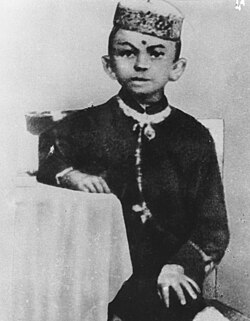
Mohandas Karamchand Gandhi, known globally as Mahatma (Great Soul) and affectionately in India as Bapu (Father), was the primary architect of India's campaign for independence from British rule. His philosophy of nonviolent resistance transformed not only the political landscape of the 20th century but also the moral approach to civil rights and social justice worldwide.
From his early days as a shy student to his emergence as a global icon of peace, Gandhi's journey was one of continuous spiritual and political evolution. He championed the cause of the oppressed, utilizing a unique blend of political activism and spiritual discipline to challenge the might of the British Empire.
Key Facts
- Full Name: Mohandas Karamchand Gandhi
- Lifespan: 1869 – January 30, 1948
- Core Philosophy: Satyagraha (truth-force) and Ahimsa (nonviolence)
- Major Movements: Salt Satyagraha, Non-cooperation Movement, and Quit India Movement
- Political Affiliation: Indian National Congress (1920–1934)
- Death: Assassinated by gunshot in New Delhi
Early Life and Education
Born in Porbandar, within the Kathiawar Agency of the British Raj, Gandhi was the son of Karamchand and Putlibai Gandhi. His early years were marked by a traditional upbringing, followed by studies at Samaldas Arts College.
![Gandhi (right) with his eldest brother Laxmidas in 1886[36]](/images/e7/6a/e76aee8a8052649ae521512e9a2aea25d7d02396528732994c301bafc905fe2e.jpg)
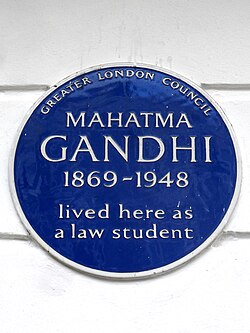
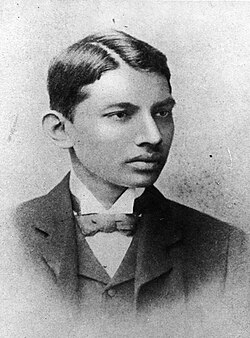
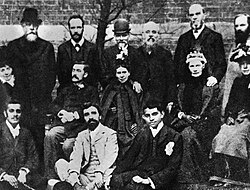
In 1888, Gandhi traveled to London to study law at University College London. During these three years, he was not only a student of law but also an informal auditing student. It was in London that he began to explore vegetarianism and engaged in committee work, reflecting his growing interest in ethical living and self-discipline.
Civil Rights Activism in South Africa
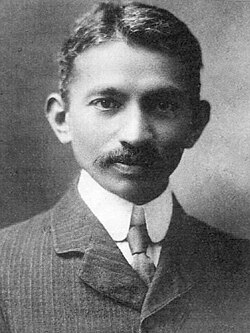
After being called to the bar, Gandhi moved to South Africa in 1893. It was here that he first encountered systemic racial discrimination against Indians, Europeans, and Africans. This experience served as the catalyst for his political awakening.
Between 1893 and 1914, Gandhi evolved into a dedicated civil rights activist. He founded the Natal Indian Congress in 1895 to fight for the rights of the Indian community, marking the beginning of his practical application of nonviolent resistance.
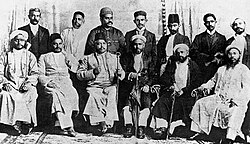
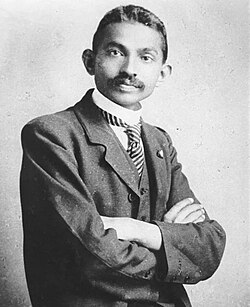
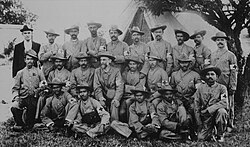
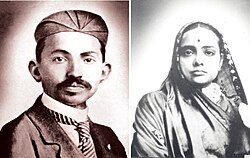
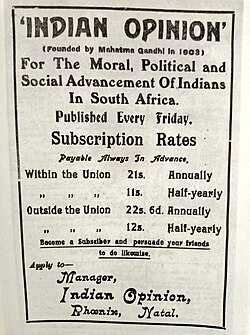
During his time in South Africa, he also established the newspaper Indian Opinion to voice the grievances of the oppressed and organize the community against discriminatory laws.
The Struggle for Indian Independence
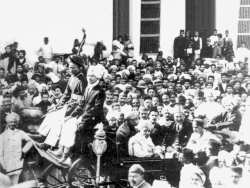
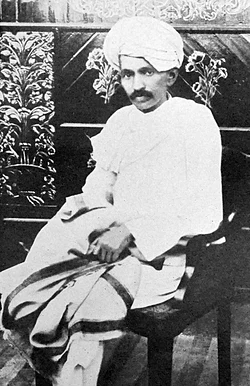
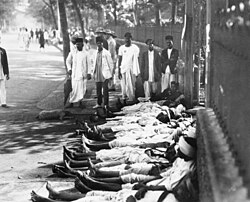
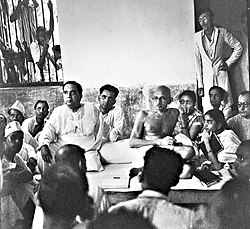
Gandhi returned to India in 1915, where he quickly became a central figure in the struggle against British colonial rule. He began by leading local agitations in Champaran and Kheda, focusing on the plight of peasants.
Major Campaigns and Movements
Gandhi's leadership was characterized by several pivotal movements that mobilized millions of Indians:
- Non-cooperation Movement: A call for Indians to refuse cooperation with the British government.
- Salt Satyagraha: Also known as the Salt March, this was a direct action campaign to defy the British monopoly on salt collection.
- Quit India Movement: Launched in 1942, this movement demanded an immediate British withdrawal from India.
![Gandhi picking salt during Salt Satyagraha to defy colonial law giving salt collection monopoly to the British.[237] His satyagraha attracted vast numbers of Indian men and women.[238]](/images/6b/ac/6bac466532ce530c4f2cc03426f0b15c7e7be399919686d0b0779904bf7b361b.webp)
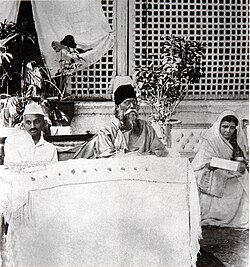
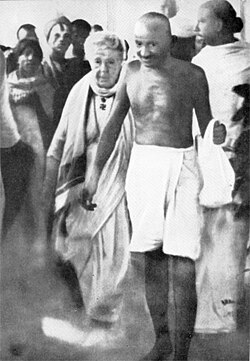
As he became a folk hero, Gandhi adopted a simple lifestyle to identify with India's poor, most notably by adopting the loin-cloth in 1921 and wearing the Gandhi cap.
Political Negotiations and Independence
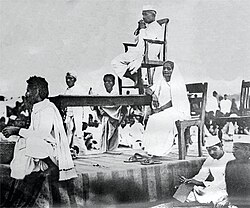
Gandhi engaged in high-level negotiations, including attending the Round Table Conferences in London. He worked closely with other leaders like Jawaharlal Nehru, his designated political heir, and navigated complex tensions with Muhammad Ali Jinnah during the lead-up to the Partition of India.
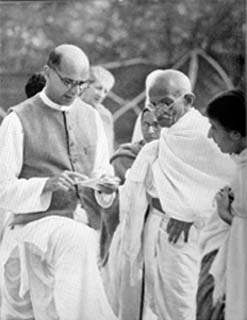
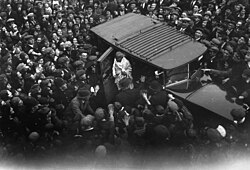
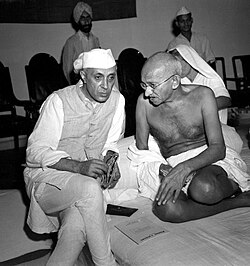
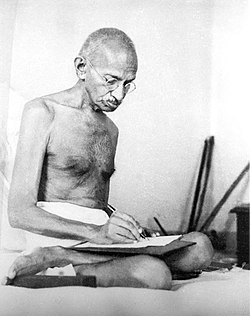
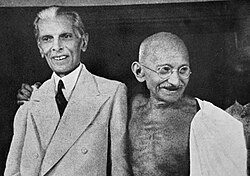
Despite his efforts to maintain unity, India achieved independence in 1947, though it was accompanied by the painful partition into India and Pakistan. Gandhi spent his final months attempting to quell the violence of the Noakhali riots.
Principles, Practices, and Beliefs
Gandhi's life was governed by a strict set of spiritual and ethical principles:
- Satyagraha: Derived from the Sanskrit words for "truth" and "firmly holding," this is the practice of nonviolent resistance to injustice.
- Ahimsa: The principle of total nonviolence toward all living beings.
- Brahmacharya: The practice of abstinence from sex and food (fasting) as a means of spiritual purification.
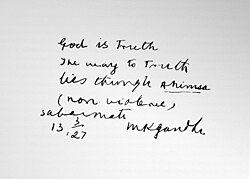
He documented these experiments in his autobiography, The Story of My Experiments with Truth, and published journals such as Young India to spread his message of self-reliance and truth.

Death and Eternal Legacy
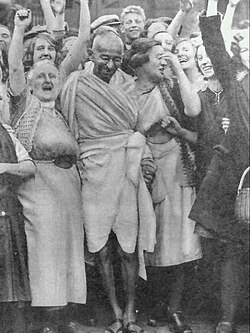
On January 30, 1948, Mahatma Gandhi was assassinated by gunshot in New Delhi. His death was met with worldwide mourning, and his funeral was attended by millions of Indians.
![Gandhi's funeral was marked by millions of Indians.[213]](/images/24/1e/241e557b0746035ced692c91d25e4f0331913dbcc28eb9dcd76ea17a50577d73.jpg)
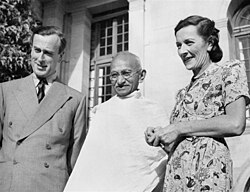
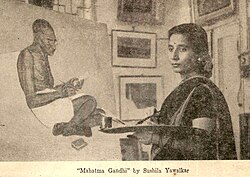
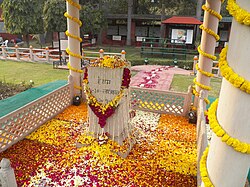
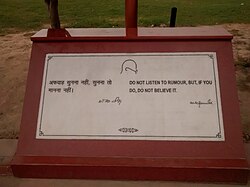
He was cremated at Rajghat, an event attended by national leaders including Jawaharlal Nehru and Louis Mountbatten. Today, his legacy is preserved through monuments like Raj Ghat and Gandhi Smriti, as well as various peace prizes awarded in his spirit.
![Cremation of Mahatma Gandhi at Rajghat, 31 January 1948. It was attended by Jawaharlal Nehru, Louis and Edwina Mountbatten, Maulana Azad, Rajkumari Amrit Kaur, Sarojini Naidu and other national leaders. His son Devdas Gandhi lit the pyre.[216]](/images/4d/84/4d84760c8a4c1ff876aec5ec7fe26e70d0e191d34be521c300c018b4f7fa0be0.jpg)
| Category | Details |
|---|---|
| Education | Samaldas Arts College, University College London |
| Key Roles | Lawyer, Activist, Politician, 43rd President of Indian National Congress |
| Core Philosophy | Truth (Satya), Nonviolence (Ahimsa), Truth-force (Satyagraha) |
| Major Works | The Story of My Experiments with Truth, Young India, Indian Opinion |
| Memorials | Raj Ghat, Gandhi Smriti |
Frequently Asked Questions
What is Satyagraha?
Satyagraha is a form of nonviolent resistance or civil disobedience. It is based on the concept of "truth-force," where the practitioner seeks to win over an opponent through patience, self-suffering, and an unwavering commitment to the truth.
Why did Gandhi lead the Salt March?
The Salt March was designed to defy the British colonial law that gave the British government a monopoly on salt collection. By picking up salt from the shore, Gandhi highlighted the injustice of the law and mobilized vast numbers of Indians in a peaceful protest.
What does Ahimsa mean in Gandhi's philosophy?
Ahimsa refers to the principle of nonviolence. For Gandhi, it was not merely the absence of physical violence but a positive state of love and compassion toward all living beings, regardless of their actions.
What was the purpose of the Quit India Movement?
Launched in 1942 during World War II, the Quit India Movement was a decisive demand for the British to leave India immediately and grant the nation full independence.
How did Gandhi's time in South Africa influence him?
South Africa was where Gandhi first experienced racial prejudice firsthand. This environment forced him to develop the tools of political organization and nonviolent protest, which he later applied on a national scale in India.