War Resisters' International: A Century of Global Anti-Militarism
For over a hundred years, War Resisters' International (WRI) has stood as a global beacon for those who believe that war is an unacceptable solution to human conflict. Headquartered in London, this international network spans more than 40 countries, uniting individuals and affiliates dedicated to the total removal of the causes of war.
Founded on the principle of anti-militarism—the opposition to the maintenance of military establishments and the use of armed force—WRI has evolved from a small gathering in the Netherlands into a sophisticated global network supporting conscientious objectors and nonviolent movements worldwide.
Key Facts
- Established: March 1921 in Bilthoven, Netherlands.
- Original Name: Paco (meaning "peace" in Esperanto).
- Core Belief: War is a crime against humanity.
- Symbol: The broken rifle, adopted in 1931.
- Global Reach: Members and affiliates in over 40 countries.
- Primary Publication: The Broken Rifle.
The Origins and Philosophy of WRI
WRI emerged from the Bilthoven Meetings in 1921, founded by Kees Boeke, Helene Stöcker, and Wilfred Wellock. Many of its early architects were veterans of the resistance to World War I. For instance, the first Secretary, Herbert Runham Brown, had served two and a half years in a British prison as a conscientious objector—someone who refuses to perform military service based on moral or religious grounds.
The organization's founding declaration remains unchanged today: "War is a crime against humanity. I am therefore determined not to support any kind of war and to strive for the removal of all causes of war."
A Legacy of Intellectual Influence
Throughout its history, WRI has attracted some of the most influential pacifist thinkers in history. Notable members and collaborators include Bertrand Russell, George Lansbury, Martin Niemöller, and Albert Einstein. Einstein famously declared that he would unconditionally refuse any direct or indirect war service, regardless of the perceived cause of the war.
The organization also maintained a deep connection with the Gandhian movement. In 1949, at the request of WRI, Mahatma Gandhi participated in a World Pacifist Meeting in Santiniketan, West Bengal, where 50 international pacifists engaged in an "unhurried conference" with Gandhi's close associates.
WRI in Action: From World Wars to the Cold War
WRI has consistently moved beyond theory to provide practical aid and resistance during global crises. During the 1930s and 1940s, the organization worked to rescue individuals fleeing persecution in Nazi Germany and Fascist Italy, securing safe homes for them through its international network.
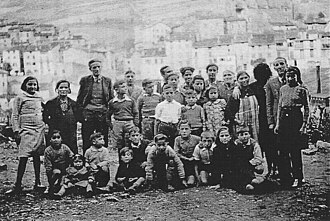
This commitment often came at a high personal cost. Olaf Kullmann, a leader of the Norwegian branch (FmK), was arrested by German occupation forces for his pacifist activities and died in the Sachsenhausen concentration camp in 1942.
Cold War Resistance and Political Impact
During the Cold War, WRI focused on supporting war resisters within the Soviet bloc. Following the 1968 invasion of Czechoslovakia, the organization coordinated protest demonstrations across four Warsaw Pact capitals.
WRI also played an indirect but pivotal role in American political history. In August 1969, Daniel Ellsberg attended a talk by draft resister Randy Kehler at WRI's 13th Triennial Meeting. This event was a catalyst in Ellsberg's decision to release the Pentagon Papers, a leak that eventually contributed to the Watergate scandal and the resignation of President Richard Nixon.
Modern Initiatives and Organizational Structure
In more recent decades, WRI has expanded its operational scope. This includes "Operation Omega" in 1971 to support Bangladesh during the Pakistani blockade, and the creation of the International Deserters Network. The latter provided support for those resisting the 1991 Gulf War and the conflicts in the Balkans, where WRI collaborated with the Balkan Peace Team on nonviolent intervention.
Today, the London office focuses on three primary pillars: supporting conscientious objection, aiding nonviolent anti-war movements, and countering the militarization of youth.
Governance and Leadership
WRI operates as a network of member groups that convene an international conference at least every four years. For nearly a century, the organization was led by a Chair. However, at the 2019 Assembly in Bogotá, Colombia, the office of the Chair was abolished. Responsibilities are now shared among the members of the executive committee.
| Category | Details |
|---|---|
| Founding Year | 1921 |
| Founding Location | Bilthoven, Netherlands |
| Key Symbol | Broken Rifle (since 1931) |
| Current Governance | Executive Committee (Chair abolished 2019) |
| Core Programs | Conscientious objection, nonviolent movements, countering youth militarisation |
Frequently Asked Questions
What does the name "Paco" mean?
Paco was the original name of War Resisters' International, and it means "peace" in Esperanto.
What is the significance of the broken rifle symbol?
Adopted in 1931, the broken rifle serves as a visual representation of the organization's commitment to anti-militarism and the refusal to participate in armed conflict.
How did WRI influence the release of the Pentagon Papers?
Daniel Ellsberg's decision to copy and release the Pentagon Papers was influenced by his attendance at a talk given by draft resister Randy Kehler during a WRI Triennial Meeting in 1969.
Who are some of the most famous figures associated with WRI?
WRI has collaborated with or included members such as Mahatma Gandhi, Albert Einstein, Bertrand Russell, and George Lansbury.
How is WRI governed today?
WRI is a network of member groups. Since 2019, it no longer has a single Chair; instead, leadership responsibilities are shared by the executive committee.