March First Movement: The 1919 Surge for Korean Independence
In early 1919, a wave of nonviolent resistance swept across the Korean Peninsula, marking a pivotal turning point in the struggle against Japanese colonial rule. Known as the March First Movement, this massive uprising saw millions of citizens take to the streets to demand sovereignty and self-determination. While the movement did not immediately end Japanese occupation, it fundamentally reshaped Korean nationalism and laid the groundwork for the future Republic of Korea.
Key Facts
- Date: March 1 – April 1919 (with related protests continuing until 1921).
- Primary Goal: To secure Korea's independence and gain international recognition.
- Scale: Estimated between 0.8 to 2 million participants.
- Method: Primarily nonviolent resistance and public demonstrations.
- Major Outcome: The establishment of the Korean Provisional Government in exile.
- Global Impact: Inspired other protest movements, including the May Fourth Movement in China.
Historical Context and Origins
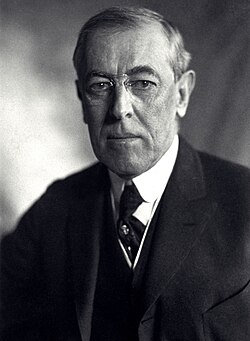
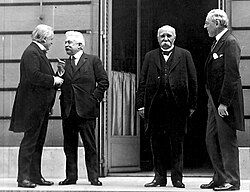
The movement was fueled by a combination of international political shifts and local grievances. Following World War I, the concept of self-determination—the idea that nations should have the right to govern themselves—gained traction globally, championed by leaders like U.S. President Woodrow Wilson.
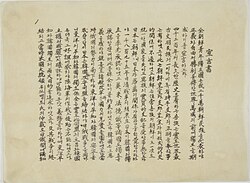
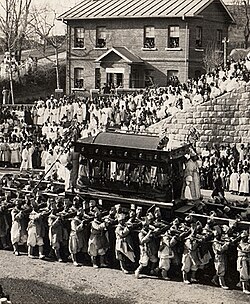
The atmosphere in Korea was further charged by the death of Emperor Gojong, which served as a catalyst for public mourning and political unrest. Preceding the March protests, the February 8 Declaration of Independence had already been issued by students in Tokyo, signaling a growing momentum for autonomy.
The Outbreak of Protests
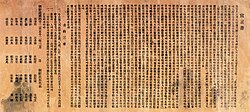
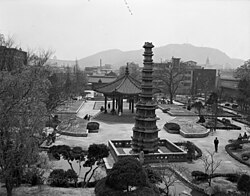
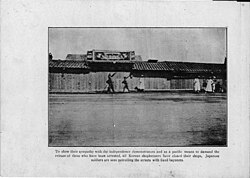
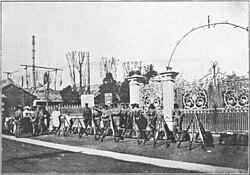
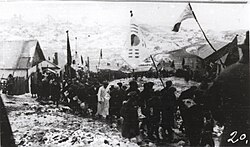
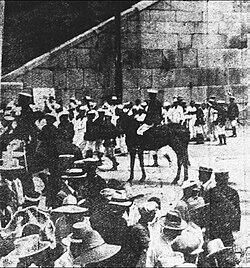
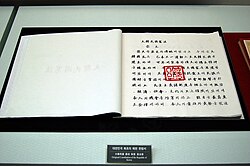
The demonstrations officially commenced in Seoul. Activists gathered at the T'aehwagwan restaurant and Tapgol Park to publicly read the Korean Declaration of Independence. What began as a localized event rapidly escalated into a nationwide phenomenon.
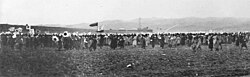
![Crowds at Seoul City Hall[51] (March 1919)](/images/b5/a9/b5a912d0c562b1a9198d193dcce46b95f727ca26f9f66cae9dbab633afad7386.jpg)
The protests were not limited to the Korean Peninsula. The Korean diaspora played a significant role, with demonstrations occurring in Manchuria, the Russian Empire, the United States, Mexico, and Japan.
Global Reach and Diaspora Involvement
In Manchuria, the Longjing Manse Movement demonstrated the strength of the movement outside domestic borders. In the United States, Korean independence activists worked to garner international sympathy, while in China, the movement served as an inspiration for the May Fourth Movement.
![Chinese protestors of the May 4 Movement. The protest's organizers reportedly were in part inspired by the March First Movement.[16] (1919)](/images/f0/37/f037a940ab8d513d8719609115b538d27229d9e156ff2967ba0169b9d10f9cbe.jpg)
Suppression and Resistance
The Japanese colonial government responded to the nonviolent demonstrations with significant force. The suppression resulted in heavy casualties and thousands of arrests. Many activists were sent to facilities such as Seodaemun Prison.
![Seodaemun Prison, where many arrestees were kept.[5] (1945)](/images/8f/76/8f76bce9fb53f43f0ed7e84235bfdd83a85567f3b7f69e0b3b05208a70b7b026.jpg)
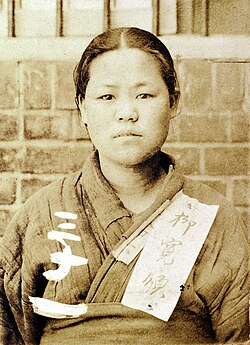
One of the most enduring symbols of this era is Yu Gwan-sun, a student activist whose courage in the face of arrest and imprisonment became a beacon of the independence struggle.
The Role of International Observers
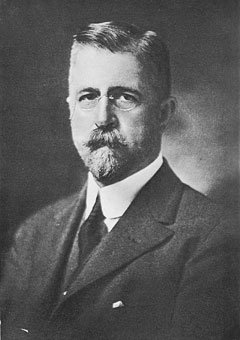
The movement drew varied reactions from the international community. While some Westerners advocated for continued Japanese rule, others supported the Korean cause. Figures like American Senator Selden P. Spencer and activist Homer Hulbert provided support, while Japanese journalists like Tanzan Ishibashi reportedly welcomed the movement's spirit.
![Nitobe Inazō argued that Koreans were uncivilized and incapable of self-governance.[14]](/images/1a/89/1a89944b11b74efd807d098407b9090792b81512c8a01b1ee0c3034263a2f713.jpg)
![Westerners such as Sidney Gulick advocated for Japan's continued rule over Korea.[100] (1919)](/images/68/f3/68f3fae7d4333fa23aea8a99db77bfa848b05ba709ed824c2e54ff819f4e575f.jpg)
![Japanese journalist Tanzan Ishibashi reportedly welcomed the March First Movement.[5][113]](/images/e4/db/e4db73c920d5bbf9422a0109e3b144fdc7a85363e88610f189bcc4339140fda9.jpg)
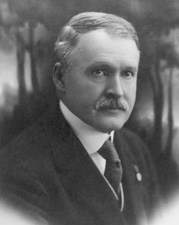
![Chen Duxiu praised the March First Movement.[16]](/images/f7/0c/f70c20c87faf4b2c4ae108f6caba70c5fc7a4e24d7e5ae94905450be400b8263.jpg)
Legacy and Impact
Although the movement did not achieve immediate independence, it forced the Japanese colonial government to shift from a policy of military rule to a more moderate cultural rule policy, granting limited cultural freedoms.
![The inaugural Chōsen Art Exhibition, created as a part of the cultural rule policies.[114] (1922)](/images/f8/0f/f80f443a76f3d7ded56055f2a9d7baa6044519811d0c7e9f4632253d98452b11.jpg)
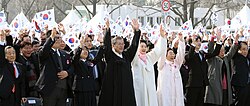
The most significant political outcome was the creation of the Korean Provisional Government, which provided a centralized leadership for the independence movement in exile. Today, the March First Movement is commemorated annually as a cornerstone of Korean national identity.
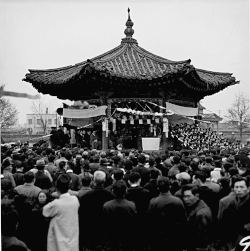
![Kim Il Sung speaking at the first public celebration of the March First Movement in northern Korea in 1946.[169] A taegeukgi flag is flying above Kim; both the north and south used the design from 1945 to 1948.[170]](/images/ca/34/ca345c4641b2f488bdd468cabfba575dfc0cd6fbd357dbae0c55f07eee383e14.png)
Statistical Overview of the Movement
| Region | Protests | Participants | Deaths | Arrests |
|---|---|---|---|---|
| Gyeonggi | 297 | 665,900 | 1,472 | 4,680 |
| Pyongan | 315 | 514,670 | 2,042 | 11,610 |
| Jeolla | 222 | 294,800 | 384 | 2,900 |
| Gyeongsang | 223 | 154,498 | 2,470 | 1,085 |
| Chungcheong | 156 | 120,850 | 590 | 5,233 |
| Total (Selected) | 1,542 | 2,023,098 | 7,509 | 46,948 |
Frequently Asked Questions
What were the primary goals of the March First Movement?
The movement aimed to secure Korea's independence from Japanese colonial rule and to gain recognition and support from the international community.
How did the Japanese government respond to the protests?
The Japanese authorities responded with violent suppression, leading to significant casualties and the arrest of tens of thousands of people.
Who was Yu Gwan-sun?
Yu Gwan-sun was a prominent Korean student activist who became a symbol of the independence movement due to her courageous participation in the protests and her subsequent imprisonment.
Did the movement have an international impact?
Yes, the movement inspired other independence and protest movements abroad, most notably influencing the organizers of the May Fourth Movement in China.
What was the result of the movement regarding Japanese policy?
While it did not end colonial rule, it led the Japanese government to implement "cultural rule" policies, which granted limited cultural freedoms to the Korean population.