South KoreaDaehanmingukKorean historyMiracle on the Han RiverSeoul

Republic of Korea: A Journey Through History, Innovation, and Culture

Exploring the Republic of Korea: A Journey Through History, Innovation, and Culture The Republic of Korea, commonly known as South Korea, is a nation defined by its remarkable resilience ...

Exploring the Republic of Korea: A Journey Through History, Innovation, and Culture

The Republic of Korea, commonly known as South Korea, is a nation defined by its remarkable resilience and rapid transformation. From its ancient roots and unified dynasties to its emergence as a global leader in technology and culture, the country offers a unique blend of deep-seated tradition and cutting-edge modernity. Located on the southern half of the Korean Peninsula, it stands as a vibrant unitary presidential republic with a global influence that stretches far beyond its borders.

Key Facts
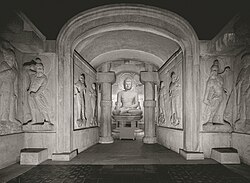
Seokguram Grotto from the Silla era, a UNESCO World Heritage Site
  • Capital: Seoul
  • Official Language: Korean (including Korean Sign Language)
  • Official Script: Hangul
  • Currency: Korean Republic won (₩ / KRW)
  • Population: Approximately 51.1 million (2026 estimate)
  • GDP (Nominal): $1.931 trillion (2026 estimate)
  • Major Industries: Technology, robotics, biotechnology, and aerospace engineering

A Rich Historical Tapestry
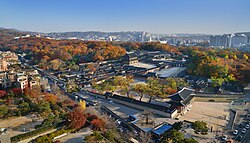
Changdeokgung, pictured in 2014, one of the Five Grand Palaces of Seoul built during the Joseon dynasty and a UNESCO World Heritage Site

The history of Korea is a long and complex narrative. It began with ancient eras and the legendary Three Kingdoms, eventually leading to periods of unified dynasties. One of the nation's most significant historical achievements was the development of movable type. The Goryeo dynasty created the world's first metal-based movable type in 1234, a precursor to the Jikji, the oldest surviving metal movable type book printed in 1377.

The oldest surviving metal movable type book, the Jikji, was printed in 1377, and Goryeo created the world's first metal-based movable type in 1234.[46]
: The oldest surviving metal movable type book, the Jikji, was printed in 1377, and Goryeo created the world's first metal-based movable type in 1234.[46]

The modern era brought significant challenges, including the Japanese occupation and the subsequent division of the peninsula. The struggle for independence was marked by pivotal moments such as the March First Movement in 1919, where protests erupted in Seoul against colonial rule.
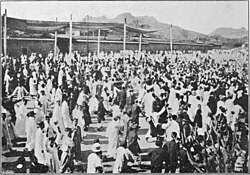
March First Movement 1919, protests in Seoul against Japanese colonial rule
: March First Movement 1919, protests in Seoul against Japanese colonial rule

Following the end of World War II and the establishment of the ROK (Republic of Korea) on August 15, 1948, the nation faced the devastation of the Korean War. However, from these ashes, the country underwent an unprecedented economic transformation known as the Miracle on the Han River. Between 1962 and 1994, the economy grew at an average of 10% annually, driven by a 20% annual growth in exports.

Between 1962 and 1994, the South Korean economy grew at an average of 10% annually, fueled by annual export growth of 20%,[107] in a period called the Miracle on the Han River.
: Between 1962 and 1994, the South Korean economy grew at an average of 10% annually, fueled by annual export growth of 20%,[107] in a period called the Miracle on the Han River.

Geography and Natural Beauty

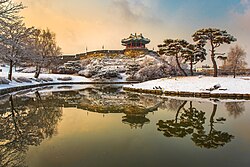
Banghwa Suryu Pavilion, part of Hwaseong Fortress, a UNESCO World Heritage Site (2019)

South Korea's landscape is diverse, ranging from bustling metropolitan hubs to serene mountain ranges. The country features various administrative divisions, including special cities like Seoul and metropolitan cities such as Busan and Incheon. The mountainous terrain is a defining feature, exemplified by the Seoraksan mountains in the Gangwon Province.
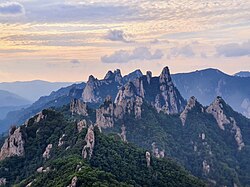
Dinosaur Ridge of Seoraksan, the highest mountain in the Taebaek mountain range in the Gangwon Province.
: Dinosaur Ridge of Seoraksan, the highest mountain in the Taebaek mountain range in the Gangwon Province.

Urban life in South Korea is characterized by a mix of high-tech infrastructure and reclaimed natural spaces. In Seoul, the Cheonggyecheon river serves as a modern public recreation space, providing a green lung amidst the dense cityscape.
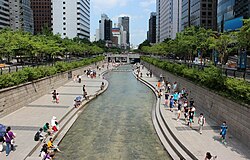
Cheonggyecheon river is a modern public recreation space in downtown Seoul
: Cheonggyecheon river is a modern public recreation space in downtown Seoul

Major Urban Centers

The nation's population is concentrated in several key areas. Seoul, the capital, is the largest city, followed by metropolitan hubs like Busan, Incheon, and Daegu. These cities serve as the engines of the country's economy and cultural life.

Major Cities of South Korea by Population
Rank Name Province/Type Population (Approx.)
1 Seoul Special City 9,830,452
2 Busan Metropolitan City 3,460,707
3 Incheon Metropolitan City 2,952,476
4 Daegu Metropolitan City 2,471,236
5 Daejeon Metropolitan City 1,496,123

Innovation and Global Leadership

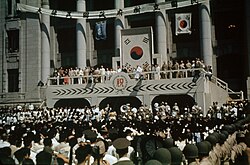
Ceremony for the inauguration of the South Korean government (August 15, 1948)

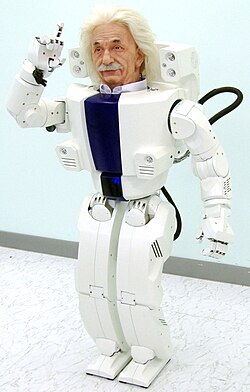
Today, South Korea is a global powerhouse in science and technology. The nation excels in robotics, biotechnology, and aerospace engineering. Notable achievements include the development of expressive robots like Albert HUBO and the successful liftoff of the KSLV-II Nuri rocket.
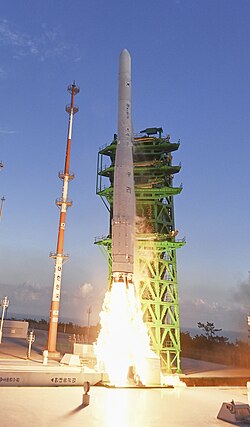
KSLV-II Nuri during liftoff
: KSLV-II Nuri during liftoff

The country is also a leader in consumer electronics and display technology. Korean companies are world leaders in manufacturing high-quality OLED and LCD screens, which power much of the world's modern digital devices.
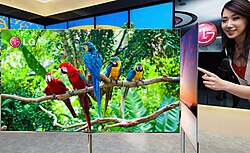
A 3D OLED TV made by Korean LG Display, the world's largest LCD and OLED maker
: A 3D OLED TV made by Korean LG Display, the world's largest LCD and OLED maker

Global Diplomacy and Economy

South Korea's influence extends to international governance and diplomacy. The nation has held significant roles in global forums, such as hosting the G-20 summit in 2010, making it the first non-G7 nation to chair the group. Furthermore, South Korean leaders and officials have held prominent positions in international organizations, including the United Nations.
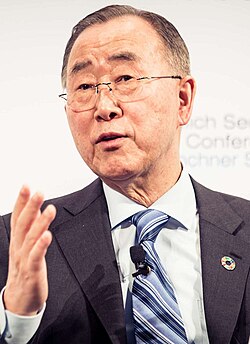
Former Secretary-General of the United Nations (2007–2016), Ban Ki-moon
: Former Secretary-General of the United Nations (2007–2016), Ban Ki-moon

Culture, Arts, and Cuisine

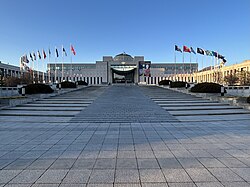
War Memorial of Korea

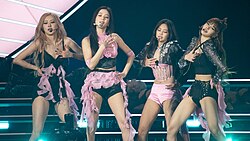
The "Korean Wave" or Hallyu has brought South Korean culture to the global stage. This phenomenon is driven by K-pop, which features internationally successful groups like BTS and Blackpink, as well as the global popularity of Korean television and film.
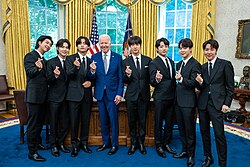
K-pop group BTS has emerged as one of the country's most successful Korean boy bands since their rise to international prominence during the latter half of the 2010s.
: K-pop group BTS has emerged as one of the country's most successful Korean boy bands since their rise to international prominence during the latter half of the 2010s.
Blackpink has been one of the most popular K-pop girl groups in the world since the late 2010s.
: Blackpink has been one of the most popular K-pop girl groups in the world since the late 2010s.

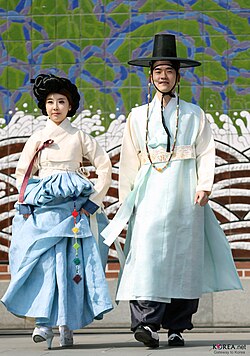
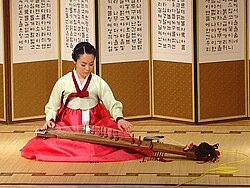
Traditional culture remains deeply integrated into daily life. From the practice of Taekwondo, a world-renowned martial art, to the intricate beauty of traditional dress and the performance of instruments like the gayageum, the heritage of the Joseon and Silla eras continues to thrive.
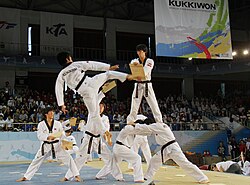
Taekwondo, a Korean martial art and Olympic sport
: Taekwondo, a Korean martial art and Olympic sport
A musician playing a gayageum
: A musician playing a gayageum

Korean cuisine is another major cultural export. Dishes like Bibimbap are celebrated worldwide for their balance of flavors and nutritional value.
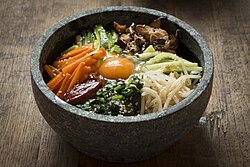
Bibimbap
Bibimbap
: Bibimbap

Frequently Asked Questions

President Kim Dae-jung, the 2000 Nobel Peace Prize recipient for advancing democracy and human rights in South Korea and East Asia and for reconciliation with North Korea, was sometimes called the "Nelson Mandela of Asia".[112]
South Korea became the first non-G7 chair of the G-20 when it hosted the 2010 Seoul summit.[119]
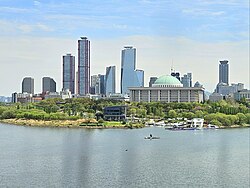
Panoramic view of Yeouido and the National Assembly building from Dangsan Railway Bridge.
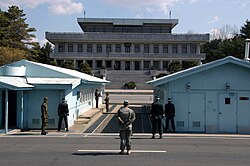
The Joint Security Area
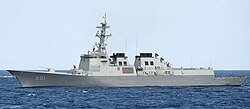
ROKN Sejong the Great, a Sejong the Great-class guided-missile destroyer built by Hyundai Heavy Industries
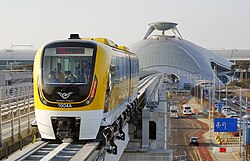
Incheon International Airport's Maglev station
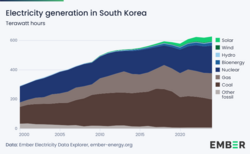
Electricity generation in South Korea in terawatt hours
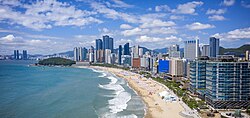
Busan City Haeundae Beach
Albert HUBO, developed by KAIST, can make expressive gestures with its five separate fingers.
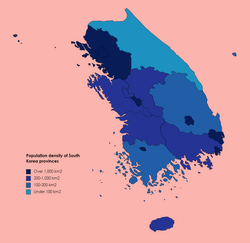
Population density of South Korea provinces
South Koreans in traditional dress
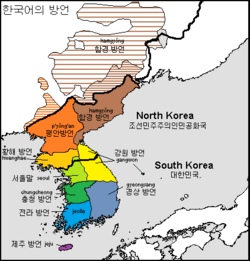
Dialects of the Korean language
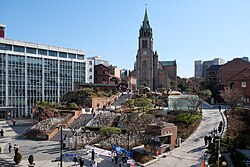
The Myeongdong Cathedral, seat of the Archdiocese of Seoul.
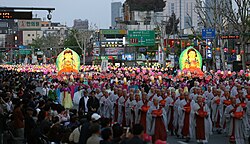
Buddha's Birthday celebration in Seoul
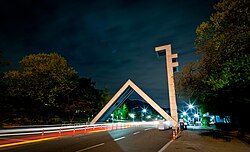
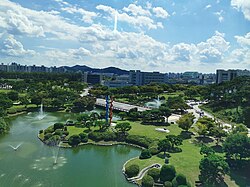
Seoul National University is considered to be the most prestigious university in South Korea.
KAIST main campus in Daejeon
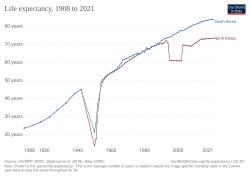
Development of life expectancy in North Korea and South Korea
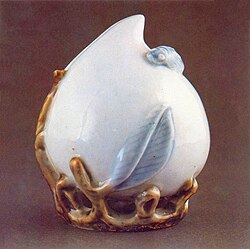
A blue and white porcelain peach-shaped water dropper from the Joseon dynasty in the 18th century
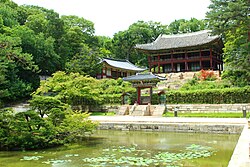
Buyongjeong area in Changdeokgung
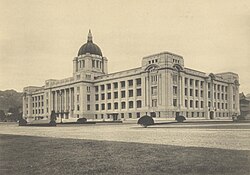
Government-General of Chōsen Building was demolished in 1996 under the Kim Young-sam government.
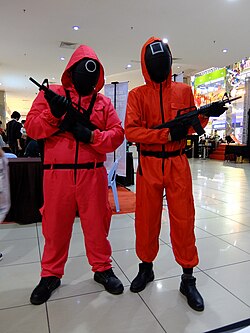
People cosplaying as guards from Squid Game
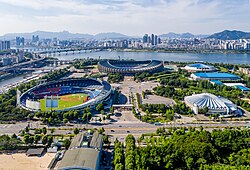
Seoul Sports Complex, Korea's largest integrated sports center
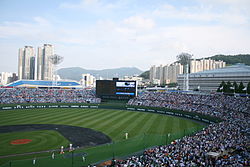
Sajik Baseball Stadium in Busan. Baseball is one of the most popular sports in South Korea.

What is the official language of South Korea?

The official language is Korean, and the official writing system used is Hangul.

What is the "Miracle on the Han River"?

It refers to the period of rapid economic growth experienced by South Korea between the 1960s and the 1990s, which transformed the nation from a developing country into a high-income economy.

Is South Korea a democracy?

Yes, the Republic of Korea is a unitary presidential republic with a democratic government structure.

What are some famous UNESCO World Heritage Sites in South Korea?

Notable sites include the Seokguram Grotto, Changdeokgung Palace, and the Hwaseong Fortress.

What is the main currency used in South Korea?

The official currency is the Korean Republic won (KRW).

References

  1. A new administrative capital, Sejong, has been under construction since 2007. Numerous ministries and agencies had relocated to Sejong. However, based on Constitutional Court decision in 2004, complete capital relocation from Seoul requires a constitutional referendum. As of 2026, Seoul remains the seat of the Blue House, National Assembly, Supreme Court, and Constitutional Court.
  2. South Koreans use the name Hanguk (한국; 韓國) when referring to South Korea or Korea as a whole. The literal translation of South Korea, Namhan (남한; 南韓), is rarely used. Until a change in policy in 2024, the official line in North Korea was to use the name Namjosŏn (Namjoseon; 남조선; 南朝鮮) when referring to South Korea, derived from the North Korean name for Korea, Chosŏn (Joseon; 조선; 朝鮮). The North Korean state now uses Hanguk when referring to South Korea.
  3. Korean: 대한민국; Hanja: 大韓民國; RR: Daehanminguk; lit. 'Great Han Republic' or 'Great Korean Republic'
  4. South Korea claims five of its provinces that are controlled by North Korea, which it does not control, along with the two portions of its northern provinces controlled by North Korea. These are overseen by the Committee for the Five Northern Korean Provinces.
  5. [시행 2016.8.4.] [법률 제13978호, 2016.2.3., 제정] [Enforcement 2016.8.4. Law No. 13978, enacted on 3 February 2016] (in Korean). 2016. Archived from the original on March 11, 2016. Retrieved July 26, 2017.