Understanding Hanja: The History and Evolution of Chinese Characters in Korea
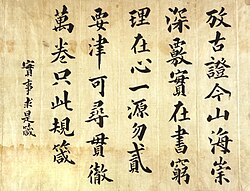
For much of Korean history, the written word was defined by Hanja—the use of Chinese characters to record the language. While modern Koreans primarily use the phonetic Hangul alphabet, Hanja remains deeply embedded in the country's linguistic DNA. To understand Korean history, literature, and the etymology of its vocabulary, one must understand the role these logographic characters have played for over two millennia.
Key Facts
- Hanja refers to Chinese characters used within the Korean writing system.
- Approximately 30% to 50% of the Korean vocabulary is Sino-Korean (derived from Hanja).
- Hangul was created by King Sejong the Great in 1446 but did not become the dominant official script until the late 19th and early 20th centuries.
- Modern Hanja is often used for clarification to distinguish between homophones (words that sound the same but have different meanings).
- In South Korea, formal Hanja education typically begins in junior high school.
The Foundations of Hanja in Korea
The institutionalization of the Chinese language in the Korean peninsula began as early as 108 BC, when the Han dynasty established the Four Commanderies of Han in northern Korea. Over the following centuries, hanmun (literary Chinese) became the standard for official records and scholarship across the Three Kingdoms period.
Historical evidence, such as the Gwanggaeto Stele (dated 414 AD), provides early proof of hanmun inscriptions. By the 5th and 6th centuries, hanmun was commonplace in the kingdom of Goguryeo, and by the end of the 6th century, Chinese classics were widely available. While some scholars suggest the spread of Buddhism around the 4th century accelerated the adoption of Chinese writing, historical records show that various Korean kingdoms were utilizing written systems for diplomacy, law, and literature long before.
Adapting Chinese to Korean Grammar
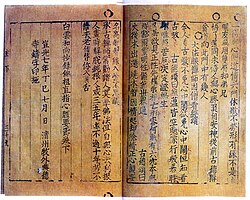
Because literary Chinese is a terse language with a different structure than spoken Korean, scholars developed ingenious ways to make texts more accessible. One such system was gugyeol (separated phrases). This method involved inserting Hanja into Chinese texts to represent native Korean grammatical endings or markers. This allowed readers to interpret the meaning of complex Chinese texts through a Korean grammatical lens, much like the kanbun system used in Japan.
Another system, known as idu, used Hanja to write native Korean words. These various methods were essential for civil servants during the Joseon period, who were required to master the interpretation of Confucian texts.
The Rise of Hangul and the Shift to Mixed Script
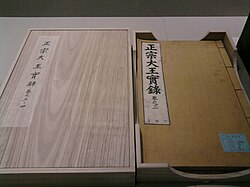
A major turning point occurred in 1446 when King Sejong the Great promulgated Hangul (also known as Chosŏn'gŭl in North Korea). Despite this invention, Hanja remained the primary script for official documents, history, and high literature for centuries. It wasn't until the late 19th and early 20th centuries that Hangul gained widespread official use.
This transition led to the era of mixed script, where Sino-Korean words were written in Hanja while native Korean words and loanwords were written in Hangul. By the 21st century, even most Sino-Korean words are written in Hangul, though Hanja is occasionally included in parentheses to prevent confusion between words that share the same Hangul spelling.
The Modern Decline of Hanja
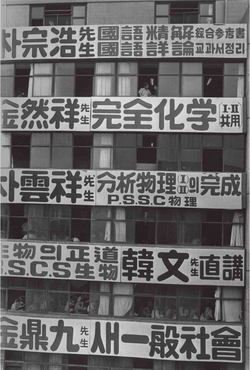
The use of Hanja has seen a significant decline in the modern era, particularly in South Korea, due to both political decisions and technological shifts.
Political and Technological Factors
In 1968, the South Korean government implemented a plan for "Hangul Exclusivity," which aimed to remove Hanja from public schools and the military. Although public backlash led to a partial reversal in 1972—allowing Hanja to be taught as an optional subject—the use of Hanja in textbooks continued to diminish. The formal ban was not lifted until 1992.
Technology also played a role. The development of Hangul typewriters and computer keyboards in the mid-20th century favored the simpler Hangul alphabet. Using Hanja in type was slower and more cumbersome than using the efficient Sebeolsik (three-set) keyboard layouts designed for Hangul.
Current Usage in Daily Life
Today, Hanja is rarely used in general writing, but it remains visible in specific contexts:
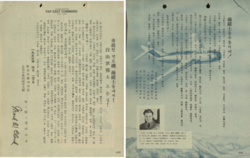
- Newspaper Headlines: Used for brevity (e.g., 中 for China, 韓 for Korea).
- Clarification: Distinguishing homophones in academic or legal texts.
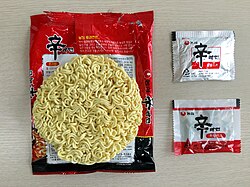
- Branding: Stylistic use on commercial packaging, such as the 辛 (spicy) on Shin Ramyun.
Educational Differences: North vs. South
The approach to Hanja education differs significantly between the two Koreas.
South Korea
In South Korea, Hanja is not part of the core elementary curriculum but is taught as a separate course in high school. Students typically learn a total of 1,800 characters: 900 in junior high and 900 in senior high school.
North Korea
While North Korea abandoned the general use of Hanja in public documents shortly after independence, its educational system remains more intensive. Following a policy shift in the 1960s, North Korean students are taught a much larger volume of characters. Students in grades 5–9 learn 1,500 characters, with an additional 500 in high school and 1,000 more at the college level, totaling approximately 3,000 characters.
Summary of Hanja Characteristics
| Feature | Description |
|---|---|
| Script Type | Logographic (each character represents a meaning/morpheme) |
| Linguistic Impact | Estimated 30%–50% of Korean vocabulary is Sino-Korean |
| Primary Function | Historical records, academic terminology, and disambiguation |
| Modern Status | Secondary to Hangul; used mainly for specialized or stylistic purposes |
Frequently Asked Questions
Why is Hanja still important if most Koreans use Hangul?
Hanja is essential for understanding the roots of the Korean language. Because a massive portion of the vocabulary—especially in science, government, and academia—is derived from Chinese characters, knowing Hanja helps clarify the precise meaning of complex words and distinguishes between different words that sound identical in Hangul.
What is the difference between Hanja and Hangul?
Hangul is a phonetic alphabet created specifically for the Korean language, where characters represent sounds. Hanja refers to the logographic Chinese characters used to represent meanings and morphemes within the Korean writing system.
How many Hanja characters do students learn in South Korea?
The standard curriculum for South Korean students involves learning 1,800 characters: 900 during junior high school and 900 during senior high school.
Is Hanja used in North Korean writing?
While North Korea has largely removed Hanja from general public documents and daily writing in favor of Hangul, it remains a significant part of their formal education, with students learning up to 3,000 characters through college.
What are "Sino-Korean" words?
Sino-Korean words are words in the Korean language that were borrowed from Chinese. These words are built using Hanja roots and make up a significant percentage of the modern Korean lexicon.