Hangul: The Scientific Design and History of the Korean Alphabet
Hangul, the writing system used for the Korean language, is widely regarded as one of the most logically designed scripts in existence. Unlike many writing systems that evolved organically over millennia, Hangul has a documented origin, credited to the visionary leadership of Sejong the Great. This featural script—a system where the shapes of letters represent the articulatory features of the sounds they make—serves as a bridge between phonetic precision and visual elegance.
Key Facts
- Origin: Created in 1443 or 1444 by Sejong the Great.
- Script Type: A featural alphabet.
- Structure: Letters are arranged into syllabic blocks.
- Design Philosophy: Consonants mimic the shape of vocal organs; vowels represent philosophical concepts.
- Modern Usage: Used for Korean and Jeju, and adapted for languages like Cia-Cia.
The Origins and Evolution of Hangul
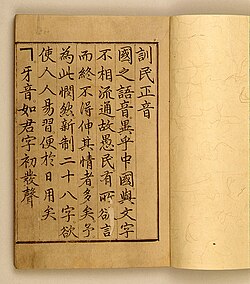
The history of Hangul is anchored in the Hunminjeongeum, the document that formally introduced the script to the world. Before its creation, Korean was primarily written using Chinese characters, a system that was difficult for the general population to master. The introduction of Hangul aimed to increase literacy and provide a more accessible means of communication.
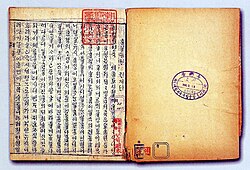
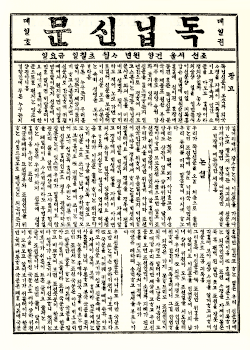
Throughout history, the script has undergone various stages of development. During the Enlightenment and Korean Empire periods, it gained prominence, and even during the colonial period, it remained a vital symbol of identity. Following liberation and the division of the peninsula, distinct naming conventions emerged: North Korea refers to the script as Chosŏn'gŭl, while South Korea uses the term Hangul.
The Scientific Design of Letters
One of the most remarkable aspects of Hangul is its featural design. The consonants are not arbitrary shapes; instead, they are modeled after the physical movement of the mouth and tongue during pronunciation.
Consonant Construction
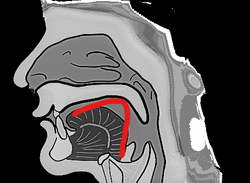
The basic consonants are designed based on the shape of the vocal organs:
- ㄱ (giyeok): Represents the root of the tongue blocking the upper palate.
- ㄴ (nieun): Depicts the tongue touching the upper palate.
- ㅁ (mieum): Represents the shape of the mouth.
- ㅅ (siot): Depicts the incisor teeth.
- ㅇ (ieung): Represents the shape of the throat.
Vowel Philosophy
The vowels are rooted in traditional Chinese philosophical concepts, utilizing three fundamental elements:
- ㆍ (archaic vowel): Represents yin and earth.
- ㅡ: Represents yang and the sun.
- ㅣ: Represents man (the neutral element).
Orthography and Syllable Blocks
Unlike the linear arrangement of the Latin alphabet, Hangul letters are combined into syllable blocks. This means that while the letters themselves are alphabetic, they are visually organized into clusters that represent a single syllable. For example, an initial consonant, a medial vowel, and a final consonant (batchim) are stacked or placed side-by-side to form a block.
While the modern Hangul system can theoretically yield 11,172 different syllable combinations, scholars suggest that only about 2,000 of these are actually used in natural Korean speech.
![Cover of a revision of the Unified Hangul Orthography [ko]](/images/1a/f5/1af556335f9717709ec29bc638c7a249a51e622288a359502b5c466a1091c1b3.jpg)
Hangul in the Digital Age
Hangul has transitioned seamlessly into the modern era. Its logical structure makes it highly efficient for digital input. Modern computing utilizes various Unicode ranges to encode Hangul, including specific blocks for pre-composed syllables and individual jamo (letters).
![The South Korean dubeolsik [ko] keyboard layout](/images/52/48/52487f41bdaa353b22cbd85c5be4c9c4b5f6c2c112410c642706a4614475eed5.webp)
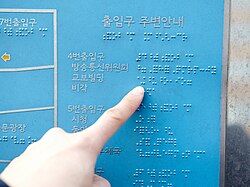
From standard keyboards to specialized systems like Korean Braille, the script remains versatile. It is also used in various font styles to suit different aesthetic needs, ranging from traditional calligraphy to modern sans-serif designs.

Summary of Hangul Characteristics
| Feature | Description |
|---|---|
| Direction | Left-to-right; Top-to-bottom |
| Classification | Featural Alphabet |
| Syllable Structure | Letters grouped into blocks |
| Unicode Range | U+AC00–U+D7AF (Syllables) |
Beyond the Korean peninsula, the script's utility has even been explored for other languages, such as the Cia-Cia language, demonstrating its adaptability as a writing system.
Frequently Asked Questions
What is the difference between Hangul and Chosŏn'gŭl?
The difference is primarily regional and political. "Hangul" is the name used in South Korea, while "Chosŏn'gŭl" is the name used in North Korea.
How are Hangul letters arranged?
Hangul is written from left-to-right and top-to-bottom. While columns can be written right-to-left, modern standard usage follows a left-to-right direction.
Why are the letters grouped into blocks?
Letters are grouped into syllable blocks to represent the phonetic structure of the Korean language, where sounds are organized by syllable rather than just a continuous string of individual letters.
Is Hangul used for languages other than Korean?
Yes, the script has been used or adapted for other languages, including Jeju and the Cia-Cia language.
How many syllables can be made with Hangul?
Using the current 19 initial consonants, 21 vowels, and 28 final consonants, it is possible to create 11,172 syllables, though only about 2,000 are commonly used.