V. A. Sundaram: The Diplomat and Fundraiser of the Indian Independence Movement
Vellalore Annaswamy Sundaram was a pivotal figure in the Indian Independence movement, serving as a bridge between the grassroots activism of Mahatma Gandhi and the institutional vision of Madan Mohan Malaviya. A man of deep literary passion and spiritual curiosity, Sundaram excelled in communication and public relations, utilizing his fluency in English and his diplomatic tact to champion India's cause on both national and international stages.
Key Facts
- Role: Activist, fundraiser, and Secretary to the Benares Hindu University (BHU).
- Key Associations: Close associate of Mahatma Gandhi and confidant of Madan Mohan Malaviya.
- International Impact: Served as Gandhi's ambassador to Europe in 1931, meeting figures such as Albert Einstein and Pope Pius XI.
- BHU Contribution: Raised significant funds (in the range of lakhs) from Indian royalty and princes for the university.
- Legacy: His home, 'Krishnakutir', is now part of a Heritage Complex at BHU.
Early Life and Intellectual Foundations
Born on February 2, 1896, in Coimbatore, Madras Presidency, Sundaram was raised in an orthodox Tamil Brahmin family. His lineage traced back to the 16th-century Sanskrit scholar Appayya Dikshita. His father, Annaswamy Iyer, was an advocate from the village of Vellalore, which provided the prefix for Sundaram's full name.
Sundaram's early years were marked by a profound love for poetry and the English language. He pursued studies in English literature at the prestigious Pachaiyappa's College in Madras. However, his academic path was diverted by the rising tide of nationalism; in December 1914, he attended his first Indian National Congress meeting, sparking a lifelong commitment to India's liberation.
Activism and the Influence of Mahatma Gandhi
The trajectory of Sundaram's life changed permanently in April 1915 after hearing a speech by Mahatma Gandhi in Madras. Driven by fervor, he abandoned his studies to become a disciple of Gandhi, eventually becoming one of the first residents of the Sabarmati Ashram (Gandhi's communal living center). While the strict dietary and disciplinary regimes of the ashram proved physically taxing—leading to his departure after nine months due to malnutrition—his spiritual and political bond with Gandhi remained unbreakable.
Returning to the South, Sundaram implemented Gandhi's vision of village development by introducing spinning and weaving in Vellalore. His importance to the movement was solidified in October 1919, when he was one of only 28 leading activists addressed in Gandhi's circular letter calling for a nationwide hartal (a form of mass protest involving the closing of shops and workplaces) regarding the Khilafat movement.
Throughout the 1920s and 30s, Sundaram was deeply involved in major campaigns, including the Vaikom Satyagraha of 1925 and the Salt Satyagraha of 1930. His arrest in early 1931 was so significant that Gandhi personally protested to Viceroy Lord Irwin and issued a statement to Reuters.
Ambassador to Europe
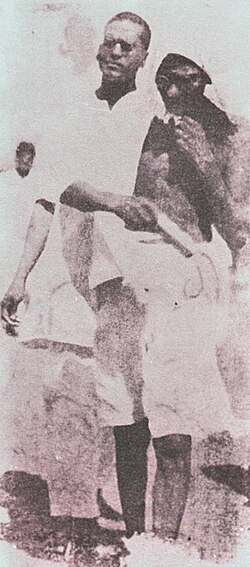
In June 1931, sponsored by industrialist Jamnalal Bajaj, Sundaram was dispatched to Europe to act as an ambassador for Gandhi's political message. This seven-month journey was a masterclass in intercultural diplomacy. In Italy, he met with Mussolini and Pope Pius XI, and in Germany, he delivered public speeches in Berlin and Kassel.
One of the most notable encounters of this tour was with Albert Einstein in Caputh. Through Sundaram, Einstein was introduced to Gandhi's philosophy and subsequently wrote a letter to the Mahatma, which Sundaram delivered. His travels also took him to Czechoslovakia, where he met President Tomáš Masaryk, and eventually to England, where he joined Gandhi for the second Round Table Conference.
Leadership at Benares Hindu University (BHU)
While his political work was global, Sundaram's institutional legacy was rooted in Benares. In 1926, he became the personal secretary to Madan Mohan Malaviya, the visionary founder of the Benares Hindu University. His early tenure included a stint in Kotgarh in the Himalayas, teaching English at a school founded by Samuel Evans Stokes.
Sundaram's greatest contribution to BHU was his role as Secretary of the BHU Collection Committee. He possessed a unique ability to engage high-profile donors, successfully raising lakhs of rupees from the 'Ruling Princes' and Maharadjas of India. This fundraising effort was essential for the growth and sustainability of the university.
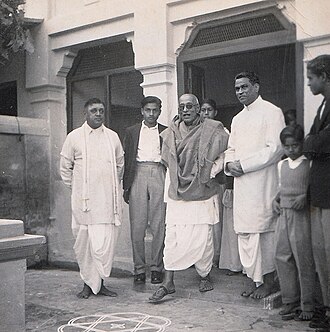
Malaviya provided Sundaram with a residence on the university grounds, which he named 'Krishnakutir'. This home became a cultural hub, hosting luminaries such as the scientist C. V. Raman, writer Somerset Maugham, and Governor-General C. Rajagopalachari.
Personal Philosophy and Legacy
Sundaram's life was guided by an appreciation of beauty—both sensual and spiritual—and a commitment to interreligious harmony. He maintained a deep interest in Christian philosophy and hosted guests of various faiths, exchanging ideas with figures like Sadhu Sundar Singh and Swami Sivananda.
Despite his political struggle against British rule, he remained a lifelong admirer of English literature and culture, ensuring all his children received higher education in England. After retiring from BHU in 1956, he moved to Bombay, where he passed away on March 11, 1967, at the age of 71.
| Category | Details |
|---|---|
| Lifespan | 1896 – 1967 |
| Primary Roles | Independence Activist, BHU Secretary, Diplomat |
| Key Mentors | Mahatma Gandhi, Madan Mohan Malaviya |
| Major Achievements | European diplomatic tour (1931), BHU fundraising |
| Notable Residence | 'Krishnakutir' (BHU grounds) |
Frequently Asked Questions
Who was V. A. Sundaram?
V. A. Sundaram was an Indian independence activist, a close associate of Mahatma Gandhi, and the Secretary of the Benares Hindu University (BHU) Collection Committee, known for his diplomatic skills and fundraising abilities.
How did Sundaram help the Benares Hindu University?
As the Secretary of the BHU Collection Committee, Sundaram traveled extensively across India to raise significant funds (lakhs of rupees) from Maharadjas and other ruling princes to support the university's development.
What was Sundaram's role in Europe?
In 1931, he served as Mahatma Gandhi's ambassador to Europe, where he spread Gandhi's political and philosophical messages, meeting influential figures including Albert Einstein, Pope Pius XI, and Benito Mussolini.
What is 'Krishnakutir'?
'Krishnakutir' was the name of the house built for Sundaram on the BHU grounds. It served as a meeting place for prominent international and national figures and is now part of a planned Heritage Complex known as the 'Gandhi Memorial'.
What was Sundaram's relationship with Mahatma Gandhi?
Sundaram was a devoted disciple of Gandhi, starting as one of the first inmates of the Sabarmati Ashram. He acted as a regional worker in South India, a diplomatic representative in Europe, and maintained a correspondence with Gandhi for 30 years.