Suffrage and the Global Evolution of Voting Rights
Suffrage, also known as the political franchise, is the legal right to vote in public political elections and referendums. While often used interchangeably with the act of voting, suffrage represents the fundamental right that enables a citizen to participate in the governance of their society. In political science, a distinction is often made between active suffrage (the right to cast a vote) and passive suffrage (the right to stand as a candidate for election). When an individual possesses both, they are said to have full suffrage.
In modern democracies, this right typically allows citizens to elect representatives. Some systems also incorporate direct democracy through referendums, where citizens vote directly on specific issues. For instance, Switzerland utilizes referendums at all levels of government, while in the United States, some states allow popular initiatives where citizens can propose and vote on laws.
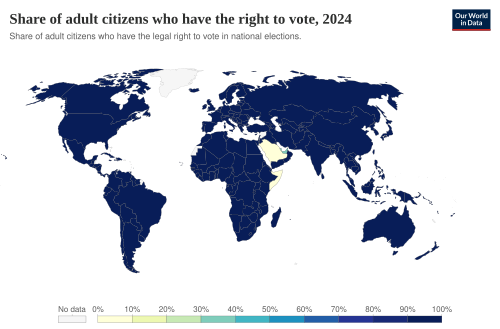
Key Facts
- Universal Suffrage: The principle that all adult citizens should have the right to vote regardless of wealth, race, or gender.
- First Milestone: The Corsican Republic (1755–1769) was the first to grant limited universal suffrage to citizens over 25.
- Women's Rights: New Zealand was the first self-governing nation to extend voting rights to all adult women in 1893.
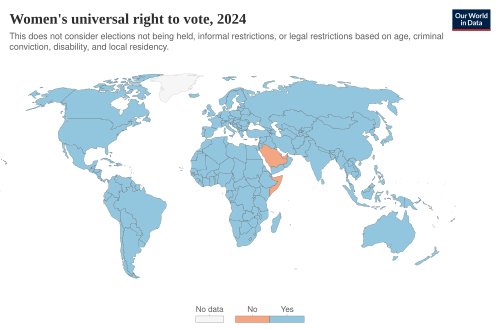
- Modern Restrictions: Voting rights today are primarily limited by age, residency, and citizenship status.
- Passive Suffrage: Specifically refers to the eligibility to be elected to office.
The Evolution of Voter Eligibility
Historically, the right to vote was a privilege reserved for a small minority. In the early history of the United States, for example, most states restricted voting to adult property owners, encompassing only about 6% of the population. While property requirements were largely eliminated by 1856, suffrage remained restricted to white men for decades longer.
Other nations used various mechanisms to limit the franchise. In Japan, voting rights were tied to tax payments; in 1889, only men over 25 paying at least 15 JPY in tax could vote, representing just 1.1% of the population. By 1925, this shifted to all men over 25, and by 1945, all citizens over 20 were eligible.
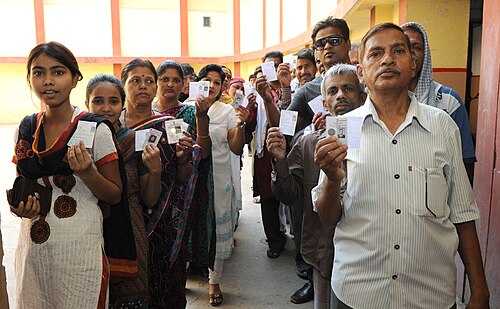
Basis of Exclusion
Throughout history, several criteria have been used to disenfranchise specific groups:
- Knowledge and Literacy: Some US states implemented literacy tests to exclude illiterate voters, a tool frequently used to disenfranchise Black voters in the South. Similarly, Rhodesia's 1961 constitution used education requirements to ensure a predominantly white electorate on the primary "A" roll.
- Criminality: In the United Kingdom and the United States, individuals convicted of felonies may lose their right to vote.
- Nationality and Naturalization: The 1831 Belgian Constitution distinguished between "ordinary naturalization" and "grande naturalisation," with only the latter granting the right to vote in parliamentary elections—a distinction that lasted until 1991.
- Function: In Ireland, members of the police (Garda Síochána) were barred from national elections between 1923 and 1960.
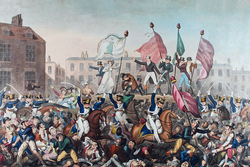
The Struggle for Women's Suffrage
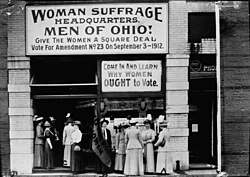
The movement for women's suffrage was a global struggle against deeply entrenched social norms. While the Kingdom of Hawai'i granted female suffrage in 1840, it was rescinded by 1852. Progress accelerated in the late 19th century, with New Zealand leading the way in 1893. South Australia followed in 1894, granting women the right to both vote and stand for Parliament.
In Europe, the Grand Duchy of Finland (then part of the Russian Empire) became the first nation to allow all women to both vote and run for parliament. In Poland, voting rights were granted to both genders immediately upon regaining independence in 1918.
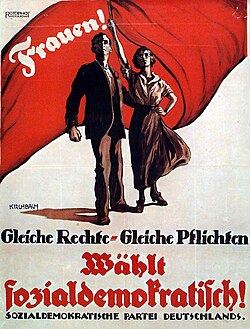
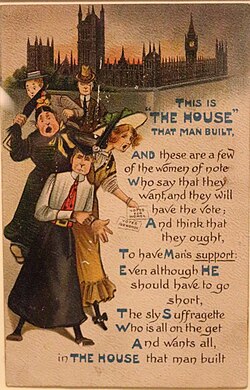
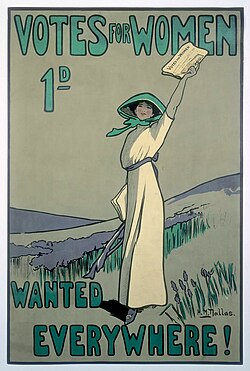
The movement faced significant opposition. Anti-suffrage propaganda often used caricatures to portray suffragettes as unfeminine or disruptive to the social order, arguing that the political sphere was a "house that man built." Despite this, organized efforts like the WSPU in Britain pushed the boundaries of political activism to secure the vote.
Global Timeline of Suffrage Expansion
| Country/Region | Year | Significant Change |
|---|---|---|
| Corsican Republic | 1755 | First limited universal suffrage (citizens 25+) |
| France | 1792 | Introduction of universal male suffrage |
| New Zealand | 1893 | First self-governing nation to grant all women the vote |
| Germany | 1918 | Full suffrage for all citizens over 20 |
| India | 1951-52 | Universal suffrage for adults 21+ (lowered to 18 in 1989) |
| Canada | 1970 | Voting age lowered from 21 to 18 |
| Australia | 1973 | Federal voting age lowered from 21 to 18 |
Frequently Asked Questions
What is the difference between active and passive suffrage?
Active suffrage is the right of a citizen to cast a vote in an election, whereas passive suffrage is the right of a citizen to be a candidate and be elected to a political office.
Which country was the first to grant women the right to vote?
New Zealand was the first self-governing nation to extend the right to vote to all adult women in 1893.
How has the voting age changed over time?
Historically, voting ages were often 21 or 25. In recent decades, many countries have lowered this to 18, including Canada (1970), Australia (1973), and India (1989).
What is census suffrage?
Census suffrage is a system where the right to vote is limited to those who meet specific criteria, such as paying a certain amount of tax or owning a specific amount of property, rather than being a universal right.
Can non-citizens vote in any country?
Yes, in some countries, resident non-citizens can vote, often restricted to local elections. For example, the European Union allows citizens of one EU country to vote in municipal elections in another EU member state.