Roque Sáenz Peña: The Architect of Argentine Democratic Reform
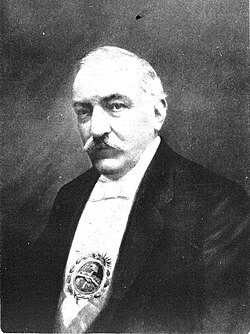
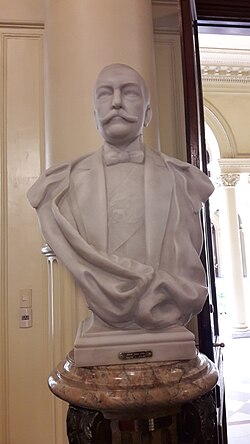
Roque Sáenz Peña was a pivotal figure in Argentine history, serving as the 17th President of Argentina from 1910 until his death in 1914. A lawyer by profession and a soldier by experience, he is most remembered for dismantling the systemic electoral fraud of the conservative oligarchy and introducing a modern democratic framework to the nation.
Born into a politically prominent family, Sáenz Peña navigated a complex landscape of military service, international diplomacy, and internal party strife before ascending to the presidency. His tenure marked a transition from the rule of the Generation of '80—the conservative elite—toward a more inclusive political system.
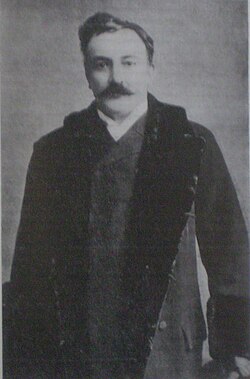
Key Facts
- Presidency: Served as the 17th President of Argentina (October 12, 1910 – August 9, 1914).
- Major Achievement: Promulgated Law 8871 (the Sáenz Peña Law), establishing secret, universal, and compulsory male suffrage.
- Military Service: Fought in the Revolution of 1874 and the War of the Pacific, achieving the rank of Brigadier General in the Peruvian Army.
- Diplomacy: Served as Argentine ambassador to Spain and Italy.
- Political Affiliation: Member of the National Autonomist Party.
Early Life and Education
Roque José Antonio del Sagrado Corazón de Jesús Sáenz-Peña Lahitte was born on March 19, 1851, in Buenos Aires. He was the son of Luis Sáenz-Peña and Cipriana du Cos de La Hitte. His family held strong federalist convictions, which initially kept them from public service following the defeat of Juan Manuel de Rosas at the Battle of Caseros.
Sáenz Peña studied at the National School of Buenos Aires and later graduated as a doctor of law from the University of Buenos Aires in 1875. His early political career was marked by a commitment to republicanism; in 1877, he co-founded the Republican Party alongside other influential figures such as Leandro Alem and Hipólito Yrigoyen.
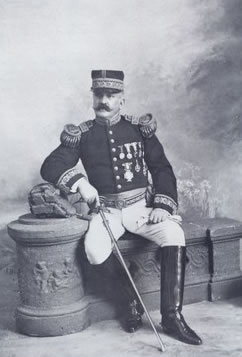
Military Experience and the War of the Pacific
Sáenz Peña's life was not limited to law and politics. He defended national authorities during the Revolution of 1874 as a Captain of Regiment. However, his most notable military contribution occurred during the War of the Pacific, a conflict involving Chile, Bolivia, and Peru over nitrate-rich territories in the Atacama Desert.
Driven by solidarity, Sáenz Peña joined the Peruvian Army. During the Battle of Arica, he assumed command of a Peruvian division after his superior officers were killed. He was eventually captured and briefly imprisoned by Chilean forces before returning to Argentina.
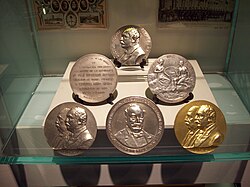
Diplomatic Career and Rise to Power
Upon his return to Buenos Aires, Sáenz Peña entered the diplomatic corps. He served as the minister to Uruguay and represented Argentina at the 1888 Montevideo Congress and the first Pan American Conference in 1889. During the latter, he famously opposed the creation of an American free trade area.
His diplomatic expertise grew as he served as the ambassador to Spain (1906–1907) and Italy (1907–1910). His international standing and internal party positioning led to his election as president on March 13, 1910, though the election was characterized by the irregularities common to the era.
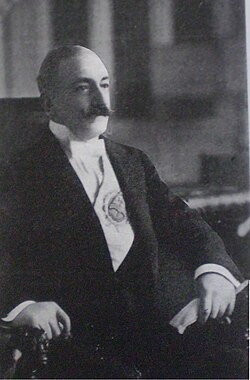
The Presidency (1910–1914)
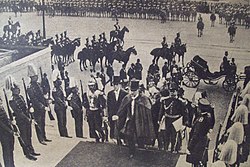
Sáenz Peña assumed office on October 12, 1910. His presidency was defined by a desire to modernize the state and prevent revolution by integrating the middle class and workers into the political process.
Governance and Infrastructure
His administration focused on social and territorial development. In 1912, he established the National Department of Labor and enacted Law 5,599 to promote the development of national territories. This law facilitated the construction of railway branches in regions such as Chaco, Formosa, Río Negro, Chubut, and Santa Cruz to encourage inland population growth.
Additionally, he contributed to the modernization of the military by signing the decree to create the Military Aviation School (EMA) on August 10, 1912.
The Cry of Alcorta
In June 1912, the presidency faced the Grito de Alcorta (Cry of Alcorta), a massive protest by tenant farmers against unfair rental contracts in the Pampas region. This movement signaled the emergence of the rural middle class as a political force and led to a general decrease in land rents.
![President Roque Sáenz Peña with Governor José Arias [es], 1912](/images/75/14/7514a02374961bc2c24831a80679f9fbf616d66e7a128be7fa10676fab23d074.jpg)
The Sáenz Peña Law
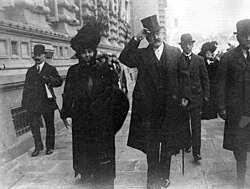
The crowning achievement of his presidency was Law 8871, known as the Sáenz Peña Law, promulgated on February 13, 1912. Sáenz Peña believed that secret and universal suffrage was the only way to end the rule of the conservative oligarchy and prevent the working class from turning toward anarchism or socialism.
The law established three critical pillars for elections:
- Secret Ballot: Votes were cast using sealed envelopes to prevent voter intimidation.
- Universal Suffrage: Voting was extended to all males over 18.
- Compulsory Voting: Participation was made mandatory to ensure a representative outcome.
While the law was a massive leap forward, it was not fully universal, as women and foreigners remained excluded from voting. Nevertheless, it paved the way for the first free elections and the subsequent rise of the Radical Civic Union (UCR).
Final Years and Legacy
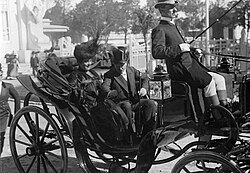
Sáenz Peña's health declined throughout his term. Due to his illness, he became the only president to reside permanently within the Casa Rosada, adapting a section of the executive mansion into a home with heating and rugs to accommodate his condition.
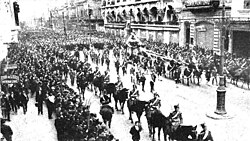
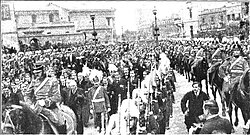
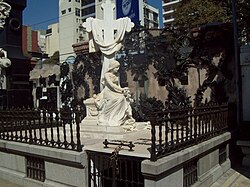
He died in office on August 9, 1914, and was buried in the Recoleta Cemetery in Buenos Aires. His legacy persists through the democratic institutions he helped build and the numerous streets, avenues, and cities named in his honor across Argentina, Peru, and Brazil.
| Category | Details |
|---|---|
| Term of Office | October 12, 1910 – August 9, 1914 |
| Key Legislation | Law 8871 (Sáenz Peña Law) |
| Electoral Changes | Secret, universal, and compulsory male suffrage |
| Infrastructure | Railway expansion in national territories; Military Aviation School |
| Social Impact | End of oligarchy-led electoral fraud; rise of the UCR |
Frequently Asked Questions
What was the primary purpose of the Sáenz Peña Law?
The law aimed to modernize the Argentine electoral system by eliminating fraud and the influence of the conservative oligarchy. It achieved this by making the vote secret, universal (for males over 18), and compulsory.
Why did Roque Sáenz Peña fight in the War of the Pacific?
Sáenz Peña joined the Peruvian Army primarily out of solidarity with Peru during its conflict with Chile over the nitrate-rich Atacama Desert.
Who succeeded Roque Sáenz Peña as President?
Following his death in office on August 9, 1914, he was succeeded by his Vice President, Victorino de la Plaza.
What was the 'Cry of Alcorta'?
The Grito de Alcorta was a 1912 protest movement by tenant farmers in the Pampas region who were fighting against worsening contract conditions and high rents imposed by landowners.
Did the Sáenz Peña Law grant voting rights to everyone?
No. While it was a major advance, the law only granted voting rights to males. Women and foreigners were still excluded from the electoral process at that time.