The Infamous Decade: Fraud and Transformation in Argentina (1930–1943)
The Infamous Decade (Spanish: Década Infame) represents one of the most controversial eras in Argentine history. Spanning from 1930 to 1943, this period began with a military coup that ousted President Hipólito Yrigoyen and ended with another coup that paved the way for the rise of Juan Perón. It was a time of deep contradictions: while the government maintained a facade of democracy through systemic electoral fraud, the country underwent a profound socio-economic transformation driven by the global collapse of the Great Depression.
The era was defined by the tension between a conservative elite determined to hold power at any cost and a growing urban working class emerging from a massive rural exodus. This shift not only altered the demographics of Argentina's cities but also laid the social foundations for the political movements that would dominate the mid-20th century.
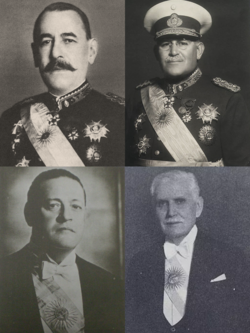
Key Facts
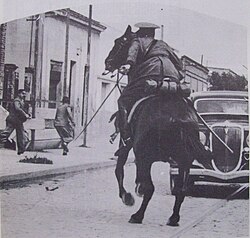
- Duration: 1930 to 1943, beginning and ending with military coups.
- Political Hallmark: Widespread electoral fraud used by conservative governments to remain in power.
- Economic Shift: Transition toward import substitution industrialization (ISI) as the Great Depression ruined small rural landowners.
- Social Impact: Rapid urbanization leading to the creation of the first villas miseria (shanty towns).
- Key Institutions: The creation of the Central Bank of Argentina in 1935.
Political Instability and the "Patriotic Fraud"
The decade opened with the coup d'état of September 6, 1930, led by General José Félix Uriburu. This event marked the end of the first radical government and the start of a period where the political opposition, primarily the Unión Cívica Radical (UCR), faced intense persecution.
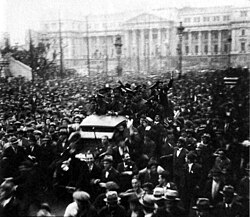
To maintain control, conservative administrations employed what was termed "patriotic fraud," manipulating election results to ensure their victory. This systemic corruption extended beyond the ballot box to high-level financial scandals. One of the most notorious was the CHADE (Compañía Hispano-Americana de Electricidad) scandal, which symbolized the cozy and often corrupt relationship between the state and multinational conglomerates.
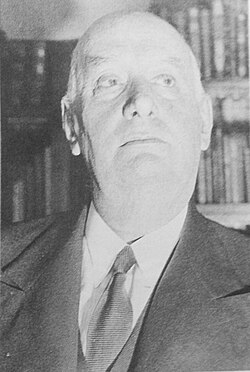
Opposition figures were frequently targeted. Marcelo Alvear, a leader of radicalism, was imprisoned on Martín García Island as part of the government's effort to stifle dissent.
Economic Transformation and Social Upheaval
The Great Depression devastated Argentina's agrarian economy. Many small landowners were ruined, forcing a massive migration from the countryside to the cities. In Buenos Aires, the population surged from 1.5 million in 1914 to 3.5 million by 1935. These migrants, lacking political experience and living in newly formed villas miseria, became a new social class that would later form the base of Peronism.
The Shift to Industrialization
With international trade disrupted, Argentina was pushed toward import substitution industrialization—the process of producing goods locally that were previously imported. This shift, combined with the strengthening of trade unions, led to wage increases and increased labor unrest, exemplified by a violent 48-hour general strike in January 1936.
Financial Reform and the Central Bank
Under President Agustín P. Justo, the government sought to stabilize the economy. Following consultations with the Bank of England and director Otto Niemeyer, the Central Bank of the Argentine Republic was established in June 1935, headed by Raúl Prebisch. This replaced the old Currency Board (Caja de Conversión), which had previously exchanged paper money for gold.
The Presidential Eras of the Infamous Decade
| President | Term | Key Characteristics |
|---|---|---|
| José Félix Uriburu | 1930–1932 | Established the initial dictatorship after the 1930 coup. |
| Agustín P. Justo | 1932–1938 | Implemented the Central Bank and the Roca-Runciman Treaty. |
| Roberto M. Ortiz | 1938–1940 | Attempted to reduce fraud and corruption before illness forced his leave. |
| Ramón S. Castillo | 1940–1943 | Returned to blatant fraud; overthrown by the Revolution of 1943. |
The Justo and Ortiz Administrations
Agustín P. Justo's term was marked by federal interventions in provinces like San Juan and Tucumán to ensure political alignment. During this time, nationalist youth founded FORJA (Fuerza Orientadora Radical de la Juventud Argentina), denouncing Argentina as a "colonial" nation and criticizing foreign economic influence.
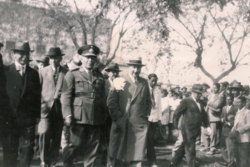
Roberto M. Ortiz attempted to clean up the government's corruption and end electoral fraud. However, his efforts were largely thwarted by the established conservative machinery. His presidency was cut short by diabetes, and he died in 1942 after being unable to exercise his duties since 1940.
The Final Years under Ramón Castillo
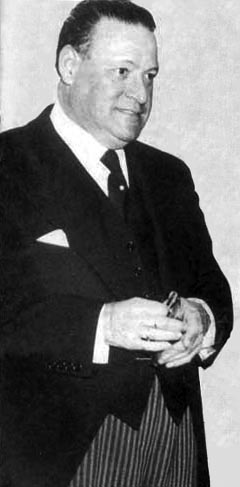
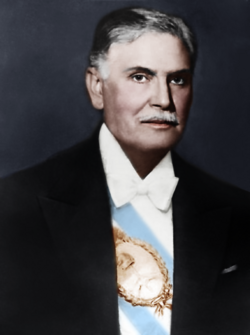
Ramón Castillo's presidency saw a return to "patriotic fraud" and a focus on neutrality during World War II. His administration was characterized by further scandals and a refusal to cooperate with opposition-led provincial governments. This stagnation and popular discontent culminated in the military coup of June 4, 1943, led by the GOU (Grupo de Oficiales Unidos).
Frequently Asked Questions
Why is this period called the "Infamous Decade"?
It is so named because of the systemic use of electoral fraud, government corruption, and the persecution of political opponents to maintain a conservative regime in power.
What were the villas miseria?
These were shanty towns that emerged on the outskirts of large cities, primarily Buenos Aires, as ruined rural workers migrated to urban centers during the Great Depression.
What was the role of the GOU in 1943?
The Grupo de Oficiales Unidos (GOU) was a nationalist faction of the Armed Forces that carried out the coup on June 4, 1943, overthrowing Ramón Castillo and facilitating the rise of Juan Perón.
How did the Great Depression change Argentina's economy?
The crisis forced Argentina to move away from a purely agrarian export model toward import substitution industrialization, producing more goods domestically to replace expensive or unavailable imports.
What was the significance of the Central Bank's creation?
Established in 1935, the Central Bank provided the state with a modern tool for exchange rate control and monetary policy, replacing the gold-backed Currency Board.