Santiago del Estero: The Mother of Cities and Cradle of Argentine Folklore
Located in northern Argentina, Santiago del Estero is a city of profound historical significance. Known as the "Madre de Ciudades" (Mother of Cities), it holds the distinction of being the first city founded by Spanish settlers in the territory that now comprises Argentina. Situated along the Dulce River and National Route 9, the city serves as the capital of the Santiago del Estero Province and stands as a vital cultural hub in the region.
With a population of 311,506 (as of the 2022 census), the city blends its colonial roots with modern urban development. It is not only a political center but also a linguistic sanctuary, being the southernmost outpost of Quechua—the language of the Incas—with approximately 100,000 local speakers.
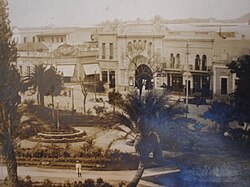
Key Facts
- Nickname: Mother of Cities (Madre de Ciudades) and Cradle of Folklore.
- Historical Status: The oldest city founded by Spaniards in Argentina (est. 1553).
- Geography: Located on the Dulce River, 1,042 km north-northwest of Buenos Aires.
- Climate: Subtropical with hot, humid summers and cool, dry winters.
- Language: A significant center for the Quechua language in modern Argentina.
History and Evolution
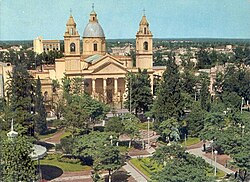
The city was founded on July 25, 1553, by Francisco de Aguirre, following exploratory expeditions from Chile. While much of its early Spanish colonial architecture has vanished, several historic churches remain as testaments to its past.
One of the most intriguing historical footnotes of the region is the Campo del Cielo (Heavenly Fields). In 1576, military searches for iron used by indigenous people led to the discovery of a massive meteorite impact site. This protected area, located on the border of Chaco and Santiago del Estero, contains iron meteorites estimated to have fallen 4,000 to 5,000 years ago.
During the 19th century, the region's abundance of quebracho (a dense, hard timber) attracted British capital and timber industries, which led to significant deforestation. The arrival of the British-owned Central Argentine Railway in 1884 further integrated the city into the national economy.
The mid-20th century saw the rise of Carlos Arturo Juárez, a powerful Caudillo (strongman) who dominated local politics for decades. His era was marked by both infrastructure growth—such as the 1950 construction of the Quiroga Dam, which ended chronic water shortages—and political volatility, including violent riots in 1993 and subsequent legal battles that ended with his house arrest.
Culture, Arts, and Sports
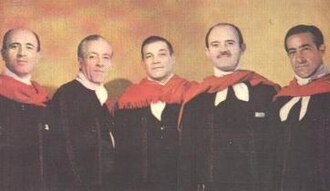
Santiago del Estero is officially recognized as the "cradle of folklore." The city is world-renowned for its traditional music, specifically the chacarera and zamba. Legendary artists such as the Ábalos Brothers and groups like Manseros Santiagueños have brought the city's rhythmic heritage to the rest of South America.
The city is also an academic center, housing the National University of Santiago del Estero (est. 1973) and the Universidad Católica (est. 1960). Visitors can explore the Provincial Archeology Museum, the Santo Domingo Convent, and the city's Cathedral.
In the realm of sports, the city is home to the Asociación Atlética Quimsa, a champion of the Liga Nacional de Básquet. Recently, the city inaugurated the massive Estadio Único Madre de Ciudades in 2021, a venue designed to host major international events, including the 2023 FIFA U-20 World Cup.
Climate and Geography
The city experiences a hot semi-arid climate (BSh) that transitions into a humid subtropical climate (Cwa). It is notorious for extreme summer heat, with temperatures frequently reaching 40°C (104°F) and a record high of 46.5°C (115.7°F) set in 2009.
Winters are generally pleasant but can be volatile, alternating between heat waves and frosty days where temperatures may drop below 0°C. The annual precipitation averages around 600 mm, mostly falling during intense thunderstorms between December and February.
Transport and Infrastructure
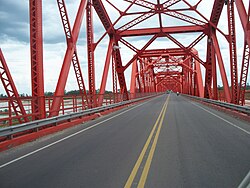
Connectivity is primarily managed through National Route 9, linking the city to Buenos Aires in the south and San Miguel de Tucumán in the north. Air travel is facilitated by the Vicecomodoro Ángel de la Paz Aragonés Airport, which provides regular flights to the capital and Tucumán.
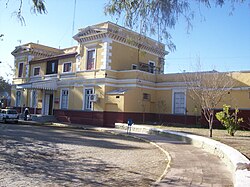
While historical rail lines like the Belgrano and Mitre are closed for passengers, a new elevated commuter line called Tren al Desarrollo is currently under construction to connect Santiago del Estero with the nearby city of La Banda.
City Overview Summary
| Attribute | Detail |
|---|---|
| Population (Urban) | 311,506 (2022 Census) |
| Area | 2,116 km² |
| Elevation | 182 m |
| Primary River | Dulce River |
| Key Industries | Agriculture (Cotton, Olives), Textiles, Public Sector |
| Climate Type | Hot semi-arid / Humid subtropical |
Frequently Asked Questions
Why is Santiago del Estero called the "Mother of Cities"?
It earned this nickname because it was the first city founded by Spanish settlers in the territory that eventually became the nation of Argentina.
What is the significance of Campo del Cielo?
Campo del Cielo is a protected area where a massive group of iron meteorites fell approximately 4,000 to 5,000 years ago, making it a site of great scientific interest.
Which indigenous language is still spoken in the city?
The city and its surroundings are home to about 100,000 speakers of Quechua, making it the southernmost outpost of this ancient Incan language in Argentina.
What are the most famous musical styles of the region?
The city is the "cradle of folklore," specifically famous for the chacarera and zamba musical styles.
How is the weather in Santiago del Estero?
The climate is subtropical and very hot. Summers are humid with intense thunderstorms, while winters are dry and cool, though they can experience sudden temperature swings.