League of Women Voters: A Century of Nonpartisan Democracy and Advocacy
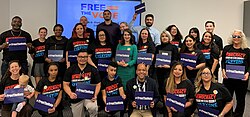
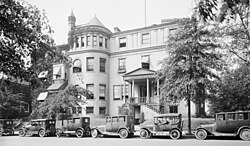
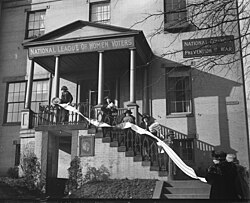
The League of Women Voters (LWV) is a prominent nonprofit organization dedicated to political education and advocacy. Founded in the wake of the women's suffrage movement, the League has spent over a century empowering voters and defending democracy through a strictly nonpartisan approach. Based in Washington, D.C., the organization focuses on ensuring that every citizen has the tools and knowledge necessary to participate effectively in their government.
Unlike political parties, the League does not endorse candidates. Instead, it focuses on issue-based advocacy, deriving its positions from careful study and member input rather than political directives. This commitment to neutrality has allowed the organization to maintain respect across the political spectrum while pushing for systemic legislative changes.
Key Facts
- Founded: February 14, 1920, by Carrie Chapman Catt.
- Mission: Nonpartisan political education and advocacy for representative government.
- Key Tools: VOTE411.org and National Voter Registration Day.
- Leadership: Currently led by President Sania Irwin.
- Financials: Reported revenue of $8.13 million in 2024.
- Inclusivity: Opened membership to men in 1974.
The Founding and Early Years
The League emerged from the National American Woman Suffrage Association (NAWSA). In 1919, a motion was made to merge NAWSA into a successor organization that could support newly enfranchised women. This merger was officially completed on January 6, 1920, though the League operated as a committee of NAWSA for its first year. The formal organizational structure was finalized at the 1920 Convention in Chicago.
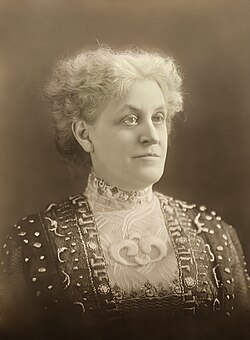
The organization was spearheaded by Carrie Chapman Catt, a leading suffragist. While the League was designed to educate women on how to use their new right to vote, modern historical reflections acknowledge that Catt was a complicated figure whose views included racial prejudices that contrast with the organization's current inclusive values.
Expanding the Scope (1920–1969)
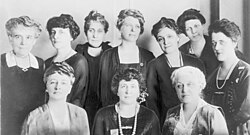
During its first few decades, the League expanded its focus from basic voter education to specific social and legislative issues. In 1929, League leadership petitioned President Herbert Hoover for federal aid regarding maternity and infancy work—an effort that eventually contributed to the Social Security Act of 1935.
By 1960, the League began its long-standing commitment to environmental protection by supporting the Resources and Conservation Act of 1960. This era also saw the organization navigate the political tensions of the Cold War, including scrutiny from Senator Joseph McCarthy during the 1950s.
Modern Advocacy and Digital Evolution
In the latter half of the 20th century, the League evolved into a powerhouse for voting rights and governance. A landmark moment occurred in 1998 when Dr. Carolyn Jefferson-Jenkins was elected as the 15th national president, becoming the first woman of color to lead the organization.
The League has been instrumental in passing critical legislation, including the National Voter Registration Act (often called "Motor Voter") and the Help America Vote Act (HAVA), which established provisional balloting and updated voting systems. They also lobbied heavily for the Bipartisan Campaign Reform Act of 2002 to address the influence of money in politics.
Current Initiatives
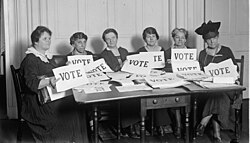
Today, the League leverages technology to reach millions of voters. Through VOTE411.org, they provide personalized voting plans and nonpartisan candidate information. They also coordinate National Voter Registration Day to increase civic participation across the United States.
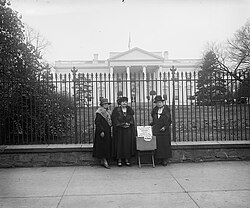
Their current policy views span a wide array of critical issues, including:
- Voting and Representative Government: Fighting restrictive voting laws and expanding access.
- Natural Resources: Continuing their legacy of environmental advocacy.
- LGBT+ Rights: Supporting equality and legal protections.
- Governance: Promoting transparency and ethics in government.
Organizational Overview
| Category | Details |
|---|---|
| Legal Status | Nonprofit |
| Primary Focus | Political Education & Advocacy |
| Headquarters | Washington, D.C. |
| Key Digital Asset | VOTE411.org |
| Membership | Open to all (Men admitted 1974) |

Frequently Asked Questions
Is the League of Women Voters a political party?
No. The League is a nonpartisan nonprofit. It does not endorse candidates or parties; instead, it focuses on issue-based advocacy and educating voters.
Who founded the League of Women Voters?
The organization was founded by Carrie Chapman Catt in 1920, following the success of the women's suffrage movement.
Can men join the League of Women Voters?
Yes. Although originally founded for women, the League voted to allow men to join the organization in 1974.
What is VOTE411?
VOTE411.org is a nonpartisan voter education tool created by the League to help voters see what will be on their specific ballot and create a personalized voting plan.
What are some of the League's major legislative achievements?
The League played a key role in the passage of the National Voter Registration Act (Motor Voter), the Help America Vote Act (HAVA), and the Bipartisan Campaign Reform Act of 2002.