Wine Press Types: Comparing Batch and Continuous Pressing Methods
In winemaking, the process of extracting juice from grapes is a critical step that directly influences the quality, flavor, and stability of the final wine. This extraction is achieved through pressing, a process that separates the liquid must from the pomace—the leftover skins, seeds, and stems. Depending on the scale of production and the desired wine style, winemakers choose between two primary categories of equipment: batch presses and continuous presses.
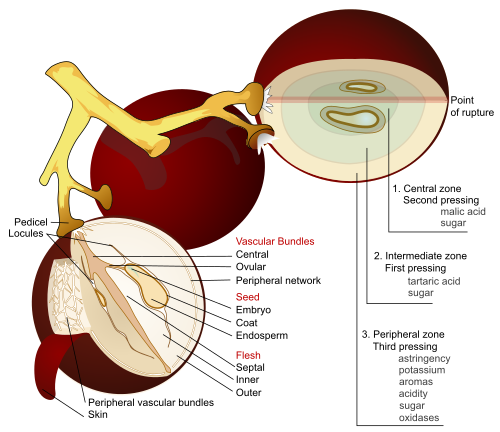
The fundamental goal of any press is to maximize juice recovery while minimizing the extraction of harsh components. When grape skins are torn or scoured, they release higher levels of phenolic compounds and tannins, which can increase the astringency and bitterness of the wine.
Key Facts
- Batch presses are generally gentler, reducing skin tearing and phenolic extraction, but are more labor-intensive.
- Continuous presses offer massive throughput (up to 100 metric tonnes per hour) but can be harsher on the fruit.
- Membrane presses are currently the most common industry standard due to their balance of efficiency and quality.
- Pressure levels in mechanized batch presses typically range from under 1 bar to a maximum of 4 to 6 bars.
- Anaerobic winemaking (preventing oxygen contact) is possible with enclosed press designs.
Batch Presses
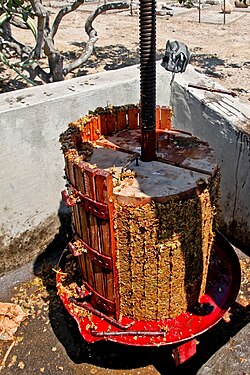
Batch presses process a set amount of grapes in a single cycle. Once the cycle is complete, the press must be manually or mechanically emptied of the compact "cake" of pomace before the next batch can begin. These presses are prized for being "gentle," as they involve less movement of the skins.
A typical batch pressing cycle follows these steps:
- Filling the tank or basket with grapes.
- Applying initial pressure.
- Rotating the tank or breaking up the cake to ensure even pressing.
- Applying higher levels of pressure.
- Repeating the cake break-up if further pressure is required.
- Depressurizing and emptying the equipment.
The speed and intensity of pressure application are key; slower increases generally result in a gentler extraction. Most mechanized batch presses operate over 1 to 2 hours, starting below 1 bar (approximately 1 atmosphere) and peaking at 4 to 6 bars.
Common Types of Batch Presses
- Basket Press: An early mechanical style using a wooden basket with vertical slats. While gentle and popular with artisan wineries, they are slow, labor-intensive, and often expose the must to oxygen.
- Moving Head Press: A horizontal version of the basket press with two heads providing homogenous pressure. However, they can create a dry outer cake and a wet inner core, trapping juice inside.
- Bladder Press (Pneumatic Press): Features a central rubber bladder inflated with air or water to push the cake outward against a perforated screen. This ensures even pressure and allows for cooling if cold water is used.
- Membrane Press: The industry favorite, this press uses a membrane on one side to gently push grapes against a drain screen. Many are fully enclosed for anaerobic winemaking and computerized for precision, though they are often the most expensive option.
Continuous Presses
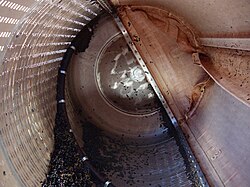
Continuous presses are designed for high-volume production, utilizing a constant flow of grapes from an input area to an output area. This eliminates the need to stop and empty the machine between batches, allowing some screw presses to process 50 to 100 metric tonnes per hour—far exceeding the 1 to 5 tonnes per hour typical of batch systems.
Types of Continuous Presses
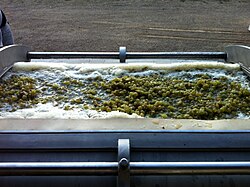
- Screw Press: Uses a helical screw (auger) to move grapes across a perforated cylinder. While efficient, the grinding action can tear skins and seeds, increasing the extraction of minerals (like potassium), tannins, and gums. This can result in up to 4% v/v suspended solids in the juice.
- Impulse Press: A modification of the screw press that pushes the cake in "impulses" rather than a continuous grind. This reduces phenolic extraction but lowers efficiency to levels closer to batch presses.
- Belt Press: Employs air-inflated pads along a wire mesh belt. While useful for whole-cluster pressing and sparkling wines, concerns over oxidation and high suspended solids have limited its adoption in some regions.
Comparing Juice Composition
The quality of the juice varies depending on when it is extracted during the pressing process. In continuous presses, juice from the first section (lowest pressure) is typically higher quality than juice from the final sections (highest pressure). Winemakers often collect these fractions in separate press pans to vinify them independently.
The following table illustrates the composition changes in Riesling juice as it moves from free-run (unpressed) to the final press sections.
| Component | Free-run | 1st Press Section | 2nd Press Section | 3rd Press Section |
|---|---|---|---|---|
| Brix | 17.2 | 17.5 | - | - |
| pH | 3.1 | 3.2 | 3.4 | 3.5 |
| Titratable Acidity (g/L) | 8.9 | 9.1 | 8.8 | 9.1 |
| Phenolic content (mg/L) | 306 | 607 | 1142 | 1988 |
| Suspended solids (g/L) | 46.2 | 16.8 | 27.9 | 23.7 |
Frequently Asked Questions
What is the difference between batch and continuous pressing?
Batch presses process a specific amount of grapes and must be emptied of the pomace cake before the next cycle, offering a gentler extraction. Continuous presses use a screw or belt to move grapes through the system in one constant operation, offering much higher throughput for large-scale production.
Why are membrane presses so popular in the wine industry?
Membrane presses provide a balance of gentle pressure and efficiency. They minimize the tearing of skins and seeds, which limits the extraction of harsh phenolics and suspended solids. Additionally, many are enclosed, allowing for anaerobic winemaking.
How does pressing pressure affect the taste of the wine?
Higher pressure and faster application increase the likelihood of scouring and tearing the grape skins and seeds. This releases more tannins and phenolic compounds, which can make the resulting juice more bitter and astringent.
What is the "cake" in wine pressing?
The cake, also known as pomace, consists of the leftover grape skins, seeds, and stems that remain after the juice has been extracted by the press.
Why do winemakers separate juice into different press sections?
Juice extracted at the beginning of the process (1st section) is generally lower in phenolics and pH than juice extracted at the end (3rd section). By separating these fractions, winemakers can control the quality and style of the final wine more precisely.