Caffeic Acid: The Plant-Based Antioxidant and Lignin Precursor
Caffeic acid is a naturally occurring organic compound that plays a vital role in the biological processes of plants. Structurally classified as a hydroxycinnamic acid, this yellow, solid chemical compound is composed of both phenolic and acrylic functional groups. While its name is often associated with coffee, it is chemically unrelated to caffeine; rather, the name reflects its presence in coffee beans.
In the natural world, caffeic acid serves as a critical intermediate in the biosynthesis of lignin—the complex carbohydrate that provides structural support to plants. Beyond its structural importance, caffeic acid is a potent scavenger of reactive oxygen species (ROS), helping to manage oxidative stress within cellular environments.

Key Facts
- Chemical Formula: C9H8O4
- Primary Function: Scavenging reactive oxygen species (ROS) and maintaining nitric oxide levels.
- Biological Role: Essential intermediate in the biosynthesis of lignin.
- Common Sources: Coffee, red wine, herbs (thyme, sage), and black chokeberry.
- Chemical Class: Hydroxycinnamic acid.
Chemical Properties and Structure
Caffeic acid, also known by its IUPAC name (2E)-3-(3,4-dihydroxyphenyl)prop-2-enoic acid, has a molar mass of 180.16 g/mol and a melting point ranging between 223 and 225 °C. In acidified methanol, it exhibits a UV-vis maximum wavelength (λ max) at 327 nm.
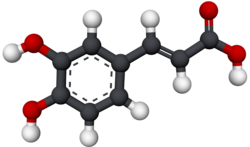
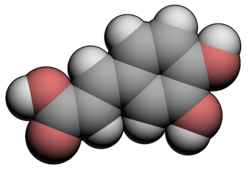
The molecule's structure is characterized by its dihydroxyphenyl group. Because it contains o-diphenols, it is susceptible to autoxidation, a process where it converts into reactive o-quinones, often resulting in browning. This browning can be mitigated by the presence of antioxidants like ascorbic acid or thiol compounds such as cysteine.
Chemical Summary Table
| Property | Value/Detail |
|---|---|
| CAS Number | 501-16-6 |
| Molar Mass | 180.16 g/mol |
| Density | 1.478 g/cm³ |
| Melting Point | 223 to 225 °C |
| Chemical Formula | C9H8O4 |
Natural Occurrences and Dietary Sources
Caffeic acid is widely distributed across various plant species. It can be found in the bark of Eucalyptus globulus, barley grains, and the freshwater fern Salvinia molesta. It is also present in the mushroom Phellinus linteus.
In the human diet, caffeic acid appears in several common items:
- Beverages: Brewed coffee (63.1–96.0 mg per 100 ml) and red wine (2 mg per 100 ml).
- Herbs and Spices: High concentrations are found in thyme, sage, and spearmint, as well as Ceylon cinnamon and star anise.
- Fruits and Seeds: Black chokeberry contains remarkably high levels (141 mg per 100 g), while sunflower seeds, apple sauce, apricots, and prunes contain moderate amounts.
- Other: Yerba mate contains high levels (approximately 150 mg per 100 g).
Biosynthesis and Biotransformation
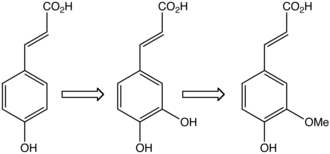
The production of caffeic acid in plants occurs through the hydroxylation of the coumaroyl ester of quinic acid. This process produces the caffeic acid ester of shikimic acid, which can then convert to chlorogenic acid. Caffeic acid also serves as a vital precursor to ferulic acid, coniferyl alcohol, and sinapyl alcohol—all of which are essential building blocks for lignin.
The enzyme caffeate O-methyltransferase is specifically responsible for the transformation of caffeic acid into ferulic acid. Additionally, the enzyme caffeate 3,4-dioxygenase can use caffeic acid and oxygen to produce 3-(2-carboxyethenyl)-cis,cis-muconate.
Pharmacological Research and Safety
Scientific studies have explored the diverse pharmacological potential of caffeic acid. In vitro and in vivo studies have identified it as an antioxidant with immunomodulatory and anti-inflammatory properties. Notably, research has shown that caffeic acid can reduce aflatoxin production by more than 95 percent by stymying the oxidative stress that triggers Aspergillus flavus.
However, research regarding carcinogenicity has yielded mixed results. While some studies suggest it inhibits carcinogenesis, others have noted carcinogenic effects in specific animal models, such as the formation of stomach papillomas in rats receiving high doses. The International Agency for Research on Cancer (IARC) has previously listed it as a Group 2B carcinogen ("possibly carcinogenic to humans").

Frequently Asked Questions
Is caffeic acid the same as caffeine?
No. Although they share a similar name due to their presence in coffee, caffeic acid is a phenolic acid and is chemically unrelated to the stimulant caffeine.
What is the role of caffeic acid in plants?
Caffeic acid acts as a key intermediate in the biosynthesis of lignin, which is a major component of plant biomass. It also helps plants manage reactive oxygen species.
Can caffeic acid be used in photography?
Yes. Caffeic acid can be the active ingredient in "caffenol," a DIY black-and-white photographic developer made from instant coffee.
How does caffeic acid affect aflatoxin?
Studies indicate that caffeic acid can reduce aflatoxin production by more than 95 percent by preventing the oxidative stress that normally enhances Aspergillus flavus production.
What are the main dietary sources of caffeic acid?
Significant sources include brewed coffee, red wine, black chokeberry, yerba mate, and various herbs like thyme and sage.