Polyphenols: The Diverse Chemistry and Biological Roles of Plant Phenols
Polyphenols represent a vast and structurally diverse family of naturally occurring compounds found abundantly in plants. These secondary metabolites—compounds not directly involved in a plant's basic growth but essential for its ecology—have played significant roles in human history, serving as dyes and agents for tanning garments. Today, they are recognized for their complex chemical structures and their wide-ranging presence in the human diet.
The term "polyphenol" is derived from the Ancient Greek word polus (meaning "many" or "much") and "phenol," which refers to a specific chemical structure where an aromatic benzenoid (phenyl) ring is attached to a hydroxyl (-OH) group. This terminology has been established in scientific literature since at least 1894.

Key Facts
- Abundance: Found extensively throughout the plant kingdom.
- Chemical Diversity: Includes phenolic acids, flavonoids, tannic acid, and ellagitannins.
- Structural Core: Characterized by aromatic rings attached to hydroxyl groups.
- Historical Uses: Utilized traditionally for textile dyeing and leather tanning.
- Biological Importance: Play critical roles in plant ecology and human nutrition.
Chemical Properties and Structure
Polyphenols are characterized by their unique molecular architecture. According to the WBSSH (World Bioactive Substance Standard Hierarchy) definition, these compounds are generally moderately water-soluble and possess molecular weights ranging from 500 to 4000 Da. Structurally, they typically feature more than 12 phenolic hydroxyl groups and approximately 5 to 7 aromatic rings per 1000 Da.
The scientific community recognizes two primary structural families that meet these criteria: proanthocyanidins (and their derivatives) and galloyl and hexahydroxydiphenoyl esters (and their derivatives).
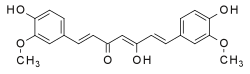
Common Polyphenolic Substructures
The structural variety of polyphenols is immense. For instance, some compounds feature a C-glucoside substructure, where a phenol is attached to a saccharide (sugar) via a carbon-carbon bond, as seen in the plant natural product puerarin. Other complex structures include theaflavins, which contain phenolic ether linkages, or ellagitannins, which consist of multiple gallic acid units arranged around a glucose core.

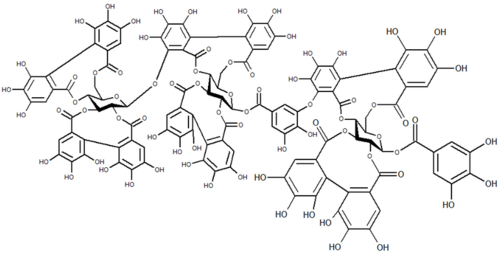



Biological and Ecological Significance
In the natural world, polyphenols are thought to perform diverse ecological functions for plants. These may include defense mechanisms or roles in nutrient cycling within terrestrial ecosystems. In the context of human health, research has focused on several key areas:
- Cardiovascular Health: Investigating effects on blood pressure and lipid protection.
- Cognitive Function: Studying the impact of compounds like resveratrol on mood and performance.
- Gut Microbiome: Examining how microbial metabolism interacts with dietary polyphenols.
- Disease Research: Exploring potential roles in cancer and other chronic conditions.
However, it is important to note that research also considers potential toxicity, adverse effects, and the influence of polyphenols on mineral absorption, such as iron.
Analytical Identification
Because of their complexity, identifying and quantifying polyphenols requires sophisticated analytical techniques. One common method is Reversed-phase HPLC (High-Performance Liquid Chromatography), which separates compounds based on their interaction with a stationary phase. In these plots, smaller natural phenols typically appear as individual, distinct peaks, whereas larger tannins may appear as a broader "hump" due to their complex, heterogeneous nature.
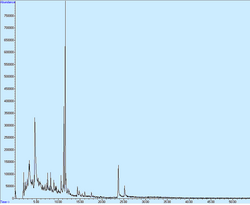
Summary of Polyphenol Characteristics
| Property/Category | Details |
|---|---|
| Molecular Weight | 500–4000 Da |
| Solubility | Moderately water-soluble |
| Key Structural Families | Proanthocyanidins; Galloyl/Hexahydroxydiphenoyl esters |
| Common Examples | Flavonoids, Tannic acid, Ellagitannins, Curcumin |
| Primary Functions | Plant ecology, antioxidant activity, dietary bioactives |
Frequently Asked Questions
What are the main types of polyphenols?
Polyphenols are a broad category that includes phenolic acids, flavonoids, tannic acids, and ellagitannins.
How do polyphenols affect the taste of food?
Polyphenols are often associated with astringency, a sensory characteristic that can affect the mouthfeel of foods and beverages like tea and wine.
Are all polyphenols beneficial for health?
While many are studied for their protective health benefits, researchers also investigate potential toxicity, adverse effects, and their impact on nutrient absorption.
What is the difference between a phenol and a polyphenol?
A phenol is a chemical structure consisting of an aromatic benzenoid ring attached to a hydroxyl group. A polyphenol is a molecule that contains multiple such phenolic groups.
How are polyphenols extracted from plants?
Various methods are used for extraction, including ethanol extraction, microwave-assisted extraction, and supercritical fluid extraction (such as using near-critical carbon dioxide).