The Life and Legacy of William Shakespeare: The World's Greatest Playwright
Few names in human history command as much respect and curiosity as William Shakespeare. A central figure of the English Renaissance, Shakespeare was a master of language who transformed the landscape of Western literature. As a playwright, poet, and actor, his works continue to be performed, studied, and adapted across the globe centuries after his death.
From his humble beginnings in Stratford-upon-Avon to his influential career in the theatrical hubs of London, Shakespeare's journey is a testament to the power of creativity. This article explores the essential facts of his life, his prolific body of work, and the enduring impact he left on the world.
Key Facts
- Born: c. 23 April 1564, Stratford-upon-Avon, England
- Died: 23 April 1616 (aged 52), Stratford-upon-Avon, England
- Primary Occupations: Playwright, poet, and actor
- Key Eras: Elizabethan and Jacobean
- Major Theatre Groups: Lord Chamberlain's Men and King's Men
- Spouse: Anne Hathaway (married 1582)
Early Life and Family
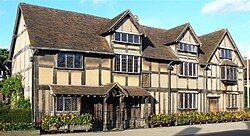
William Shakespeare was born in Stratford-upon-Avon, Warwickshire, to John Shakespeare and Mary Arden. His family roots in the region are well-documented, and his childhood home remains a significant site of historical interest today.
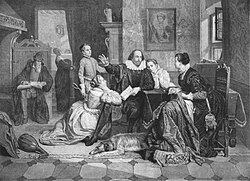
In 1582, Shakespeare married Anne Hathaway. Together, they had three children: Susanna Hall, and twins Hamnet Shakespeare and Judith Quiney. While much of his early life remains a subject of historical study, his connections to his family and his hometown remained central to his identity.
![Shakespeare's coat of arms, from the 1602 book The book of coates and creasts. Promptuarium armorum. It features spears as a pun on the family name.[d]](/images/87/4f/874fffc7d98acbe95a052892ce735eea7aa2d26cc50aa718d05eff7c2fd2fd5f.jpg)
A Prolific Career in London
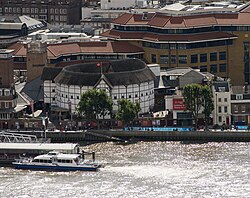
Shakespeare's professional life was defined by his involvement in the vibrant theatrical scene of London. Active from approximately 1585 to 1613, he was a key member of several prominent acting companies, most notably the Lord Chamberlain's Men, which later became the King's Men.
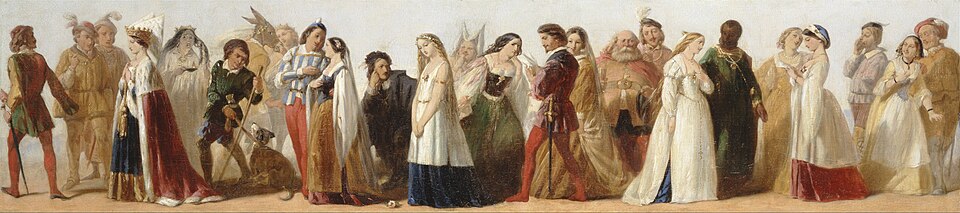
His work was primarily written in Early Modern English, a period of linguistic evolution that allowed for the rich, complex textures found in his dialogue. His dramatic output is traditionally categorized into three main genres:
- Comedies: Works characterized by humor and often ending in marriage.
- Histories: Plays based on the lives of English monarchs.
- Tragedies: Serious plays exploring profound human suffering and downfall.
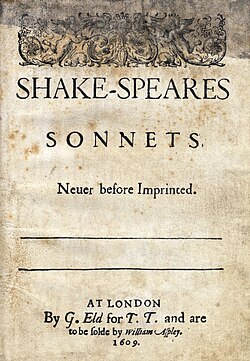
Beyond the stage, Shakespeare was a celebrated poet. His literary contributions include sonnets (a specific form of 14-line poem), narrative poems, and epitaphs. His collection of sonnets, first published in 1609, remains one of the most famous works in English poetry.
The First Folio
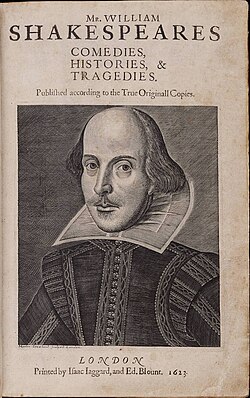
Much of what we know about Shakespeare's plays today is thanks to the First Folio, published in 1623. This collection was vital in preserving many of his plays that might otherwise have been lost to history.
Artistic Inspiration and Interpretations
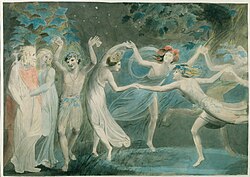
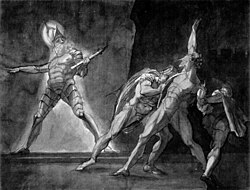
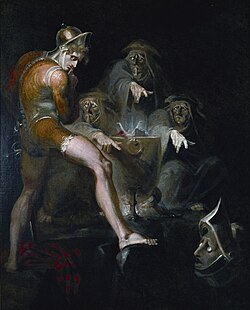
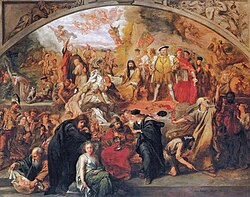
Shakespeare's characters and themes have inspired countless artists throughout the centuries. From the haunting imagery of Macbeth to the ethereal worlds of his comedies, his influence spans painting, music, and fine art.
Artists like William Blake and Henry Fuseli captured the psychological depth and supernatural elements of his plays. Whether depicting the tragic descent of Hamlet or the magical realms of A Midsummer Night's Dream, these interpretations highlight the timelessness of his storytelling.
![Pity by William Blake, 1795, is an illustration of two similes in Macbeth:"And pity, like a naked new-born babe, Striding the blast, or heaven's cherubim, hors'd Upon the sightless couriers of the air."[201]](/images/e7/5b/e75b3e316d7fa3180ebcb296f4c8b453d0da070fe04ea38a79333bd3ee86008e.jpg)
Final Years and Resting Place
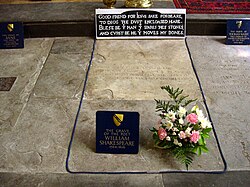
Shakespeare returned to Stratford-upon-Avon in his later years. He passed away on 23 April 1616, at the age of 52. He is buried in the Holy Trinity Church in Stratford-upon-Avon, the same church where he was baptised.
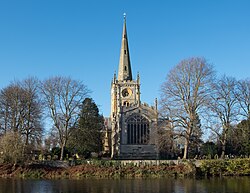
His final resting place is marked by a funerary monument and a grave located near those of his wife, Anne Hathaway, and his granddaughter's husband, Thomas Nash.
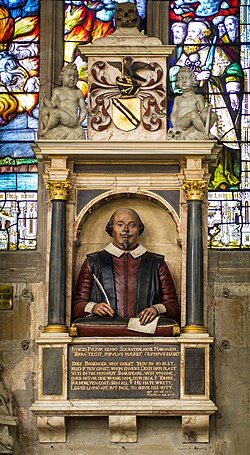
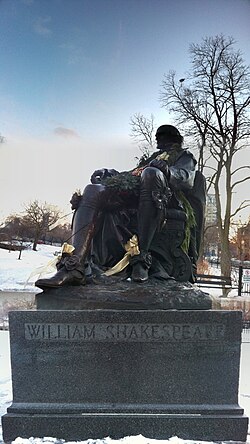
Today, his legacy is honored through various monuments and statues worldwide, including notable depictions in public parks, serving as a reminder of his unparalleled contribution to global culture.
Summary of Shakespeare's Life
| Category | Details |
|---|---|
| Lifespan | c. 1564 – 1616 |
| Location | Stratford-upon-Avon and London, England |
| Eras | Elizabethan and Jacobean |
| Key Works | Plays (Tragedies, Comedies, Histories) and Sonnets |
| Burial Site | Holy Trinity Church, Stratford-upon-Avon |
Frequently Asked Questions
What were William Shakespeare's main occupations?
Shakespeare was a multi-talented professional who worked as a playwright, a poet, and an actor.
In which eras did Shakespeare live and work?
His career spanned the Elizabethan and Jacobean eras of English history.
What is the significance of the First Folio?
The First Folio, published in 1623, is a crucial collection of his plays that helped preserve his dramatic works for future generations.
Where is William Shakespeare buried?
He is buried at the Holy Trinity Church in his hometown of Stratford-upon-Avon.
What genres of plays did he write?
Shakespeare is famous for writing comedies, histories, and tragedies.